Ten Crime Dramas That I Binge Watched.


Ten Crime Dramas That I Binge Watched. 

Hello everyone and welcome to Friday’s Choice. Even though thus far I have been focusing on movies and books, I do also love to get invested in a good tv series and I would have to say that crime dramas are by far my favourite genre of tv show. If you follow me on Instagram (@katelovesliterature), then you’ll already know that on Tuesday night I sat down to watch Annika, a brand new show starring Nicola Walker that premiered on Alibi. I really enjoyed the first episode and I’m already looking forward to seeing what happens but watching Annika got me thinking about all the other crime dramas that I have watched. 

After reflecting over how much I enjoy crime dramas,  I thought it would be fun for this week’s #fridayschoice to make a list of ten shows that I have binge watched and loved. 

Disclaimer – This is not an AD. This is not sponsored. This is not promotional content. I am not promoting these shows or any particular channel or streaming platform. I am simply talking about a genre that I love. I have created this list by myself. This is simply a list of shows that I have watched and loved and I am going to talk you through why I loved them. With that very important note made, I am now going to explain how I’ve put together my list of ten crime dramas that I binge watched. 

I don’t really like rating shows numerically, just because tv, and movies, and books are so subjective so I am going to list the ten shows however this is not a top ten rating system. I’m simply going to talk about ten shows I loved in alphabetical order so without further adieu let’s dive into Friday’s Choice. 

A is for Annika

This is a brand new series and the first episode just premiered on Alibi on Tuesday at 9.pm so I don’t have a whole lot to say about this show except that I really enjoyed the first episode and I am definitely going to be tuning in next week to see what happens. I really love Nicola Walker, I think she is a brilliant actress and so I look forward to see her leading this new series. 

This show struck me as different because Nicola Walker actually breaks the fourth wall and addresses the audience which is something that I haven’t seen done before in a crime drama. It’s new and it’s different and I do enjoy the moments where Walker talks to the camera. It feels like she’s talking to you personally and I feel as though this will be really interesting as the series plays out because we may get to hear her private thoughts on the cases she is investigating. If you’re looking for a new series to watch then I’d recommend starting Annika. If the first episode is anything to go by, this is going to be a great series. Great premise, great actors, great start. I can’t wait to see what happens. 

B is for Bosch.

If you’ve been following my blog and my Instagram then you’ll know that August’s #bookofthemonth is City Of Bones by Michael Connelly. Bosch is the tv series based off of the books, starring Titus Welliver as Detective Harry Bosch. I’ve just rewatched all seven seasons of the series on the Amazon Fire Stick and I am eagerly awaiting the new series that will explore Bosch’s new journey as a private investigator. If you’re a fan of Michael Connelly’s books then I would highly recommend this show. You can tell that Connelly is involved behind-the-scenes because I feel that this tv show really captured the feel of the books. Welliver is the perfect Bosch and I believe that his name was suggested for the part by Connelly himself. This is a show that handles very sensitive crimes, it discusses family dynamics and police politics. The backdrop of Los Angeles is absolutely perfect and I love seeing the locations that are mentioned in the books brought to life onscreen. The soundtrack is incredible as Bosch loves jazz and so the show is set to some really wonderful music and every actor does a fantastic job. There are only ten episodes in each season except for the final season which has only eight. Each season feels complete but nothing feels rushed. This is a brilliant show. It’s perfectly paced, at times it’s fast moving but then it slows down sometimes too. It lets the heavy moments settle. It allows us to sit in the silence and absorb what has happened. There’s light and dark, and some really funny, sarcastic one liners. This is a great show and I would absolutely recommend it even if you haven’t read the books. Stay tuned for my #bookofthemonth discussion that will be published at the end of August. I’m really looking forward to sharing my thoughts on City Of Bones, but in the meantime, watch Bosch

B is also for Briarpatch

Based on Ross Thomas’s novel Briarpatch, this show follows Allegra Dill back to her hometown to search for the person responsible for her sister’s death. This hunt for her sister’s killer turns into a quest to bring the corrupt town to its knees. I enjoyed this show but I will say that is is an acquired taste. It is bizarre. It is odd. It feels surreal at times. The characters are eccentric and corrupt and it’s one of those shows that when the episode ends, even though you’re not entirely sure what you just watched, you’re compelled to watch the next episode to see what happens, to see if it will eventually make sense. The English literature student side of me loves that this show is so absurd. I do enjoy things that don’t really make sense because I do feel that’s the point. If you’re left wondering what just happened, the show has done it’s job. I equate this type of show to reading the poetry of someone like Berryman, the fact it doesn’t make sense is the point. You will struggle to make sense of a Berryman poem and that is intentional, and my interpretation of this show is that it functions almost the same way the Theatre of the Absurd does. It is eccentric and confusing and bizarre but that’s a good thing because it keeps you curious and it keeps you watching. 

I’m skipping down through the alphabet all the way to the letter H and H is for Hudson & Rex

This is probably the most lighthearted show on this list, if you can call a crime show lighthearted. Hudson & Rex is all about how Detective Charlie Hudson solves cases with the help of his faithful partner, the extremely intelligent and extremely adorable, fictional police canine Rex. Rex is possibly one of the most expressive dogs I’ve ever seen and this show highlights the bond that can exist between a dog and their human. It isn’t the most intense crime drama on television however the cases are interesting and it is charming and fun. It is somewhat formulaic as most of the episodes end with the case being solved however in my opinion this doesn’t dampen the viewing experience. Each case is interesting, the cast is great and watching this show makes me love my own dog even more. Fun fact, he sits and watches the tv very intently when Rex is on the screen, head tilts and everything. I think he’s a fan! If you want to venture into the crime drama genre but don’t want to start with anything too intense, Hudson & Rex is the perfect show for you. I love the premise and any time I sit down to watch this show I enjoy myself. You should check it out too on Alibi. 

L is for Law & Order SVU. 

This is one of my favourite shows. I even wrote about it in one of my final essays that counted heavily towards my degree. This is a show that is hard hitting. This series deals with inherently violent topics and portrays some of the most horrific crimes however there is always an undercurrent of justice and hope because the message of this show, in my opinion, is that rape, sexual assault, and abuse of any kind is unacceptable. This show states time and time again that it doesn’t matter what the victim was doing, wearing, drinking, etc, the attack they endured is never their fault. The fault lies with the perpetrators and only the perpetrators. This show gives survivors their voices back. It is at times hard to watch. It is at times very poignant and very emotional, and I would go as far as to say this show is educational. It covers so many important topics such as abuse, racism, homophobia, consent, victim blaming, harassment, and so much more. I could dedicate an entire post to this show alone and in the future I will. Mariska Hargitay leads this brilliant cast. She stars as Detective Olivia Benson and she is kind, caring, compassionate, and brave. There has been so many amazing guest stars on this show, and so many brilliant episodes, some that are even based on true events. It is definitely one of the more hard hitting shows on this list, purely because of the nature of the crimes that are being portrayed however I believe this is an important show to watch because it talks about the horrific things that sadly do happen in real life. They shouldn’t happen but sadly they do, and as Law & Order SVU makes clear, these horrific crimes are never acceptable. I watch all seasons of this show on the Amazon Fire Stick and I think it is a must watch show. 

L is also for Line Of Duty. 

Firstly, I have a question. Who hasn’t seen this show? I feel like everyone has seen this show because for a while it was talked about nonstop. It is on Netflix and I believe it airs on BBC One. This show follows DS Steve Arnott as he is moved to the Anti- Corruption Unit 12. In the unit he meets his new partner, the talented undercover officer DC Kate Fleming. Under the watchful eye of Superintendent Ted Hastings, they investigate corruption within the fictional police force and as the series goes on, it soon becomes clear that the seemingly unalike corruption cases are all linked to a long history of deep rooted corruption and organised crime. The show’s long- running arc revolves around the need to uncover who “H” is and it is believed that “H” is someone or multiple people of high rank within the police force who are instrumental to the operations of organised crime. This show is one of the most successful crime dramas there is. The viewing figures that this show has are incredible. Millions of people watched this show and it is easy to understand why. This show features gruesome crimes and gripping plot twists. The interrogations scenes in particular are my favourite. They are filled with suspense. The cast is brilliant. The characters are all believable and if you like a show with twists and turns then this is one you don’t want to miss.  

S is for Scott & Bailey. 

I’ll tell you all a fact about myself. Even though I have Netflix, the Amazon Fire Stick and Disney+, I still love collecting DVDs. Now you can watch this show on the Amazon Fire Stick and I believe the show aired on ITV but I actually own a box set of all five seasons and I love it. I collect box sets because as wonderful as streaming services are, they’re just not quite as impressive as a shelf of DVDs. This show is set in Manchester and it follows Detective Rachel Bailey and Detective Janet Scott as they investigate murders and series one starts off strong with this dynamic duo investigating murders that appear to be the work of a serial killer. This is a female driven cast. One of my favourite characters in any crime drama will always be DCI Gill Murray played by the brilliant Amelia Bullmore. Gill is no nonsense, sharp tongued, impressively intelligent and also very funny. All of these characters are layered and flawed and they are very believable, real people. The personal problems they face don’t feel melodramatic and their friendships they create at work are very realistic and endearing. The relationship between Scott & Bailey is the heart of the show. They’re a brilliant team. Each season has a main storyline and I really like that each season starts and ends with something new. It’s also really nice seeing the characters grow as each season progresses. This is a show that I go back and rewatch a lot because after a bit of time in between watches, it is so engaging that I can watch it all from the beginning despite seeing it more than once before, that is how much I enjoy it. The characters are believable, funny, compelling and relatable and the crimes are interesting. This is another series that has really suspenseful and dynamic interview and interrogation scenes so it is very high up on my favourites list. 

T is for The Fall. 

The Fall is perhaps the most intense and most violent show on this list. This is another show that I love from an analytical point of view. This is another show that I have written about academically. I think that when it comes to crime dramas, it is fair to say that most audience members have a bit of a morbid fascination with crime and violence and death. Something that I found really interesting when I was studying the portrayal of violence on television was just how popular crime dramas are. That isn’t a surprise. There are countless shows about detectives and murder and police and then there’s an entire category of true crime. It’s popular. I wouldn’t be making this list of shows if they weren’t popular and I think it’s fascinating that most people would be terrified if an actual crime happened in real life down the street from where they live. It wouldn’t be so entertaining or interesting then, and yet we love to watch crimes on tv. Now this isn’t a lecture, but I will say this, I think it can be argued that people enjoy watching violence from the safety of their own homes and there is a safety in knowing that the violence in crime dramas (unless it’s true crime) is fictional. No one actually got hurt and so therefore watching this fictional violence is a way to experience violence without actually having to experience it. 

The Fall is violent. It is one of the most unsettling shows I’ve ever watched. Jamie Dornan is frightening as Paul Spector, the methodical and meticulously violent serial killer. This show was recently made available on Netflix and it is another show that I believe everyone was talking about at one point in time. Spector chooses his victims, he stalks them, he practices breaking into their homes, he gets a thrill out of getting in and out unnoticed and then after his practice run, he goes back and he kills them. I feel that this show treats violence as an art form. Spector takes pride in how he operates. He is arrogant, he is proud of the fact that he’s gotten away with murder more than once. He takes pleasure in hurting his victims. The violence is almost desirable. It is not a show for the faint hearted as it does contain some very violent sequences that last quite a long time but it is gripping. Gillian Anderson is fabulous as Stella Gibson, the detective who throws Spector off his game. She is just as intelligent as he is, and she knows how to play his game. It’s a brilliant one to watch. It’s gripping, it’s engaging, it’s unsettling and I have yet to find another series that unsettles me as much as The Fall did. It’s easy to get scared. Unsettled is a different sensation entirely and I would argue that it is more impressive if a show unsettles you than scares you. 

U is for Unforgettable

This is another lighthearted crime show that I watched on Alibi. The charming Poppy Montgomery stars as Detective Carrie Wells. Carrie has a very sophisticated and advanced photographic memory. She remembers absolutely everything except the day her sister was murdered. That is the one memory that she cannot bring to the surface and while she and her partner Al Burns put her unique skills to use while solving other cases, a long-running arc is Carrie’s wish to figure out who killed her sister. Again, I really enjoyed the premise of this show. I loved Montgomery’s portrayal of Carrie. She is is fun, she is flirty, she has great gut instincts. She’s a fiery redhead who breathes life into the investigation room. There is somewhat of a formulaic structure to each episode, some plot lines span over more than one episode but it’s fun, it’s interesting and it’s different. I sometimes wonder what my life would be like if I could remember every single thing that happens in extremely vivid detail but as covered in this show, I think that would be a blessing and a curse because there are things that Carrie wishes she could forget. If you want crime drama that’s not too heavy then this show is a great one to watch. 

U is also for Unforgotten

I started this list with a crime drama starring Nicola Walker and I am ending this list with a crime drama starring Nicola Walker. Unforgotten aired on ITV I believe but it is also on Netflix. This show follows DCI Cassie Stuart and DI Sunny Khan as they investigate cold cases. I really like shows that revolve around cold cases because I find the premise intriguing. I’m not a law student. I have no academic background regarding legal proceedings however my understanding is that a case goes cold when there is no more evidence and the leads that detectives did have lead to dead ends. So the case goes cold. I like the idea of taking a cold case and looking at all the evidence again. You review all the leads and you think okay, there is something missing here. Let’s figure out what is missing. What aren’t we seeing? It’s always interesting when old cases get reinvestigated especially when new evidence comes to light. Each season of this show features a new case, and the show doesn’t only reinvestigate but it also shows the emotional consequences that these cases have on those connected to the victim and on the detectives themselves. It’s not easy to dig through the past, especially when the past is painful or you’d rather it stayed buried. It’s a really engaging show. Fascinating cases, brilliant cast, interesting characters and a very moving premise because really the motivation behind solving a cold case is to provide the victim with justice and provide those who remain living with closure. It’s a brilliant show to watch. 

This has been my list of Ten Crime Dramas That I Binge Watched. Have you seen any of these shows? If so, which one is your favourite? Have you gotten any series inspiration from this list? Is there a show that you now feel you want to watch? If so, which one? Are crime dramas your thing? What’s your favourite show? I love hearing your opinions and reading your comments so if you have any thoughts about today’s Friday’s Choice then please do let me know. 

This has been Friday’s Choice. I hope you enjoyed it, I certainly did. I hope you all have a lovely weekend. I am looking forward to Movie Monday already. 

Kate xo

Study Tips: Studying More Effectively In Less Time.

Hello everyone and welcome to another Theory Thursday. Today’s #theorythursday is perfect for those who are heading #backtoschool and #offtocollege because today I am sharing the study tips I live by. I am talking all about how to study more effectively in shorter periods of time. Want to know how I do it? Keep reading!

I love learning and I really value my education however I always found studying rather difficult. I don’t like how some exams measure intelligence based on how well someone remembers and regurgitates information. I don’t think that spewing information that you have learned off by heart onto a page is a fair reflection of your ability and intelligence and the reason I thrived so much in college is because in college, all of my exams were focused on my critical thinking skills, on my opinion of and understanding of different topics rather than simply reciting stuff however, we all do have to survive exams and so I am going to share how I do that.

Are you sick of studying for hours and hours only to feel overwhelmed, frustrated, and exhausted with a headache on top? Do you feel like it doesn’t matter how long you study because you still don’t feel prepared? Pay attention because I am going to share my study tips, and these tips got me through college. I got several distinctions and I was always extremely happy with my grades but guess what, I only study for two hours or less at a time. Let’s dive in.

Replace endless hours with shorter, structured study sessions.

I think that sometimes people feel like they have to participate in a ‘who studied the longest’ contest. People think it is impressive to say that they studied all day or all night or that they never have any free time because they are studying. I say good for them if that is what they want to do, but personally I prefer having a healthy work/study/life balance. Let me share a secret, I never discuss my grades but I have often done just as well or even better that these people who are chained to their desks and I’ve spent less time studying. It’s not about how long you spend at the desk, it is about how productive you are while at the desk.

Structure your time. Have clear goals.

Pick a study slot. I like to study from 4-6.pm.

I like to have clear study goals for each session. I always set out two or three learning objectives for each session and my goal is that by the end of the two hours, I will understand the topics that I set out to understand. Having clear goals means I’m not studying for hours aimlessly. I have a task and I am using my time productively to complete that task.

Be realistic about your goals.

You will not learn ten things in one session and unrealistic goals will set you up for frustration and disappointment. That is why I would say have two or three goals per study session and then you can spend your time working through the topics you have chosen.

Good Notes = Easy Study.

If you put the time and effort into making your notes pleasing to look at, it will become easier when it comes to going over those notes. Write clearly and concisely. Don’t overcomplicate your notes. Make them easy to follow and easy to read and that way the content of your notes becomes easy to understand and easy to remember. Use different coloured pens for different topics. If the notes are boring to look at then you will be bored reading over them. Different coloured pens will also help you visualise your notes when you are trying to remember them.

Mind maps are your friend.

I always create mind maps (or spider diagrams, whatever you want to call them), I use them for study for exams and for essays – I will dedicate a separate Theory Thursday to essay writing tips alone.

I state the topic e.g. Shakespeare’s King Lear.

I state my learning objectives in the middle of the page e.g. I want to identify the play’s key themes. I want to select two key scenes that I will talk about. I want to breakdown Lear’s character.

If I am studying for two hours and I follow this mind map, I will spend 30 minutes on themes, 30 minutes on two key scenes, and 30 minutes on Lear’s character. This leaves me with 30 minutes left to go over all three topics or I can spend more time on one of these areas if I feel the need to.

At the end of this session, I ask myself do I understand the topics I set out to understand? Am I confident that I can talk about these three topics? If so, great. If not, I take note of what I feel I need to spend more time on e.g. themes, and then the next time I study one of my learning objectives will still be themes.

This leads me to my study method that I would say has three sections; plan, write, review.

Plan. Write. Review.

Planning comes when you get given an indication of what will be coming up on the exam. Some teachers give hints, when I was in college we were always given a rundown of what would be coming up because lecturers made it clear that they wanted exams to be about critical thinking and they did not want anyone to feel caught out. So if you have a fair idea of what topics you need to cover that is great, if you unfortunately have to guess, this method will still work but it means you have to do it a few more times.

For example, I once knew that all the plays I studied over the course of the module would be coming up on the exam except for the two that already came up on our mid-semester essay assignment. So that is two plays crossed off. I don’t need to study those two. Now, if every other play is going to come up and I know I will have two hours to answer two questions (usually one from a section A and one from a section B), then it is time for me to pick which two plays I am going to study.

I pick my plays. I outline all the things I will need to know. The playwright, when it was written, the setting, the characters, the themes, the structure, the techniques used, the message and the play’s importance, and finally my own interpretation and thoughts about the play.

Once I know my topic and what I need to know within that topic, I start to plan my study sessions and I plan how I will organise my notes.

Information about the play such as the playwright, when it was written, and where it is set will go on one page. These are basic facts and while they are important, the understanding I have of the play is more important.

Structure and themes will go together because as I have stated many times, how a story is structured can lend itself to the themes the story is presenting.

Characters get their own section. I figure out which character I will focus on because I don’t have time in the exam to focus on all of them. Maybe I’ll choose two and compare them. I will do the same with themes. I will identify what I interpret the most important theme to be and that will be the lens I write my answer through.

Once I have my plan, writing is next.

I create the mind map. I choose my two or three topics for one study session so for example I will sit down one evening and my goal for the end of the study session will be to understand the theme I am going to discuss, the techniques used in the play, and which character I will be discussing as my example.

In a different study session, I will plan to understand the play’s structure and I will choose one or two key scenes that I want to highlight in my answer to back up the points I’m making.

After writing comes reviewing.

After I create my mind map and write my notes, I move on to simply revising.

Once I am satisfied that I have covered all the topics I feel I need to, and I have made clear and easy to read notes on each topic, I then will take some time to read over these notes. I usually will be in this revising mode closer to the exam itself. The key is to do the heavy work earlier on and so when it comes close to the exam, I am simply reading over information that I already know and fully understand. When I put the notes together, I end up with a little booklet of study notes for each play.

This neat little booklet is clean, easy to read, and easy to understand. Each topic has it’s own page and it’s own coloured pen e.g. themes in blue, and this makes it so much easier to just read over my notes because everything is in the one place.

This may sound like an awful lot of work but it is all very manageable.

If I am studying two plays, I usually need two writing sessions for each one. The writing sessions is where most of the heavy work gets done because I am researching, reading, and highlighting in order to make my notes and then when that is done, I give myself two revising sessions for each play and like I said, these revising sessions tend to happen closer to the exam so I go in with the notes fresh in my memory.

So when you break it down, it is four study sessions for one exam.

This breakdown is how I studied for my exams while I was doing my BA. We usually had a two-week study period before exams. I usually had four or five exams at Christmas and then another four or five exams at the end of the semester in summer.

So if I had four exams and I knew I would give myself four study sessions for each one, that is sixteen study sessions.

I would use the first week as my writing notes week and the second week as my reading over notes week and then the four exams were spread out over a two-week period too so it meant that after one exam, there were days off in between the next one so you could read over notes for whatever exam was coming up next.

This study method really saved my mental health. I was no longer bored out of my mind flipping through pages for hours and hours. I was no longer feeling frustrated with myself thinking that I’d wasted my day. Our study breaks were over our Christmas break and it can be very hard to set aside study time over the Christmas holidays because family comes over and there are different events happening and I am tired after a long semester so I want some downtime to recharge too. I was not going to miss decorating the Christmas tree because I was sitting at my desk with a headache. This study method allowed me to really enjoy my Christmas break (if it is not obvious, I am referring to pre pandemic years where leaving the house and social activities were a much more regular occurrence.)

If I wanted to be able to sit down in the afternoon and watch a Christmas movie, I could, and then after a lovely day I would go upstairs and study for two hours. If I knew there was something happening in the evening, if I was going to see a Christmas panto, then I would get up and study from 11-1.pm and then I would be able to close my laptop and enjoy the rest of my day without feeling guilty or worrying that I should be studying and fretting because work is piling up and it is getting closer to the exam dates. Work did not pile up because I was organised and structured. The two hours I spent studying were highly focused and very productive. If I wanted to take a day off I could and then what I would do is do two study sessions the next day. I might study from 11-1.pm and then go for a nice walk and have some lunch, and then come back and do another session from 4-6.pm with a clear head and fresh eyes. I left my desk feeling proud of myself and confident in my work every time and I walked into every exam feeling confident and prepared – and my grades prove me and my methods right every time.

Obviously everyone is different and we all know how we learn. My methods may not work for some people, just like how some of my friend’s methods do not work for me but I am sharing my method because I guarantee that someone will find it helpful. I am not going to pretend that studying is fun, let’s face it, it is not fun. It can be stressful and many people struggle to study but over the last three years I feel that I have perfected a method that really works for me and I now feel so much more confident when I am preparing for exams and so if I can help even one person feel more confident too then sharing my tips will have been worth it. I don’t think I will ever find studying fun but I have found a way to make it a much less stressful experience and I hope these tips help you do that too.

This has been Theory Thursday. These have been my study tips that I swear by. Are you like me where you study in shorter sessions? Have you figured out any study hacks that you’ve found really do make a difference? Let me know in the comments below.

Kate xo.

Theatre Throwback: Wicked.

Hello everyone and welcome to another #theatrethrowback. So this theatre throwback is actually quite a special one. The night still stands out in my mind. On this day three years ago, I was in the Bord Gáis Energy Theatre with my best friend. We were celebrating our Leaving Cert results because we had just gotten them that morning. We were both delighted and relieved and so excited. We sat in the very front row and we saw Wicked and it was the most incredible night.

If you’re Irish then you will know how stressful the Leaving Cert can be and you’ll also know what a big deal results day is. If you are not Irish and you keep wondering what is this Leaving Cert that I keep referring to, it is one of the biggest exams Irish students do. It is the last exam we do in secondary school (high school) and it is the exam that will determine whether or not someone who wants to go to college will get in or not. We sit eight or more exams and it can be a very long, stressful experience. So results day is a very highly anticipated one. It is actually a day that I don’t like to discuss because in my personal opinion, I like to keep results private and I’m aware that not everyone walks away happy on results day, but I was someone who did walk away happy and very relieved and even though I have been lucky enough to see Wicked on a few occasions now, it is this day that stands out the most because it was a very important day in my life.

This production of Wicked was in Dublin in 2018 and my best friend and I saw the incredible Helen Woolf as Glinda and the equally incredible Amy Ross as Elphaba. If you have seen Wicked then you know already that it is a brilliant show. The staging is absolutely brilliant, the costumes are stunning, the score is beautiful and the story is funny, compelling, and very moving. I have seen this show on four different occasions and if someone asked me would I like to see it again tomorrow I would say yes. I don’t think it is possible to have a bad time seeing Wicked.

The Bord Gáis Energy Theatre is perhaps my favourite theatre in Dublin. I absolutely love seeing shows there. I always sit in the stalls and I love being out by the canal. If you’re from Dublin then you will know how beautifully the theatre is lit up on the outside and if you’re not from Dublin then I would say if you ever visit, go to the Bord Gáis Energy Theatre because you will have an amazing night and there are lots of restaurants, coffee shops, and bars nearby to have a drink or some food before heading to the theatre.

This night stands out in my memory for so many different reasons. I was so happy and so excited, and my family and friends were all so excited and proud of me. New starts were ahead of me, I was looking forward to college, I was looking forward to starting my new course and making new friends. We were sitting in the very front row. We could see the orchestra and the conductor and if you know me, then you know that I am a huge fan of music (I even considered studying it in college), so seeing the conductor’s score was so exciting. One of the best moments was during Defying Gravity, I don’t want to spoil the show for anyone who hasn’t seen it, if you know you know, but being in the front row during that song in particular was an experience I’ll never forget. I was with my best friend, who I’ve known since I was a toddler. We were both so happy and we were celebrating a huge milestone and there we were, watching Wicked, a show that highlights how life changing best friends can be. It was a very special night and when it came up in my memories I just knew it had to be my next #theatrethrowback.

Have you seen Wicked? What do you think of the show? Let me know.

Kate xo.

A snap of my program xo.

Saving Mr. Banks.

Hello everyone and welcome back to another #moviemonday. Last week I talked about The Devil Wears Prada which you should check out if you haven’t already and today I am going to be discussing Saving Mr. Banks. This movie is one of my favourite movies and when you watch as many movies as I do and when you study so many movies in great detail the way I do, picking a favourite is hard because you love so many but Saving Mr. Banks is without a doubt on my list so let’s dive into Movie Monday.

Plot.

Saving Mr. Banks was directed by John Lee Hancock. The movie was released in 2013 and the plot revolves around the development of the 1964 movie Mary Poppins. Emma Thompson stars as P.L Travers, the very particular and proper author of the magical Mary Poppins. Tom Hanks plays the one and only Walt Disney and throughout this movie audiences watch him struggle to get the rights to get his movie made and accompanied by flashbacks to her childhood, we learn why Mary Poppins is so important to P.L Travers and why she struggles so much to let her go.

If you are a fan of watching behind-the-scenes specials then this movie will be your cup of tea because we get to see how the classic songs we all know and love such as Let’s Go Fly A Kite and the very poignant Feed The Birds were written and developed by the talented Sherman Brothers, along with many more scenes about how Walt Disney planned to take Mary Poppins from the pages of the book to the cinema screen all under the very strict eye of P.L Travers.

Characters.

The movie’s main protagonist is P.L Travers. She is a very proper and rather serious woman who struggles to understand the magic of Disney. She is very protective over her character of Mary Poppins and she clings to the rights for dear life as she watches over the movie proceedings with very strict eyes. She seems impossible to please. She does not want singing, she does not want dancing, she especially does not want animation and if Walt wants the rights then he had better make her happy. Thompson plays Travers with wonderful levels of nuance. It would be so easy to simply write Travers off as a mean old lady but instead, Thompson gives us a woman who is lonely, a woman who is still grieving, a woman who had quite a difficult childhood, and most importantly, a woman who created Mary Poppins because when she was a child she needed her own Mary Poppins and now she is an adult and really the only thing that she is asking is that the story gets told properly. Her connection to Mary Poppins but more specifically to Mr. Banks is crucial to this plot and it is very moving and in my opinion, it will make you watch Mary Poppins in a new light however I will discuss this more when I am discussing the movie’s themes.

The movie shows us flashbacks of the childhood of P.L Travers, there we see her as a young girl. She was called Ginty by her family. Ginty is an imaginative child who adores her father. It seems almost impossible that this creative and wonder driven child would grow up to become so serious but as this movie plays out, we see that her childhood was not so idyllic.

Travers Robert Goff is Ginty’s father. He is a doting father, he is imaginative. He encourages Ginty to dream and play and use her imagination but his struggles with alcoholism cause him to repeatedly lose jobs, which puts financial strain on his family and mental strain on his worried and overwhelmed wife, Ginty’s mother. Despite Ginty’s rose-tinted view of her father, he is an ill man and her world crashes down when he becomes fatally ill when she is only a young girl. His illness caused the arrival of Ginty’s put together and rather stern aunt and it becomes clear that this aunt is the inspiration behind Mary Poppins.

Her relationship with her father is why Travers struggles so much to let Walt Disney have the rights to Mary Poppins because she is afraid of how Mr. Banks will be portrayed. She insists he is not cold or cruel and he does love his children but he’s just struggling and it soon becomes clear that Mr. Banks is not some fictional father she created, but her father – and I will elaborate on this point in the themes section of this discussion.

Tom Hanks plays a charming Walt Disney and despite his frustrations with her, he always treats Travers with respect. He wants to make a magical movie. He promised his daughter he would, because she loves the book Mary Poppins. He wants to create magic that children can share with their parents and he is an imaginative man, he sees the wonder that Mary Poppins can be, he wants her to be a beloved character and he believes she will be, but he can’t do it without the rights so while Travers is in Los Angeles, he is determined to win her over. As the movie goes on, Walt begins to see that this story is deeply personal to Travers and he understands this, he shares his own experience with her in a wonderfully delivered monologue about Mickey Mouse. The two weeks Travers spends in Los Angeles with Walt Disney allow her to remember the imaginative little girl she used to be and both Thompson and Hanks play their parts extremely well.

At Walt Disney Studios in Burbank, Travers meets an ensemble of new characters, the creative team – Don DaGradi the screenwriter and Richard and Robert Sherman the music composers and her driver – Ralph who she develops a sweet friendship with during her two weeks.

The team are surprised by Travers’ lack of enthusiasm about the movie, and they do not know that Disney does not yet have the rights, but over time they understand how personal this is to Travers and they strive to make the movie something she will be happy with. I love this ensemble because it is so much fun seeing the songs being written and developed and the frustration behind the creative process but I also love this ensemble because it is clear that these characters love what they do and they are at their best when they are in the studio creating.

Themes.

This movie is an incredibly poignant movie and the themes it presents are very emotional and at times I do believe that people will be moved to tears.

The relationship between children and their fathers is a very obvious theme but I would argue it is the most crucial one because the relationship that Travers had with her father is the key to understanding Mary Poppins. Young Ginty idolised her father and it is heartbreaking when you see the look of devastation on that child’s face when she learns that he is drunk and he is ill. This fun, creative, imaginative man, her hero is ill and she knows she will lose him and this loss impacts her greatly. As an adult, Travers reflects on her childhood and of course as an adult, she understands her father more. He loved her but he couldn’t help himself. He was gripped too tightly by his struggles with alcoholism and then he got sick but as an adult, Travers understands that it was not his fault.

The character of Mr. Banks is so important. We know from the movie Mary Poppins that he is quite an absent father. He is always working very hard in order to provide for his family, and while he does love his family, he does not always make time for his children and he does not listen to them. He has become so wrapped up in his world of work that he does not understand the simple wonders of childhood, such as flying a kite which is why he cannot understand his children’s disappointment when he tells them he does not have time to mend the kite. The children of course don’t just want the kite, they want to spend time with him because children love their parents despite their flaws and very often, we don’t understand the flaws of our parents until we grow up and realise that our parents are also real people too and not just ‘mam and dad’.

Mr. Banks is not just a father. Travers is writing about her own father and that is why she is so emotionally attached to him. She does not want him to be portrayed as cruel and cold because he wasn’t. He just had some worries of his own. The key thing Travers wants is for the story to be told correctly. Mary Poppins is not there to save the children, she is there to save Mr. Banks. It is an incredibly moving scene when it finally clicks and Walt realises that Mr. Banks is her father and so then the story finally makes sense. The fictional Mary Poppins does what the inspiration behind her could not – save the father before it’s too late and so, the ending is changed. Mr. Banks wakes up and finally realises that his children will be grown before he knows it. He does not want to wish their childhood away so he fixes the kite and the movie ends with him and his wife skipping off with their children to go fly a kite, and the children are delighted to be spending time with their parents. The change makes Travers weep and again, Thompson gives a wonderful performance when she learns that Mr. Banks will fix the kite, that he will be redeemed, that her own father will be redeemed and in the movie anyways (because I’ll admit, I suspect some historical accuracy was overlooked for cinematic purposes) this is what finally convinces her to trust Disney with the rights to Mary Poppins because he and the creative team finally understand that it is not the children who are saved, but their father and she will sign over the rights because the story is finally being told properly.

There are other themes that run through this movie, imagination versus logic – which of course runs through Mary Poppins too. Both films deal with the idea that although logic is of course important, it is also important to acknowledge the importance of one’s imagination and creativity. Without imagination, without creativity and wonder, something is lacking and we must always leave a little room for the impossible.

Ownership is another theme running through this movie. Both Travers and Walt Disney feel a sense of ownership over Mary Poppins. Travers because of how personal it is to her and also because it is her book, she wrote it, she created these characters so her ownership is much more valid than Disney’s however Disney feels that he can tell this story, he wants to create something magical, not just for his own child but for all children and for their parents. He believes this is a story worth telling and he believes it will be a classic and he too understands turbulent relationships with parents so he sees some of his own father in Mr. Banks and I feel that many people will too. Mr. Banks is not just Travers’ father, he becomes everyone’s father because in him, we see the flaws of our own fathers but ultimately we love them and they love us and that is why this movie is so poignant.

Although it is covered in the flashbacks, alcoholism is touched upon in this movie, we see how much Ginty’s father relies upon drinking in order to get through his days, and we see him lose jobs and become argumentative and we see him spiral to his lowest. It is a tough watch because when watching, you just know that this can only end badly.

Structure.

The movie jumps between the past and the present very fluidly. As certain things happen in the development room, we see the past because the current happenings are triggering memories for Travers and we get brought back to her childhood. We see crucial moments of her childhood and you can begin to piece together how those fundamental moments shaped the idea behind Mary Poppins. Something that I really enjoyed is the colours that this movie chose to use. Walt Disney Studios looks practically perfect. It is bright, it is airy, it is cheerful. It seems like a place where it is impossible to be unhappy but Travers somehow manages it. The flashbacks to her childhood get progressively more dull. At first when she is remembering her father and the games they played, it is bright and idyllic looking but as time goes on and he can no longer hide his alcoholism from his daughter, the picture seems duller, as though that rose-tinted view is becoming dusty. It’s very subtle but very powerful. The music breaks up the poignant atmosphere and within this very moving movie, there are moments of pure joy. The scenes in the studio are so much fun and despite the creative differences and the tensions, the creative scenes are always bursting with life and ideas and songs and it is great fun to watch talented people do what they do best and love what they are doing.

Final Thoughts.

I could talk about this movie all day. It is one of my favourites and although it is very emotional and very moving and not exactly the happiest of movies, it will always be one that I say is a must see movie. I believe that everyone should watch this movie at least once. The actors did a wonderful job. The story is compelling. The music is so wonderful and it provides that perfect touch of nostalgia. This is a movie that will make you laugh and make you cry and you will walk away feeling moved and I do believe that after seeing Saving Mr. Banks, you will always see Mary Poppins differently too but in a good way as I feel the movie has become more layered and more meaningful.

Have you seen Saving Mr. Banks? If so, let me know what you think of this movie. I love reading your comments.

This has been Movie Monday. I hope you enjoyed it.

Kate xo.

Inspired By Literature: An Interview With The Artist.

Hello everyone and welcome to a very exciting Friday’s Choice. 

As you all will know by now, I believe that English Literature is a wonderfully enriching subject to study because I think that a love for literature can open many doors and it can be an inspiration to so many people. 

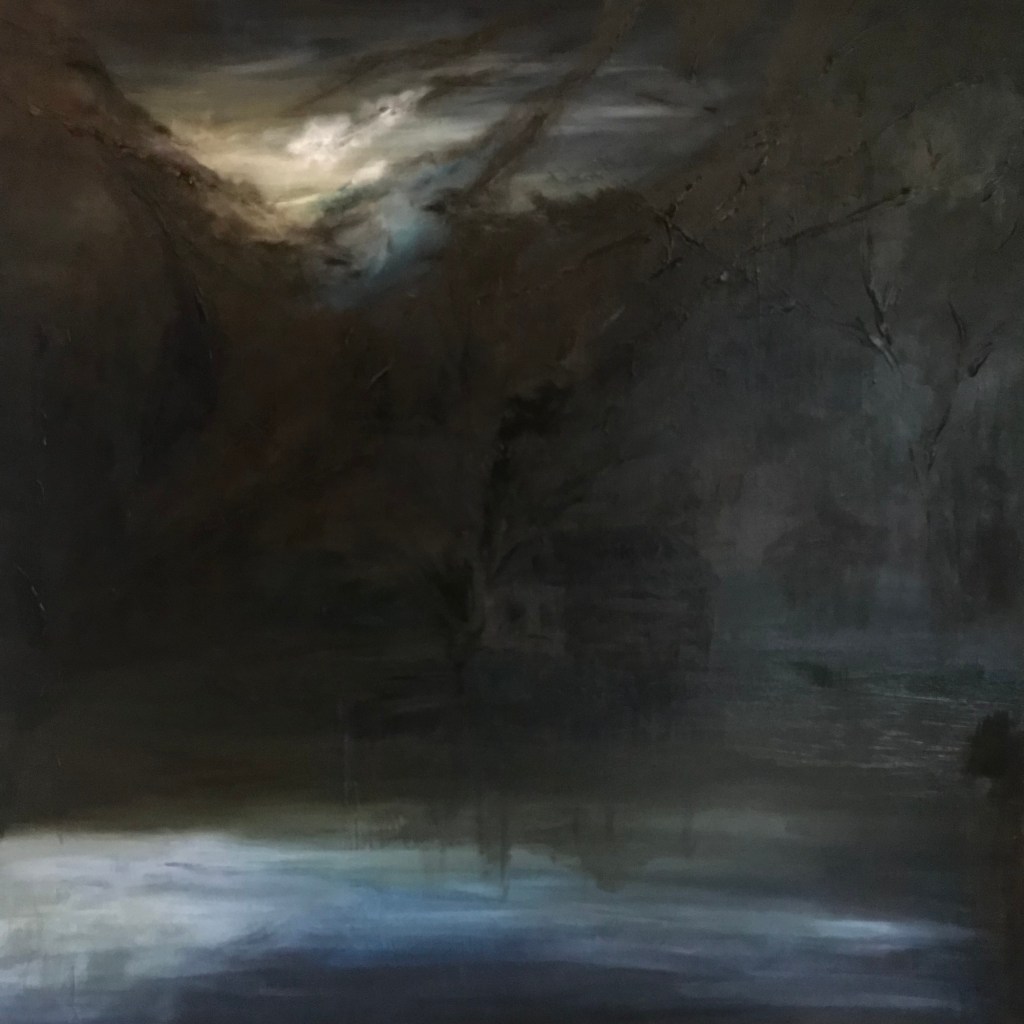
This week I had the wonderful opportunity to chat to the incredibly talented artist Annabel Carington. Annabel is fascinated by the relationship between language and images and I reached out to her after seeing one of her beautiful paintings, a piece that was inspired by Elizabeth Bowen’s short story The Back Drawing Room. This is one of my favourite stories, I have written a review about it which you should check out if you haven’t already and I am going to take this opportunity to recommend the story again because it is simply brilliant. It is a mysterious and complex take on the ghost story and I adore the idea of the past haunting the present which is a theme that Bowen explores in this story. I saw Annabel’s painting and as someone who greatly admires art, I loved that she captured the mystery of this story on a canvas and I thought it was wonderful that this stunning piece was inspired by a piece of literature. 

So today’s Friday’s Choice is all about the interview I conducted with Annabel Carington over zoom. I asked her all about her love for art and literature and what inspires her and the conversation we had was just wonderful so stay tuned. I would also like to say thank you so much to Annabel for taking the time to chat with me. It was a fascinating conversation. I learned so much. It is always so lovely to speak to people who enjoy the arts and who enjoy literature and one of my favourite things to do is listen to someone talk to me about something that they are passionate about. Annabel was so lovely and so kind and I could not have asked for a more lovely chat so Annabel thank you very much. 

So let’s dive into the interview. 

When did you start painting? Have you always enjoyed art?

“I’ve been painting all of my life. I’ve always loved reading and writing, drawing and painting and as a child I was always spending my money on books and art materials. Not much has changed!”

Have you always had a love for literature or did that come later?

“I’ve always loved to read. When I was younger I might have thought of reading, writing, painting and drawing as separate things but, over time I found that they are complementary. If you look back through history it is common for writers to also be artists and for artists to also be writers, so there is something there about the two working together. I have also always been interested in these as different forms of expression and why someone chooses to express themselves in the way they do. Perhaps there are things that one can express in painting that can’t be expressed in writing. I find that very interesting.”

Would you say that literature inspired painting or was it the other way around? Did one come before the other or have they always worked together?

“I’ve always loved reading and painting but over time I’ve developed an interest in the way art is portrayed in literature. Lots of writers write fiction about art and I find the crossover or differences in interpretations of art in literature fascinating. I’m particularly interested in early 20th century art and how this is portrayed in writing. 

The nature of what I paint has changed over time. I’ve always been inspired by the natural world and have made a lot of seascapes and landscapes. But this interest in the connection between art and literature has really developed further over the last three years, and I have become especially inspired by literature in my painting during that time, and so the ‘landscapes’ that I make now come more from this.”

Was there a specific idea or moment that made you realise that you really enjoyed creating pieces inspired by classic literature?

“Since the mid-nineties I’ve carried around T.S Eliot’s Four Quartets with me. I have read it everywhere: on public transport, in queues, in waiting-rooms, etc. I always had it with me. Then, about three years ago, I don’t know why but I decided I wanted to create a painting about these poems, so I made a painting called ‘Burnt Norton.’ The process of making that painting made me realise this was actually an entire series I wanted to make, so that one painting led to a forty-eight piece collection! There are now twelve paintings for each of the four quartets and the names of the pieces come from the name of the poem itself and then from quotations within those poems. This was a defining moment for me and a real shift in my work and the ultimate ambition and focus became to create pieces from works of literature. I now can’t imagine doing anything else. When I was making the Four Quartets series, I really gave myself to the work, and it consumed me, really. A lot of sketchbook work went into it; I made several trips to East Coker and the other locations in the poems; and I went and did the walks that Eliot did with Emily Hale to get a feel for the landscapes he walked through. I really absorbed myself in the work. It was the first thing I thought about when I woke up every morning. I also spent a lot of time thinking about the meaning of the poems as well as what they had meant to me at different stages of my life. So the paintings are a mix of personal, real, and fictional landscapes. I had to paint them and, as I say, I was consumed by the work. It’s part of me.”

I would imagine the creative process is very personal and that it can be quite emotional at times. Would you agree?

“I think the creative process can be viewed by some as self indulgent and people who don’t have that mindset are often perplexed by the thought of spending so much time on your own, working on what can be very personal ideas. You put the work first. You spend a lot of time alone and you make sacrifices because the work comes first. You never know if you’re going to be financially recompensed, or even if anyone will ever ‘get’ the work that you’re making, but all you can do is make the work that you know you have to make, because it is a compulsion. I have to make these paintings. I can’t tell you why I have to but, I have to. It’s an ongoing thing — you never switch off when you have this kind of mindset — there is the potential for inspiration everywhere, but that’s ok…I don’t want to switch off…I see it as a good thing.”

You have said that you are very interested in the relationship between language and images. Can you tell me more about that?

“It goes back to the idea that there are so many different forms of expression and I’m interested not only in why someone chooses to express themselves in the form that they do, but the ways in which these forms overlap. If you look at a writer like Elizabeth Bowen, for example, her writing is very visual. On the one hand, this isn’t a particularly unusual feature in writing of that period because of the influence of the rise of cinema, TV and advertising, so there was a shift in focus towards the visual anyway but, on the other hand, there are aspects of her work which I think are especially cinematic and so it does lend itself to some form of visual interpretation, whether that’s painting or film adaptation. She was, of course, very interested in painting, so maybe that’s another reason why this is a particular feature of her writing. When you study literature you spend a lot of time discussing imagery and the visuals that the writer creates, as well as what that does for the reader and how it affects interpretation, so I think my interest in language and images and how they work together is a natural extension of that.”

Is it frustrating if an idea is not translating onto the canvas the way you envisioned it? How does it feel when a work is complete? I’d imagine it is quite emotional. 

“I think all artists look at their work and find flaws. I think it’s a common trait because we are always striving for something which perhaps feels just out of reach and so, yes, there can be times when it can feel frustrating. Over time, though, that has evolved for me and I see it as part of my practice and process now, so rather than feeling frustrated, I tend to feel excited about where the process might take me and the work. The idea — that envisioning you mention — is something I now see as just the starting point and a lot of it gets worked out at the sketchbook stage. I’m creating a piece inspired and informed by literature, rather than illustrating words, and so I am necessarily taking myself to the work as well and so the painting can change and evolve — that is exciting! An example is my painting that was inspired by Bowen’s The Back Drawing Room: the house started off as a much larger feature in my head because I’d always envisioned the house as rather large in the story, and it is such a crucial feature of the story, but of course the painting is a different piece of work from the story and is not an illustration of it, so conveying an overall atmosphere and feeling was more important than a conventional idea of ‘adaptation’ or ‘accuracy.’ I wanted to convey the idea of dreamlike ideas, or places you can’t fully remember, because for me, that’s critical to the story and is more significant than technical descriptions.

The best feeling in the world is when you are in the studio and everything is going right. When you finish a piece it is extremely satisfying, but it can be disorienting too, because then it is finished, and this thing into which you’ve invested so much doesn’t need you anymore. The gap between finishing one piece and starting another can be strange, and it can be hard to settle on and have certainty in a new idea sometimes, but that is all just part of it. This kind of feeling is particularly acute at the end of a whole series, rather than just one piece of work, and you can even worry about losing your ability to paint altogether… that maybe what you’ve just finished is the best it’s ever going to get! Experience tells you this is never the case though, so you just have to keep turning up to the studio and carry on until the next thing starts to fall into place. This can sometimes take a while but it always happens in the end — you just have to keep going.

When someone connects with the work it is so lovely and very humbling and you feel that you have communicated something.”

How will you pick your next piece? What is inspiring you at the moment?

“I’m currently working on a series entitled Sleep. I am very interested in nighttime and how nighttime is portrayed in literature and how dreams, nightmares, sleeping and insomnia are written about in fiction and poetry. The idea of exploring what we mean when we talk about dreamscapes and dreamlike things is fascinating because dreams are so often linked to the imagination and what we regard as ‘acceptable’ cultural expression — or not! It’s challenging in a different way to the Four Quartets series because I’m creating pieces inspired by many different writers, rather than just one, so doing that while maintaining a sense of cohesion in the collection is part of the challenge and there has to be something that links the literature I choose other than simply the thematic commonality of nighttime subject-matter. Night is interesting in the history of art: artists have always painted the night but of course no one paints the day as a subject, because day is the default. Night is seen so differently, as a place and landscape in itself. And you can’t paint the night without also painting some form of light, so it’s interesting to see how artists over the centuries have chosen to illuminate their paintings of nighttime, and to then see how I can take this idea to instances of night in literature and bring those into my own painting, and think about what illumination might mean when I’m making my work.”

One thing that I like to ask people is do they have a favourite book so is there a particular book that you love?

“I love Elizabeth Bowen’s The House in Paris. I think Bowen is a very painterly writer and this is by far her most painterly work. I actually think the book is structured like a painting and works in a similar way, so in a way it’s bound to be my favourite!”

Where can people find you?

https://annabelcarington.com/

Instagram – https://www.instagram.com/annabelcarington/

I would highly recommend going and having a look at Annabel’s website and her Instagram page because as highlighted in the wonderful chat we had above, Annabel is an incredibly talented artist and I think it is amazing to see someone’s ideas expressed on a canvas in such a beautiful way so if you are an admirer of art then this will definitely be something you enjoy and if you love literature then you’ll enjoy seeing the art that literature inspired. 

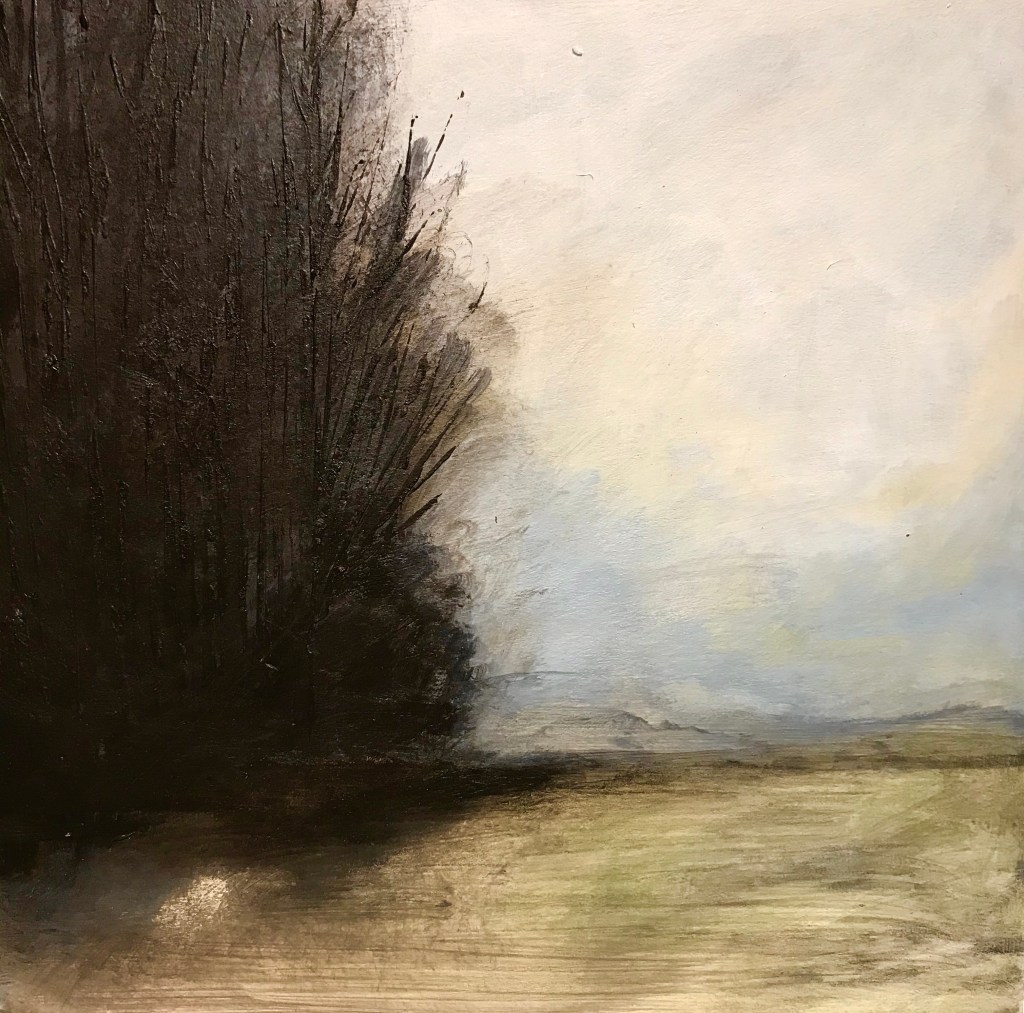
Annabel has very kindly given me permission to share photographs of some of her pieces so I’m going to share them below. I hope you enjoy this Friday’s Choice. I personally love it and I’m so glad that the opportunity arose. I hope to do more interviews in the future and again thank you to Annabel Carington for sharing her time, her experience and expertise and most importantly for sharing her work. 

I hope you all have a lovely weekend. 

Kate xo. 

A Dream Oppressed and Shifting – by Annabel Carington.
In My Beginning Is My End – by Annabel Carington.
Night Walk – by Annabel Carington.

Rhythm & Pitch.

Hello everyone and welcome back to another Theory Thursday. Last week I broke down the structure of a sonnet so if you have not read that already then you should check it out.

Today I am going to be breaking down rhythm and pitch. I have said before that some of my Theory Thursday topics will be especially helpful to anyone who is trying to become a more confident public speaker, today’s topic definitely falls into that category so be sure to keep reading!

Let’s dive into #theorythursday.

What is rhythm?

Rhythm can be referred to as the flow of speech and music.

Note – I am specifically talking about rhythm in relation to speech, while there are some overlaps between literary theory and music theory, there are some differences and if I am ever talking about music theory then I will clearly state that at the beginning of the piece.

How is rhythm produced?

We produce rhythm in speech by stress. When words have more than one syllable, one is stressed. The stressed and unstressed syllables work together to create certain patterns. That is where we get rhythm.

Rhythm can also be found everywhere. It is all around us, for example one can find rhythm in a heartbeat or in the ticking of a clock or in the sound of someone’s footsteps.

Rhythm is created by the repetition of stressed and unstressed syllables, a repetition of heavy and light sounds.

Rhythm can be found in poetry and in prose, and of course, in music.

What is pitch?

Pitch refers to the range of the speaking voice and usually one places their voice in the middle of the vocal scale – if you are singer, you may think of when warming up it is common to start at the middle C. It is a similar idea.

The voice ranges over three pitches.

There is upper pitch and we tend to use this when we are excited or nervous or afraid.

There is middle pitch which could be referred to as the ‘normal’ speaking voice. Think of how you speak on a regular basis, in regular conversation. This is your everyday voice and it is your middle pitch.

There is lower pitch which conveys sorrow or gloom, think of how you may automatically lower your voice if you have to convey bad news or if you are sad or if you are apologising.

Why are rhythm and pitch important?

When speaking, maintaining rhythm makes the speech sound natural and fluent and easy to listen to.

If you are only using stressed words then the speech can sound artificial and boring and also certain meaning may be lost if you are not emphasising the right things. Becoming a good speaker requires learning an array of skills. In order to be engaging and inspiring, it is important to speak clearly and confidently but to also remember how to emphasize your point and having an understanding of rhythm will only be an asset to you when you are speaking.

Pitch is important because we use pitch to express our emotions. If there is no variation in your pitch then your entire speech will risk sounding monotone and dull. You lose the interest of your listeners and again, certain meaning may be lost if you do not convey the emotions that your speech needs. How can an audience believe something is exciting if you sound bored talking about it? Having an understanding of pitch will enable you to make sure your speech is varied and filled with emotion and nuance and doing this will help you become the engaging speaker you want to be.

So this has been my breakdown of rhythm and pitch. I hope you enjoyed it. I hope it is helpful especially to those of you who voted for more public speaking content in my Instagram polls. If you have any questions then please do leave a comment, I am more than happy to get back to you.

This has been Theory Thursday.

Kate xo.

The Devil Wears Prada.

Hello everyone and welcome back to another Movie Monday. If you are a Disney fan like I am then I am sure you’ll know that Disney’s Jungle Cruise was released recently. The movie which stars Emily Blunt and Dwayne Johnson debuted atop the North American box office charts with a sum of $34 million and internationally the movie is said to have amounted at $90 million.

There will be a #moviemonday discussion all about Jungle Cruise coming up soon however seeing this movie made me realise how much I like Emily Blunt as an actress and it made me go back and watch one of my favourite movies that she is in which is The Devil Wears Prada. So let’s dive into Movie Monday.

The Devil Wears Prada starring Meryl Streep and Anne Hathaway came out in 2006. The movie was directed by David Frankel and the screenplay was based on Lauren Weisberger’s novel. A fun movie fact is that due to the designer labels that were used, this movie is one of the most expensively costumed movies in cinematic history.

Plot.

Anne Hathaway plays Andrea (Andy) Sachs. She is an aspiring writer who dreams of being a ‘real’ journalist who writes hard hitting articles about important topics. She could not care less about fashion but she still gets as job as an assistant to editor-in-chief of Runway Magazine, the demanding and brilliant Miranda Priestly (Meryl Streep). The goal is to work at Runway for a year, meeting writers and editors in the hopes of making connections and landing a dream job somewhere else.

At Runway the awkward and disinterested Andy meets the very driven and passionate about fashion Emily. (Emily Blunt) and the honest and tough loving and fabulous at his job Nigel (Stanley Tucci). At Runway Andy learns about fashion, she gets a wardrobe upgrade, she is pushed to her limits and challenged to the point of quitting but then she reevaluates her goals and decides that the perseverance will be worth it. With her renewed determination Andy starts to improve and even thrive in her new environment and she learns that fashion is not as silly as she once believed. This job challenges her professionally and privately and at Runway Andy learns a difficult but important lesson – being the best and being on top requires choices and consequences and if she wants to achieve her goals then she is really going to have to work towards them. This is a business. It is not personal and Andy learns that these choices are not always kind ones.

Characters.

I would say that this movie has four main characters – Miranda, Andy, Emily and Nigel.

We also meet an ensemble of characters who are important to Andy’s personal life – her boyfriend Nate and some friends, and there are also some new side characters that Andy meets in the fashion world.

Miranda Priestly is a very intimidating woman. She is brilliant at what she does. She is demanding and at times she seems impossible to please however she gives her all to her job. She is extremely successful in her professional career but her personal life is not so happy. Miranda is a character who I appreciate much more when watching as an adult. When you are young it is so easy to call her a mean woman who is very unlikable and nothing else however as an adult, it is clear that Miranda is a complex and nuanced character. She chooses her career. She chooses work. She chooses to be excellent and to her, all those personal sacrifices are worth it. Yes she is demanding but she is extremely driven and that is admirable. She is willing to make the tough calls and some of them are cruel – the ending of the film demonstrates this perfectly however I won’t spoil it. If you know you know and if you don’t know watch it.

Andy is naive. She is full of aspirations and potential. She learns a lot about herself over the course of this movie which I enjoy. She starts off not caring about fashion and scoffing at those who do. She is quickly knocked down a few pegs at Runway which I think is needed for her character development. Laughing at someone’s interests because they are different to yours is not endearing in any way and just because Andy deems fashion as unimportant does not mean that it is. This is a lesson that Miranda teaches her in the immaculately delivered ‘pile of stuff’ monologue – I would recommend this movie for this monologue alone. Andy meets new people and experiences new challenges and this job at Runway allows her to learn about herself. She is a changed person at the end which is satisfying to see and she does learn the key lesson which is we must each make our own choices and decide who and what we want to be and what we are willing to do to reach our goals. Andy makes her own choice after the experience at Runway opened her eyes.

Emily is passionate about fashion and style. This is her dream job. She is hardworking and all knowing and she helps Andy learn the ropes despite refusing to hold her hand. Emily is the type of girl who Andy would have scoffed at in the beginning and Emily has no patience for Andy’s disinterest. She is driven and for Emily, the thing that makes it all worth it is the opportunity to go to Paris with Miranda for fashion week. Emily Blunt plays this character brilliantly. She is sharp and witty and even in what are meant to be some meaner moments, Blunt plays her in an incredibly funny way that I can’t help but love her.

Nigel is the talented art director and Stanley Tucci plays him wonderfully. He takes on a mentor role and he helps Andy fit in more at Runway, starting with a wardrobe change and ending with a tough love reality check. He tells Andy to stop expecting gold stars for the bare minimum and to stop behaving as though she is above everyone at work. ‘A million girls would kill to work here and you only deign to work here.’ Nigel represents hard work and perseverance and it is he and Emily who pay the price for choices made by Miranda and Andy – again no spoilers, watch the movie!

Nate & Co.

There are many ways one can interpret the character of Nate. Some agree with him, some hate him. An amusing meme that I’ve seen lately is that he is the real villain of this movie instead of the ‘horrible’ Miranda and I tend to agree with this estimation. Nate is a terrible boyfriend in my opinion. He does have some valid points however overall he gets a no from me. He and Andy’s friends laugh at fashion, just as she used to and they get annoyed when her job starts taking up all of her time and they never see her. Some may see this as a valid complaint and it is to an extent however there never seemed to be any support from her friends, who had no problem accepting the expensive gifts Andy brought them from work. They never seemed to give any consideration to the fact that Andy was paying her dues and working towards her goals. Nate in particular feels Andy is changing and while this can be a valid complaint, I feel that the idea that a partner can never change or develop new interests is not one that should be made popular and Nate is a chef so he should be more understanding about working odd hours in busy and demanding environments. Communication is a character flaw, on his part and on Andy’s part. They should have sat down and had a proper discussion about their issues. Nate should have said he misses her and feels as though they have nothing in common anymore and Andy should have been honest about the fact that after learning more about the fashion world she realises it is nothing like she imagined it and she should have been honest about the fact that she was beginning to enjoy her job. Alas there are so many plots that involve miscommunication and if all characters sat down rationally then we have no movie.

Disclaimer I don’t think Nate is a bad guy – he’s just not the type of guy I’d want to date and her friends could have been more understanding and issues could have been discussed better but again, what’s a plot without conflict?

I also do not consider Miranda to be the villain. She is a flawed character who does bad things at times but she is also an incredibly driven business woman who has chosen to put her career first and as Andy so rightfully points out, ‘If Miranda was a man all anyone would say is how good she is at her job.’ Miranda is all too aware of the personal costs her professional life entails and she has decided that those costs are worth it.

Structure & Themes.

I would say this is a movie that could be described in three sections – The initial struggle. Adapting. Choosing. I would say that the movie’s themes match that structure very well.

Let’s look at the themes of this movie. The cost of success. Learning and growing as a person. The tension between one’s personal life and one’s professional life. Achieving dreams. The cost of dreams and most importantly, choices. This movie teaches a very important lesson about choices. All decisions have aftermath and consequences. Some impact you wonderfully and others badly. So it is up to the individual to make their own choices and decide if the consequences are worth it.

Andy makes many choices. She chooses to work for Miranda. She chooses to stick it out. She chooses to put in more effort and improve and this choice is reflected in the middle of the movie.

In the beginning Andy is awkward. She makes mistakes. She’s not interested and then we see her improve. Her outfits become more high fashion. She becomes more confident and the movie begins to flow more smoothly just as Andy does. We watch her go from struggling to adapting to thriving and then the key point in this film is at the end when Andy must decide what kind of life she wants and that is how this movie ends, with Andy choosing.

So her character has three stages – awkward – gaining confidence – clear ideas about who she is and what she wants so since Andy is our main protagonist, I would say the structure matches her personal journey which is satisfying to watch.

Final Thoughts.

The Devil Wears Prada is an entertaining film and I think Meryl Streep and Emily Blunt make this movie. Anne Hathaway is a wonderful Andy but I personally prefer Streep’s and Blunt’s characters.

I would recommend this movie. I think that fashion lovers will appreciate the attention to detail and anyone who has a dream they are working toward will understand the journey and I think if you just like good movies with conflict and comedy then this is a great movie to watch on a rainy day.

This has been Movie Monday. Let me know what you think of this movie.

Kate xo.

A Little Snap Of History.

Hello everyone and welcome back to Friday’s Choice. I hope you all had a good week.

Today’s Friday’s Choice is a little bit different as I’m not discussing a piece but rather I am sharing a little snap of history because I think it’s really interesting and if you are a fan of literature and you’re following my blog then hopefully you will find it interesting too.

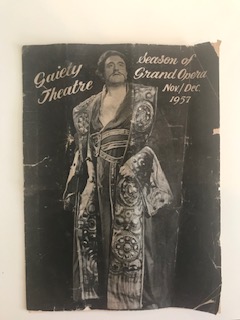
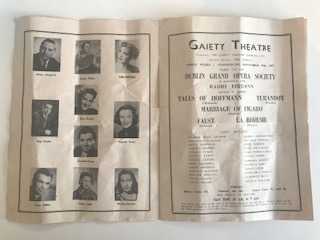
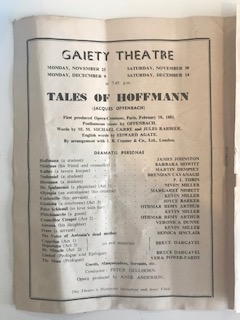
Something that I love about where I’m from is that Dublin is steeped in literary history. Dublin is home to some incredible theatres, one of them being the Gaiety Theatre. The Gaiety Theatre opened in 1871 and I am lucky enough to have a program from 1957.

I absolutely love this program. I love that it gives me a glimpse back in time and from reading it you can get an idea about what was going on at that time. What I love about it most is that I think it just proves how universal theatre is. Theatre is and has always been a communal experience and yet it is also a personal one.

When you go to the theatre, you are sitting in an audience and then the lights go down, the curtains open and we all watch something together. We all watch the same show and yet we can all leave feeling different. Some will love it, others may hate it, some will feel deeply moved, others may be indifferent because even though we have all watched the same show, theatre can move people in different ways and that is what makes it so interesting. I love chatting to my friends after a show and learning what stood out for them and seeing if it is different to what stood out for me and I just love the idea that even though times change, shows change, and audiences change that some things stay the same.

The next time I go to the Gaiety or to any theatre, I will get a program. In 1957 an audience gathered and someone got a program and now in 2021 I have it and I love it. I love it because it is a little snap of the past, it is a snap of literary history and it is a very special addition to my program collection.

I hope you all enjoyed this Friday’s Choice. It was something different but the goal is that every week is new and different. I hope you like the snaps below. Do you have pieces that mean a lot to you? Any snaps of the past? I love reading comments so let me know.

I hope you all have a lovely weekend. I am already looking forward to Movie Monday.

Kate xo.

The program cover xo.
A snap of the cast xo.
A snap of the Tales of Hoffmann page xo.
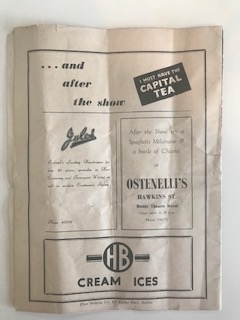
A snap of the back page with the advertisements of 1957 on the back xo.

Structure in Poetry – Sonnets.

Hello everyone and welcome back to another Theory Thursday. Last week I broke down Rate & Pace so you should check that out if you haven’t already. My Rate & Pace breakdown will be the first of a few Theory Thursdays that I feel will be really helpful when it comes to helping readers get better at public speaking.

I ran a poll on my Instagram –@katelovesliterature, you should follow me there if you don’t already. I asked if people would find tips and advice about how to become a more confident speaker helpful and the response I got was very positive so going forward there will be more Theory Thursday breakdowns that are aimed towards anyone who may wish to become a more confident speaker whether it be for presentations, interviews or just day to day conversations. It won’t be every single week as I like to do something different and keep things fresh so there is something for everyone, but going forward I will be including more public speaking tips so if that is something you know you would find helpful then do stay tuned and do keep tabs on my Instagram because then you will see when a piece that you might find helpful is coming up.

Today though is all about poetry. Going forward I am going to be breaking down all aspects of poetry here on Theory Thursday, I’m going to discuss form, style, poetic techniques and much more and today I am starting off with structure and I am starting off with a sonnet.

There are many types of poems and a sonnet is one of them. So let’s dive in.

What is a sonnet?

A sonnet is a lyrical poem that consists of fourteen lines. The sonnet dates all the way back to the thirteenth and fourteenth centuries. The sonnet was originated in Italy and it was perfected by Petrarch and Dante and it became popular in England in the sixteenth century as it was used by well known English poets such as William Wordsworth and William Shakespeare.

A sonnet is written in iambic pentameter. What does this mean?

Iambic pentameter refers to the rhythm that the words establish in a line. The rhythm is measured in small groups of syllables, these are referred to as ‘feet’. Iambic pentameter is extremely popular, in fact it is one of the most commonly used meters in English poetry.

Shakespeare famously used iambic pentameter in his plays and in his sonnets, and so now that we are more aware of what iambic pentameter is, we can now look at a sonnet and how it is constructed.

A sonnet is a very specific and disciplined style of poem because in a sonnet every word is important.

There are two kinds of sonnet – The Petrarchan Sonnet (also can be referred to as the Italian Sonnet) and the English Sonnet.

In the Petrarchan Sonnet, there is a clear break between the first eight lines and the following six lines. The first eight lines introduce the poem’s theme and the following six develop that theme or introduce something new. The rhyming scheme of a Petrarchan Sonnet is usually ABBA ABBA CDE CDE OR CD CD CD.

The first eight lines are called an octave and the following six are called a sestet.

In the English Sonnet, the theme is introduced in the first four lines and developed in the next eight. Sometimes each stanza can deal with a different aspect of the overall theme and it is usually summed up at the end. The rhyming scheme of an English Sonnet is usually ABAB CDCD EFEF GG. In each stanza, the mood may be different and so the speaker should reflect this if they are reading a poem aloud – that however will be a different Theory Thursday as how to go about reading a poem aloud is an entire blog post in itself.

Why is this important?

The sonnet as a poetic form has remained popular for five centuries so I feel that understanding how a sonnet is constructed allows readers of poetry to have a greater understanding of the poem itself. As I said before when I spoke about Form & Themes, having an understanding of form, of how a piece is written allows us to have a greater appreciation for that piece. Having an understanding of what a sonnet is will improve close reading skills and analytical skills. It will allow you to have a greater understanding and appreciation of poetry and when this happens, a poem becomes much more meaningful.

I am aware that not everyone is an English student, but if you are studying English in school or in college then analysing a poem is something you will have to do at some point and knowing about form will be part of that analysis. When one is studying Shakespeare in school or college, analysing form will come up again and since Shakespeare famously uses sonnets in his plays, having an understanding of how a sonnet is structured will help you especially in the Leaving Cert or in your college essay.

I feel that sonnets are really useful poetic devices because they allow a poet to explore the tensions that may exist in the theme they are exploring. Sonnets tend to feature two contrasting emotions or beliefs, love and hate, winning and losing, life and death etc. and the structure of a sonnet – the introducing of a theme and then either expanding on it or arguing against it – really lends itself to the themes and emotions that a poet is expressing in a sonnet and of course I spoke about how form & theme can compliment each other already in my Theory Thursday entitled Form & Themes, which you should check out if you haven’t already but another example of form and theme working together can be found when one is analysing sonnets.

Something to note is that aspects from previous Theory Thursdays may pop up again and again in future breakdowns and this is because all aspects of literary theory are entwined with each other and once you begin to understand each aspect, it will become easier to recognise them in all works and of course that is the goal. I want English Literature to be accessible to anyone who wishes to access it and my Theory Thursday breakdowns are aimed at anyone who wishes to read about English Literature in more detail but they are also aimed at anyone who is struggling with their English classes because they may find my breakdowns really helpful and once you begin to understand the many aspects of literary theory, they become easier to recognise and then learning becomes much more enjoyable and much more layered because with each aspect, we are opening the door to English Literature more and more, and the more we understand these aspects, the more we can appreciate literature and the more meaningful literature becomes and so that is why I consider it very important to learn about literary theory and why I chose to discuss the sonnet today.

This has been my Theory Thursday. I hope you enjoyed it and found it insightful. Do you enjoy poetry? Do you have a favourite poem? If you are a student, is poetry something you struggle with? Let me know and if you do have any questions then please do comment below, ask away because I would be delighted to get back to you.

Kate xo.

The Dig.

Hello everyone and welcome back to another Movie Monday.

Today I am going to be talking about the movie The Dig. The movie has been available for streaming on Netflix since January 2021. It was directed by Simon Stone and it is based on the 2007 book The Dig, written by John Preston.

Plot.

The movie tells the tale of the excavation of Sutton Hoo in 1939. Edith Pretty hires Basil Brown to take care of the burial mounds in the grounds of her rural estate. Brown is local and self-taught and because he left school at a young age, he is dismissed when he says the mounds could be Anglo-Saxon.

As Brown works, he bonds with Edith and her son and begins to ignore letters from his wife. One day he uncovers iron rivets from a ship, suggesting that the burial sight is of someone of great importance such as a King. The news spreads fast and when Charles Phillips, an archaeologist from Cambridge arrives, he declares the site one of National importance and he takes over the dig.

Characters & Structure.

When I was watching this movie, I felt as though the introduction of different characters and the way the movie is structured went hand in hand so that is why I am going to talk about the characters and the structure together in the same section.

I would describe the structure as a structure of two phases. Phase one being the discovery and phase two being the descent. Let me explain.

The initial phase of the dig is very exciting. It is filled with discovery and anticipation, dreams and passion. Basil Brown is a humble man. He is working-class. He does not have a formal education, he learned everything he knows from his father, who learned from his father before him and I think that he has an underdog quality that is really easy to root for. It is frustrating when he is scoffed at or dismissed simply because he lacks a formal education. He has hands on experience. He is doing the work. He believed in this dig when no one else did and the dynamic he has with Edith is lovely to watch.

Edith is a character that I really rooted for because in my opinion her story is a sad one of squashed potential and bad timing. Edith has always been interested in archaeology and she even got accepted into university but instead she had to take care of her sick father. She lived her whole life putting her passions on hold, now she is widowed, and not well herself but she has got a feeling about those burial mounds. She believes there is something down there, she has a gut feeling and after all this time I wanted her to be right. I was hopeful for her because she deserves to have this moment after waiting a lifetime for it.

The second phase of the movie, which I have called the descent, is when the rest of the characters arrive, descending on the dig, and all wanting a piece of the action and more importantly, the credit.

Charles Phillips is a famous archaeologist from Cambridge and he quickly declares the site to be too important to be handled by the self-taught Brown, and he takes over the dig with his own team, who brings with them problems of their own.

His team consists of Stuart and his wife Peggy, she is a budding archaeologist who feels emotionally detached from her husband. When they arrive, Peggy meets Edith’s cousin Rory who is taking photographs of the dig. He is kind, gentle and charming and he makes her feel things she has never felt in her marriage.

While the arrival of these new characters does detract from Basil and Edith, who I did miss when they were off-screen, I did feel that the choice to introduce these new characters midway through was a clever one because it allows audiences to almost experience things exactly how Basil and Edith did. Here they are, working, digging, sharing passions and believing in this dig while all of the ‘experts’ laughed at them, and now suddenly all of these experts are arriving, and taking over and they feel they are more important and they have more knowledge and their problems are more important so even though the romantic subplot between Peggy and Rory does lack substance compared to the dynamic that was building between Basil and Edith, it does make sense that the movie would focus on them for a while because this new team has descended on the dig and they all believe they are the most important players in the game and as a viewer and as a fan of movies, I liked this a lot because I felt that this structure matched the events that were being portrayed. The dig was taken over by this new team halfway through, as was the plot and I thought that was cleverly structured.

Themes.

There are many themes explored in this movie. Passion, discovery, class differences, love, loss, and of course the past haunting the present.

The dig itself is the heart of the plot. The dig is what is most important, the dig is what is fuelling all of the other ideas that are explored. Simon Stone is a detail orientated director in this movie. The movie does explain how a dig must proceed, how dangerous a dig can be, how exciting, and it does so in a way that is easy to understand so even though I have never studied archaeology, I felt I understood the process and I enjoyed watching it play out. Another thing to remember is as this dig is happening, war is approaching. The movie signals this by having RAF planes fly overhead more and more frequently as time passes and this creates a real sense of urgency because if war breaks out, the dig must cease, ceasing with it all the discoveries that will be found deep down in the earth.

This dig is physical and it is metaphorical as while the characters are physically digging into the ground, they are also digging into the past and digging into themselves, learning about who and what came before them, and learning about themselves too. There is a sense of community despite the class differences, and despite the other issues that are happening, everyone wants to dig, everyone wants to discover what is down in the earth because doing so will open up a new world of knowledge and understanding about the past.

Final Thoughts.

Overall I really enjoyed watching The Dig. Although some historical accuracy was left out, and some details were added for a more cinematic script (which happens in movies very often), as someone who has always enjoyed history, I really did enjoy this movie. I like any stories that involve looking back at the past and discovering something and this dig was both physically and personally rewarding for the characters. The characters were intriguing, the passion, and expertise they exhibited felt believable and the story was told gracefully and simply but the feelings of triumph and discovery were really satisfying to watch. Nothing was overdone and yet you could really feel how significant this event was.

So this has been my Movie Monday. I hope you enjoyed it. Have you seen The Dig? What did you think? Let me know because I love hearing your thoughts.

Kate xo.