The beginning of November is a time when many of us think about those who we have lost.
It feels as though I am stating the obvious when I say that grieving can be a very difficult experience. Grief is a very complex feeling as many people grieve differently, and it is almost impossible to know how you will handle grief until something happens that makes you grieve.
Grief is a prominent theme in many, many works of literature as grief can be expressed in many different ways. When looking at children’s literature, the question of how does one approach the subject of grief with children is a difficult one.
Unfortunately, children are not immune to bad experiences and loss, so to pretend that children are not impacted by grief would be unfair and unrealistic, however, grief is a complex feeling and so it is a complex topic to talk about in children’s fiction.
I think it is important that children do see grief in stories, especially because children who are grieving themselves can see something that they relate to, and a story can have the power to be comforting. I also think that it is important that the topic is handled carefully, because while it is important to acknowledge that children do suffer loss and they do grieve too, it is also important that the information is given to children in a sensitive and age appropriate way, so that the story does provide comfort rather than cause more upset.
The Heart and the Bottle by Oliver Jeffers is a really beautiful story about grief.
I love this book. I cried the first time I read it because I feel that it depicts grief in a very realistic way, without being too gloomy. The story does not diminish the impact of grief, it does show how much grief can impact one’s life, but there is hope and I think having that hope is very important.
The story is about a little girl who is filled with wonder and curiosity. Her father fuels this curiosity by reading her lots of stories and answering all of her questions and encouraging her to explore the world and all of its wonders. The girl and her father are very close, so you can imagine how upset the girl was when one day she came downstairs only to find her father’s chair empty.
That empty chair says everything.
The little girl’s heart is heavy with grief, and she never wants anything to hurt her heart ever again so she puts it in a glass bottle to keep it safe. This works for a while, the girl feels nothing, but as she gets older, she learns that wrapping away your heart means that while you block out the grief, you’re also blocking out joys. When the girl decides it is time to take her heart back, she finds that it is not so easy to take it back out of the bottle.
I love this story. I love how true it is. When you build a wall around your heart, it is extremely hard to knock it down again. It is hard to be vulnerable, it is hard to put yourself out there. It is hard to risk another heartbreak, but putting ourselves out there, caring about things, caring about others, loving others, that is where we find joy, but allowing our hearts to love and find joy, means that we risk grief. The risk is worth it though.
When the little girl locked her heart away, she locked away all of her questions, her curiosity, her wonder, and she no longer took any notice of anything. Instead of locking away her grief, she became consumed by it because locking away your heart means that you are closing yourself off from life. The girl grows up and when she is a grown woman, she sees another little girl who is full of wonder, and this girl reminds the woman of all she has lost, prompting her to want to take her heart back.
Despite the story highlighting how what started off as a coping mechanism slowly became something that was hurting the girl even more, demonstrating how much grief can consume a person, overall I found it to be a very hopeful tale. One that is about finding happiness again after a loss, and how even though it is difficult, it is worth it.
Happiness can be found again, it does not mean that we are forgetting about those whom we miss. The little girl’s father always encouraged her wonder, and he would not want her to go through life without experiencing any joys. He would not want her to lose her curiosity.
The first time I read this story, it made me very emotional and it still does. I still tear up a little when the girl takes her heart back.
Taking your heart back does not mean that grief ends automatically, and it does not mean that you no longer think about those you miss, but taking your heart back means that you are allowing yourself to live fully again. You’re allowing yourself to experience joy and wonder again, and that is a very hopeful thing.
If you haven’t read The Heart and the Bottle by Oliver Jeffers, I would highly recommend it. It is a very poignant read. If you have dealt with grief, I think this book is very relatable and very comforting, and if you have not experienced grief, then this book shines a light on how much grief can impact someone, so it is important to be kind and considerate as you never know how someone can be struggling, even if they pretend that everything is fine.
Jeffers handles grief in a poignant and beautiful way, and I am very glad that I came across this story.
October isn’t over yet and I’ve decided that Edgar Allan Poe’s The Raven is a brilliant poem to read in the lead up to Halloween.
If you’re not a fan of Poe or you are unfamiliar with his work, I would recommend The Raven, because it is one of Poe’s most well-known poems. I would suggest that this poem is Poe’s most famous work, simply because of how often the poem gets parodied.
I recently watched a Halloween episode of The Simpsons. It was one of the “Treehouse of Horror” episodes, season 2, episode 3. The third section of this particular episode is an adaptation of Poe’s The Raven. It was fantastic. If you want to be introduced to this piece in a very fun way, then I would absolutely recommend this episode. The “Treehouse of Horror” episodes of The Simpsons are always great fun. I am a casual watcher, so I had never seen this particular episode before, so I was happily surprised to see that The Raven was featured. Hearing the poem again in this episode reminded me of just how much I enjoy the work of Edgar Allan Poe.
The Raven was published in 1845 and it is made up of eighteen stanzas.
I really love this poem because I think it is a piece that really demonstrates Poe’s writing style. It is no secret that I am a fan of gothic literature. I enjoy the way gothic literature subverts expectations and builds suspense. Gothic stories often take place in very vivid settings. To sum up; I love gothic literature because of how evocative it can be.
It has been said that Edgar Allan Poe is a brilliant example of a gothic writer. I would have to say that I agree with this statement because Poe’s writing often explores themes of death and despair, while also being on the verge of terrifying. Poe also uses repetition to build up a sense of urgency in his pieces, alongside utilizing descriptions to create very vivid pictures with his words.
The Raven is a poem that encapsulates all of the above mentioned characteristics. The poem is about a man who is desperately lonely and heartbroken after the death of the love of his life. On a cold winter night, a raven taps on the window and on the door. He opens the window, letting the bird in, but he slowly becomes driven mad by this raven.
The raven seems to be talking back to the man, although all the bird can croak out is the word “nevermore”. Now one can ask if the bird is actually croaking out that word? One interpretation could be that the man is imagining the bird is responding to him, or one could imagine that perhaps this bird is somehow communicating with this man.
I would say that this poem is about a man who is descending deeper and deeper into sadness and despair after the death of his wife. He thinks about how the bird will soon leave the room, leaving him, just as his loved ones have left him. The man goes on to question if he will someday be reunited with his love Lenore, but all the bird says is “nevermore”.
The man becomes more and more distraught by the raven’s response. His sadness turns to anger as he gets angry at the bird constantly saying “nevermore”. The man is driven mad by the raven, and he decides the raven is a thing of evil.
In all of my readings about The Raven, something that I have come across many times is that apparently Poe himself stated that the raven was a symbol of grief, and he felt that a raven suited the dark theme of the poem.
One could also say that this poem is a gothic romance, as it is about a man who is utterly devastated by the loss of his love, clearly showing that his love for Lenore remained just as strong after she died. He hopes to be reunited with her someday. His grief drives him so mad that he asks a raven questions that the bird cannot possibly answer.
The Raven is a beautiful, musical poem despite being so very sad. This poem is a lovely one to read aloud, and I would say that this is due to Poe’s frequent use of alliteration and repetition.
Theory Time.
Poe has used trochaic octameter in The Raven.
What does this mean?
This means that each poetic meter has eight trochaic feet in each line, and each foot contains a stressed syllable that is followed by an unstressed syllable. This is a meter that is not used often, however I would say that the rhythm it creates, paired with Poe’s alliteration and repetition is why this poem became so famous. It is musical. It flows off the tongue beautifully, and you can’t help but become passionate when you say it aloud, because you become urgent, just like the man does.
I think that the poem is very evocative because there is a lot of onomatopoeia used by Poe.
Onomatopoeia is when a word sounds like what it describes – “buzz,” “whoosh,” “splat.” These are words that are great examples of onomatopoeia.
I would argue that Poe uses quite straightforward language. The poem is easy to follow, however the repetition of very similar words can leave the reader slightly tongue twisted on the first attempt.
The Raven is an evocative, gothic poem that makes for a very eerie, moving read. It is an especially brilliant poem to turn to when one is studying poetry as this poem allows readers to analyse several different poetic literary devices such as alliteration, onomatopoeia, repetition, imagery, etc. as mentioned above. It is one thing to talk about literary devices, but it is really helpful when you can see how a writer has used these techniques to create something very beautiful and very musical.
If you’ve never read The Raven then I would highly recommend that you do. It is a brilliant October read.
Ireland not only has a rich, literary history, but Ireland is also home to some extremely talented & creative writers.
This week is Irish Book Week and if you follow me on instagram @katelovesliterature, then you will already know that everyday this week I have been recommending a book that is written by an Irish author or written in Irish.
If you don’t follow me Instagram – you should, there’s lots of fun posts happening on my page all the time – but if you don’t follow me there that’s okay because I am going to list my recommendations right here on katelovesliterature.com.
#1
The Dog Who Lost His Bark.
Written by Eoin Colfer, illustrated by PJ Lynch, & published by Walker Books, this book is a heartwarming tale about a boy & his dog. These two need each other & they get each other through hard times. I would recommend this book for anyone aged 9+. It is important to be aware that there are some mentions of animal mistreatment that more sensitive readers may struggle to read. Overall, this story is warm & up-lifting.
I’d highly recommend it.
#2
Irish Fairy Tales.
Written by James Stephens, illustrated by Arthur Rackham, & published by Macmillan & Co., this book is a stunning collection of legendary tales, all set in medieval Ireland. If you’re a fan of Irish mythology, this is a fantastic read. This book is a rich addition to any bookshelf.
#3
Beag Bídeach
Written by Sadhbh Devlin, illustrated by Róisin Hahessy, & published by Futa Fata, this charming story is about a little girl who sometimes wishes she could actually go inside her doll’s house to play with them instead of her little brother. I’m sure this is an idea that many children, and let’s be honest, many adults will be able to relate to. This story is a great way to introduce children to the Irish language & encourage them to read in Irish outside of the classroom.
#4
An Slipéar Gloine
Written by Fearghas Mac Lochlainn, illustrated by Paddy Donnelly, & published by Futa Fata, this story is an Irish language picture book that tells the timeless story of Cinderella through delightful rhymes that are accompanied by magical illustrations.
This enchanting picture book recently won the Gradam Réics Carló 2022!
The story of Cinderella has always been my favourite fairytale. It holds a special place in my heart & I’m delighted to have a beautiful Irish version on my bookshelf. I’d highly recommend it. Is breá liom é!
There are so many more Irish authors that I could write about & I hope to keep expanding my collection of books that are written in Irish. One week dedicated to Irish books is just not enough. Sometimes I’m convinced that I could talk about books for eternity.
I really enjoy recommending books. I also enjoy the challenge of trying to describe a book in just a few words, while attempting to do it justice. All of the books I’ve mentioned above are such charming reads. I will be publishing more recommendations going forward, & I will continue to speak about Irish authors & Irish books even after #IrishBookWeek ends.
My biggest goal is to continually broaden my horizons & always add to my bookshelf. I want to read books from all writers, from all places, from all backgrounds, so I will not only be talking about Irish authors, but as many authors as possible.
Subscribe to katelovesliterature.com to receive an email notifying you whenever a new piece is published. It is free!
Follow me on Instagram & TikTok if you don’t already. It’s lots of fun. My handle is always @katelovesliterature.
I love hearing opinions, comments, & feedback so don’t be shy, let me hear your thoughts.
Edgar Allan Poe’s short story was originally published in 1843.
Poe’s short story is written in the first person point of view, and an unnamed narrator takes us through how they decided to kill an old man. The unnamed narrator describes how they committed the murder, and the guilt they felt after the murder, all while they attempt to assure readers of their sanity.
Poe’s story is unsettling as it is full of contradictions. The narrator has no reason to kill the old man, but does so because they are driven mad by his eye. Poe is purposely very vague. We do not know who the old man is in relation to the narrator, which leaves the story open to many interpretations.
Is the narrator the old man’s son? Is the narrator related to the old man at all? Is the narrator a man or a woman? Is the narrator a caretaker? A servant? We don’t know. We don’t know anything about the narrator other than the fact that the narrator is driven mad by the old man’s glass eye. The narrator describes the eye as being like a “vulture’s eye” and the narrator is so tormented by this eye that they decide to act on their murderous thoughts.
I’ve always interpreted this short story to be about how one can be haunted by their conscience. I would suggest that the story’s main theme is the idea of one being driven mad by guilt.
The narrator kills the old man and disposes of his body by dismembering him and hiding him in the floorboards. The narrator cannot get away with murder because they are haunted by a thumping sound, a beating sound. The narrator is driven mad and prompted to confess by the sound of what they believe to be the old man’s beating heart, just as the narrator was once driven mad by the old man’s eye.
The narrator is consumed by guilt, consumed by the idea that others can hear the heart too, and so ultimately, the narrator confesses their crime to the police, hence the title the tell-tale heart.
Poe’s writing style is very intriguing, very gothic. He uses repetition and choppy sentences to pull readers in. The story is an enticing mix of matter of fact yet bizarre. The narrator is many things. The narrator is cold, calculated, and unflinching as they commit murder, but the narrator was driven to commit murder by an obsession with the old man’s glass eye. One must ask, why did the glass eye bother the narrator so much? Why would a glass eye bother someone so intently that they commit murder? One can ask if the eye represented something? Something that us readers are not privy to.
Poe’s short story begins in media res. This means that when the story begins, the plot is already in motion, so readers are immediately taken in by the narrator’s voice. “I loved the old man,” the narrator says, adding, “He had never wronged me.” (Poe, The Tell-Tale Heart, 1843.)
The narrator is already speaking when the story begins, so immediately readers are tasked with attempting to understand the narrator.
The story is written in the first person which means that we don’t learn anything about the old man beyond what the narrator tells us. The narrator states that they loved the old man, and that they really had no reason to dislike him or hurt him, but readers have no idea if this is true. The narrator also informs readers that they are sensitive and terribly nervous, and prone to hallucinations, so already we can say that this narrator is an unreliable one.
If the narrator is of a very nervous disposition, then there is no way to know if one can trust that events happened the way that the narrator says they did.
Sanity is brought up a lot in this short story. The narrator constantly wants to reassure readers that they are sane, but this talk of sanity is directly clashed against the narrator’s description of a cold and calculated murder. It’s very strange, because the narrator being driven to murder by a glass eye is irrational, but they carry out their plan to murder the old man without wavering. The narrator dismembers the body and hides it without flinching. These are not the actions of an extremely nervous person.
The narrator’s nervous disposition is obvious again only after the murder has been committed. The body is hidden, and now the narrator is tormented by the sound of the old man’s beating heart. The heart, arguably, represents a guilty conscience. I think it is fair to say that the heart is not actually still beating, but the narrator is feeling so guilty about their actions that they believe they can hear the heartbeat. Seeing as it is October, one could interpret this short story as a ghost story and say that perhaps the heart is still beating and the old man is purposely haunting the narrator so that the narrator will confess.
One could also examine the idea of power that exists in this story. While we don’t know who the characters are, one can assume that the old man is in a higher position than the narrator. The “vulture’s eye” is always watching, so the narrator wants to close the eye forever.
The idea that the old man’s glass eye is always watching could lead one to believe that the old man was always critiquing the narrator, always making the narrator anxious about their actions, but we cannot know this for sure because the story begins when the old man is already dead. The fact that the old man’s heartbeat haunts the narrator and forces a confession demonstrates that the old man had power over the narrator even in death – that is of course if we are looking at this like a ghost story.
If one does not look at this as a ghost story, but rather as a story about how a guilty conscience can be all consuming, it is not the old man who has power over the narrator in death after all. It is the narrator’s guilt that has the power, because that guilt gnawed away at the narrator so much that they believed they could hear the old man’s heart. The narrator’s guilt is their undoing. The narrator confesses to escape the sound of the heartbeat. One could ask if the narrator didn’t confess, would they have gotten away with it? One can imagine that the police cannot hear the heart, but the narrator’s guilt and paranoia makes them believe that they can, proving that the sound of the heartbeat is all in the narrator’s mind.
One can ask, did the heartbeat drive the narrator mad? Or were they struggling with madness all along? Would a different point of view reveal more details? Of course, but I think the reason this story is so intriguing is because there is so much we don’t know, it is extremely vague, so it forces interest.
I think that the narrator was driven mad by their own guilt, and had they not confessed, they may have gotten away with murder. I don’t think it is a ghost story, I don’t think that the heart is actually still beating, but I do think it is interesting to imagine it this way.
Have you read The Tell-Tale Heart? How do you interpret this story?
An eerie, slow-burning film about violence, obsession, and the idea of becoming a spectacle.
A review by Kate O’Brien.
NOPE was released in July of 2022 and the film was directed by Jordan Peele.
I watched NOPE for the first time a few days ago and while it is a great choice of film to talk about during #spookyseason, this film is one that will stay with me for a long time.
If you’re a new reader here at Katelovesliterature.com, you may not know that despite pushing through and watching anyways, I am not the biggest fan of horror.
I used to say that as a blanket statement – “I don’t like horror.”
I’ve realised that this isn’t true. Horror intrigues me. I can like horror and often do, the problem is that I am jumpy and squeamish. I hate blood, the sight of it makes me nauseous and so the idea of many horror films make me squirm, however if I am interested enough in a concept, I have found ways to get over my fears and watch anyways. I will begrudgingly admit that despite covering my eyes during certain scenes, I usually enjoy the films I watch overall and I am often filled with many thoughts.
NOPE is a film that I really enjoyed. I was assured that there are only two bloody/gory scenes that I would be fairly warned about and the rest of the film is a slow, suspense-filled, slow-burn.
This is true. While there are some tense scenes, it is not a gore fest and there is only one jump-scare that was quite mild, and that is coming from me. So, if you’re like me and you hate blood but you’re curious about this film, I would recommend it. The first scene that I had to look away from happens very early on, when a character gets injured. The second scene that I had to look away from happens much later on. This movie is separated into acts with title chapters so – spoiler alert-
When the Gordy section begins, I would recommend covering one’s eyes as this section opens with a long-panning, quite graphic, gory scene, but once this scene has passed, that is it. There is no more gore or shocking injuries for the rest of the movie. The third-act actually moves at a very quick pace and it even felt like an action movie at times, but I am getting ahead of myself.
All of my thoughts and opinions, and interpretations are my own, so as with any film, I may have a completely different take on it compared to someone else’s, but I would suggest that this is a film that is talking about violence, and an audience’s obsession with violence and how we can make a spectacle out of things if we don’t respect them enough.
Spoilers below.
Daniel Kaluuya and Keke Palmer star as OJ and Emerald, siblings who come together after their father dies. Their father, Otis Haywood Sr., taught his children the family business of training horses for films and television. Otis is on a horse when a mysterious coin falls from the sky, hits him in the eye and kills him. OJ and Emerald are grieving together and trying to keep the business going after their father’s death, but their family ranch has become home to an unknown presence. OJ and Emerald experience strange power outages and they also see something – they don’t know what, in the sky. The plot follows OJ and Emerald as they set out to capture video evidence of this mysterious object in the sky that appears to be eating things, including people.
I think that this film has done something really interesting, because in my opinion, this film has used alien film tropes to its advantage in order to explore various themes. As I was watching the film and trying to figure out what I think it means, there came a moment when I said, “this is an alien film.”
In some ways, it is an alien film and I’ve even heard that some people interpreted NOPE to stand for “Not of planet earth”, but according to Peele, this is coincidental. It is an alien film in the sense that the main protagonists are attempting to capture footage of of extraterrestrial beings on camera, to prove that the strange happenings that are occurring at their home are actually real, and in the process of doing this, they find themselves in danger, but I think that this film is more than an alien film. I think this is a film that uses alien plot point tropes to tell a bigger story.
I want to talk about the setting. This film is set out in the middle of nowhere on the Haywood ranch. There are some absolutely stunning visuals in this movie. There are big, sprawling, panning shots that show beautiful star filled skies, sprawling mountains, and a horizon that stretches and stretches. The Haywood’s house is a perfect backdrop for a horror film. It is a big house on a hill on a ranch out in the middle of nowhere. It is beautiful and eerie all at once. It is hard to get to and more importantly, hard to get away from. I would also argue that there are some gothic elements to this film. A very common trope in gothic literature is the idea that home becomes a place of danger rather than a place where one finds safety. In NOPE, the Haywood’s childhood home becomes the sight of odd occurrences and instead of feeling safe there, the Haywood’s are now at the mercy of whatever is in the sky. That is, they are at its mercy until they figure out what it is, and how to tame it.
In films, lighting and sound can be used in really impactful, evocative ways and in this film, the light is very important. Whenever something unsettling is about to happen, the power goes out. Lights go out, any music that is playing trails off in a rather jarring way that it is unsettling to the ear. When the thing in the sky is gone, the lights come back on and this is a signal to the audiences that our protagonists are safe – for now.
I want to talk about what I think the film’s themes are. I would argue that the film’s themes are the ideas of watching and looking, the idea of how people can become obsessed with violence and violent acts, the idea of how obsession can lead to danger, and I would also argue that the film touches on ideas about control, the want to control other beings, or the want to control the narrative etc.
This is also a film about family. OJ and Emerald are brother and sister and this is a film about them coming together and working together to defeat something. The two characters go on a journey together. If you strip away every other element, this is a film that is about grieving siblings who come together to face adversity, and that is beautiful. It’s touching. Their story really pulled on my heartstrings throughout the entire film.
Filming is a topic that comes up a lot during this film. After his father’s death, OJ takes a horse to a shoot for a commercial, but the shoot doesn’t go well because the people on set do not listen to his safety demonstration and they do not treat the horse with respect. This leads to the horse getting spooked, and even though no one was hurt, OJ loses the job. Times have been tough on the ranch and some horses have had to be sold in order to make ends meet. This leads us to meeting Ricky “Jupe” Park. Jupe was a child actor who worked on the sitcom “Gordy’s Home.” Now the adult Jupe runs a western theme park and he has been buying Haywood horses. He even offers to buy the ranch. Jupe is very proud of the work he did as a child on “Gordy’s Home”, but the thing he talks about the most, the story that he exploits, is the tragedy that happened on set. Jupe recalls the story and tells Emerald and OJ how one day, one of the chimps playing Gordy attacked several co-stars on set, and that tragic event is the reason why chimps are not used on sets anymore. Jupe witnessed this entire tragic event play out and it has had a profound impact on him as an adult, but this is a point that I will expand on later.
OJ contemplates Jupe’s offer, and Emerald encourages him to accept it, and while mulling this over, more strange events start occurring on the ranch, prompting OJ and Emerald to want to capture it on film. An important thing to note is that they want to be the ones to capture the evidence on film, because they don’t want anyone else to find out about the events on the ranch and film it, pushing the Haywood’s out. It is their family home, and they want to be the ones to tell this story, and I think this is an important point to keep in mind when thinking about who tells stories and the way that stories are told.
When OJ and Emerald go to buy camera equipment, they meet Angel at the store. Angel is a tech enthusiast and he sets up the equipment at the house. He becomes a supportive friend to OJ and Emerald and as the film plays out, he helps them capture footage of what is eventually called a UFO.
I don’t think this film has a villain, although out of everyone’s actions, Jupe’ are arguably the worst. It becomes obvious that the tragedy on the “Gordy’s Home” set had a profound impact on Jupe because now as an adult, he is obsessed with violent acts. He is obsessed with the idea of a spectacle.
The thing in the sky, the UFO, is actually animal like. It is a predator. OJ is the one who figures this out. This makes sense, seeing as it is his family that has knowledge of animals, how to train them, and also, they respect them. The film takes time to teach audiences about what not to do around horses. No loud noises, no sudden movements, don’t look them in the eye, don’t get too close. Doing these things can spook a horse. OJ figures out that the thing in the sky is predator like because it is being territorial over the ranch, and one way to stay safe is to not look up. Don’t look it in the eye.
The predator in the sky gets hungry, it scours for prey, it eats horses and sometimes it eats people, and then spits out things it can’t eat, hence the coins falling from the sky. We as the audience, learn that Jupe has become so obsessed with the spectacle that this thing creates that he has been buying the horses from OJ to use as bait to lure the thing in the sky out.
The last character I need to mention before I talk anymore about the themes is Antlers Holst. Holst is a cinematographer who Emerald calls because she wants his help getting footage of the thing in the sky, the thing that she has named Jean Jacket, referring to a horse she didn’t get to tame when she was a child. I am mentioning Holst because he has a line that I feel really captures the entire message of the film.
Holst is all about getting “the shot.” Holst warns Emerald that this thing that she is chasing, the dream that will take her to the top of the mountain, it is endless. It is a dream that “you never wake up from.”
This line is really important. This idea of chasing this dream, this idea of being obsessed with “getting the shot, the shot” is ultimately Holst’s undoing.
Holst has vast experience when it comes to capturing the extraordinary on film, and he uses manual cameras so the power outages do not mess with his footage, but he falls prey to the very thing he warned Emerald about. He got the shot. He captured Jean Jacket on film, but he wanted more, he wanted a better shot, so because he was so obsessed with getting the shot, he ignored all warnings and put himself in harm’s way. He ended up getting devoured by Jean Jacket, he died for the shot.
This is extremely significant, because I feel like this moment sums up so much of the rest of the film. Jupe is obsessed with the idea of a spectacle, so much so that he uses horses as bait, endangering them and other people too, all because he is so fixated on seeing the chaos come to life. This obsession is a direct result of what happened to him when he was on set as a child. The tragic day where so many people get extremely hurt has become a spectacle. People don’t treat it with the respect that it deserves, instead people have become obsessed with watching the clip online. People are obsessed with how awful it was, so much so that is has become almost entertaining in a very twisted way. Jupe thrives off of telling the story, even though he is still haunted by it. He loves talking to people about that day because he loves how invested and engaged people are in the story. This is why he wants to lure Jean Jacket out of the sky. He wants a spectacle, and it never seems to occur to him that by doing this, he is endangering and disrespecting other people, and the horses.
He’s not thinking about them, they’re simply part of his spectacle.
I think it would impossible to watch this film and not at all think about what it implies about animals in performance capacities. The Haywood’s care for their horses and respect them. They want their horses to be safe and healthy. Not everyone on set feels that way, Jupe doesn’t care about the horses when he is using them as bait, OJ and Emerald and Angel are the only ones who take Jean Jacket seriously. They respect the fact that the thing in the sky is a predator. It is a threat. It is not something that Jupe should be making a circus out of. Obviously times have changed compared to years and years ago, and where once upon a time large animals were used in theme parks and in circuses in unnatural habitats, this is a notion that is hugely controversial now as more and more people are against animals being held in captivity this way.
I think this idea is impossible to ignore as it perfectly ties into the idea of making a spectacle out of something that should not be one.
As we approach the end of the film, a journalist gets wind of the strange things that are happening at the Haywood ranch, so he arrives with a video camera. OJ, Emerald and Angel already have a plan set in motion about how to tame Jean Jacket so that no-one else gets hurt. This plan gets put at risk when the journalist shows up. Emerald tries to shoo him away, but he is invested and determined to get his shots. Just like Holst, he dies for the sake of filming. OJ did his best to save him but it was too late, and he too gets devoured by Jean Jacket. In his final moments, he is screaming about making sure this is filmed, make sure his death is caught on camera, so even in his final moments, he’s not thinking about his life, he’s thinking about getting his shot.
While I can’t say for certain that this was Peele’s intention, this film really made me think about social media culture and how far we will go to get the shot. How far will we go for appearances? Do we put ourselves in harm’s way by doing too many performative things?
Obviously this is quite extreme. I’ve always held the opinion that social media can be nothing more than lighthearted and fun as long as you behave responsibly and remember that so many things are created and altered so it cannot be viewed as the be all and end all, but as in all horror movies, this idea is taken to the extreme and forces audiences to question things.
I’ve talked about it before, but there is this idea that the morbid is curious. Violence can be very intriguing. I’ve written about violence onscreen in an academic setting, and the idea that really resonated with me is the idea that when something seems so unimaginable, it is fascinating.
It is the idea of wanting to look away but being unable to do so. Audiences enjoy experiencing violence from afar, in a safe way. Watching violence is intriguing because it poses no threat to us when we are safe on our sofas, but there does come a point where you have to think about what you’re doing. Are you viewing the victims of the violent acts as people? Are you feeling sympathy for them? Are you empathising with them? Or have they become part of a spectacle? Have their feelings been forgotten entirely? It is a very interesting, and complex topic because sadly violence does occur, and to pretend it doesn’t happen ever in the media that we take in would be insincere.
How violence is contextualised is very important, and I would suggest that NOPE is a film that prompts audiences to think about the ways in which we view violence and violent acts onscreen.
Despite this movie being unsettling, I would say that it ended on a hopeful note.
I am going to spoil the ending because I want to talk about how I felt that the film had a full-circle structure.
I am very happy that OJ and Emerald both survive. I was worried that we would lose one of them, but I was pleasantly surprised when this wasn’t the case. The film ends with Emerald capturing the shot and Jean Jacket gets destroyed. OJ and Emerald work together the entire time, but in the end, Emerald is the one to “tame” Jean Jacket and I found this to be very poignant. Emerald didn’t get to train or tame the horse when she was a child, because the horse got booked for a job and because OJ was older, he got to go to work with their father, but OJ always looked back at Emerald. Now, we come full-circle. Emerald is an adult, and even though she and OJ are always there for each other, always looking back at each other, she is the one who gets to tame this Jean Jacket, and the film ends with her and OJ smiling at each other, thrilled that they are both okay as photographers and journalists start arriving with their cameras, all wanting their shot.
The cycle starts again. Something happens and we always want to make a spectacle out of it. We want the details, we want the story, we want to know because we’re morbidly fascinated by the events that have occurred, because they seem so unimaginable. I feel this will always be the way it works, because we do need news, we do need to be informed, but it is important to remember to respect the people who actually experienced the event and view them as actual people, rather than figures for our own entertainment.
NOPE is a brilliantly paced, slow-burning film that is deeply unsettling and extremely thought provoking. It is bright yet there is this constant, underlying tension that something isn’t right, something is wrong, and that sense of danger and urgency continues to build and become more intense, and then the final act moves at a very swift pace. It is perfect. It mirrors the sense of urgency that we feel as viewers. The characters must act now. The plan has to work.
It is unsettling without being excessively gory. The score is stunning, and some of the visuals are almost like a painting. Overall I would say that NOPE is an extremely evocative film, and I would highly recommend it.
On Saturday I ventured into town for a #theatretrip. I went to see Lerner & Loewe’s My Fair Lady at the Bord Gáis Energy Theatre in Dublin.
If you know me then you know that a night at the theatre is my idea of a perfect night.
On Saturday we cracked out the autumn jackets and headed into town for a day filled with coffee, food, drinks, and some gorgeous music.
If you’re in Dublin and you want to go for a bite to eat, I am a big fan of The Woollen Mills. The restaurant is right beside the Ha’penny Bridge and the menu offers a wide range of choices along with a delightful cocktail menu.
All thoughts and opinions expressed here on Katelovesliterature.com are entirely my own. I have never been paid to promote or recommend anything. I’m writing about The Woollen Mills because it is a go to spot of mine, and I’d like to share it.
The theatre was buzzing with excitement, and it is great to be in a room that is filled with so much life. My Fair Lady is clearly a much-loved film, and the theatre was filled with people who love the film but hadn’t yet seen the show, or people who loved the show and the film. I fall into the latter category. I have loved the film for a very long time, and I have studied George Bernard Shaw’s Pygmalion in great detail, as well as being very familiar with Loewe’s music.
My Fair Lady the musical, directed by Bartlett Sher is a delight. The set is stunning, the music is charming. The show itself is funny, endearing, and full of passion. I laughed and cried in my seat, and I was in love with the beautiful costumes.
The entire cast was incredible and very deserving of the standing ovation that they received. I think a show like this would be a very hard one to step into because the roles are so iconic and audience members who absolutely adore the Audrey Hepburn adaptation have high expectations, but the cast definitely delivered.
Charlotte Kennedy played the famous Eliza Doolittle, and she did so brilliantly. I would argue that Eliza is the hardest role to play in the show, because the actress must almost play two parts. We meet Eliza on the street selling flowers, penniless and dirty, and “insulting the English language” according to Higgins, but then as the play goes on, Eliza becomes well educated, well spoken, and she no longer fits in on the streets where she grew up. Eliza has to be determined, feisty, funny, but she also has to be endearing, charming, and likeable. That is key. As the audience, we have to root for Eliza, we must cheer for her when she triumphs, we must be on her side, and to do that, we must like her. Charlotte Kennedy was beautiful. Her voice was sweet, yet strong, and had the most gorgeous, air-like quality to it. She was a funny, very passionate, and very likeable Eliza. I was on her side the entire time, as was the entire audience.
Michael D. Xavier was perfect as the snobby, pretentious, egotistical Professor Higgins. I have to commend him as some of the songs that Higgins must sing are very fast, and very wordy, but Michael D. Xavier was clear as a bell and very, very strong. Michael D. Xavier appeared to actually tear up during his final song, and he had me moved to tears. Higgins is an interesting character because at times he is incredibly unlikable, but it is important that he has the audience on side during his last song. We don’t have to like him, but we should feel for him, and I certainly did.
The ensemble was fantastic. The dancing was precise, and very classic. The costumes were dazzling, and the cast embodied their characters in every single way.
My Fair Lady is a fun show. It is charming. I think a great way to describe it is that it is effervescent, but it is not without heart. The show puts class differences front and centre for the world to see and highlights how very often, people are separated by the opportunities that they receive and the way that other people treat them.
Eliza puts it very aptly. The difference between a lady and a flower girl is how she is treated.
I loved the show. I thought it was bright, beautiful, and full of heart.
I would highly recommend seeing it if you get a chance to, and definitely watch the film if you haven’t.
Kate xo.
My favourite spot in Dublin. A snap of the beautiful stage before act one began. My “loverly” programme.
A charming retelling of a story that most of us already know, set to a tune that will have us humming as we go.
Published by Beehive Books, Catherine Ann Cullen’s The Song Of Brigid’s Cloak is a delightful story. What better way to introduce young readers to the story of Brigid’s cloak than by sharing a tale that can also be told through song?
Catherine Ann Cullen is a talented poet who has a knack for writing charming verses that linger in the ears for a long time. Catherine’s take on the story of Brigid’s cloak started out as a song.
You can see Catherine Ann Cullen singing “The Song Of Brigid’s Cloak” at beehivebooks.ie/brigids-cloak. Catherine adapted a traditional tune to fit her bouncy, funny take on the story of Brigid’s cloak, a story that many of us would have learned in school, but likely not in such an entertaining way.
If you have not heard the tale, the book is about the Irish legend of St. Brigid. Brigid was never without her “wee small cloak.” Brigid is determined to build a church for the people, but the miserly King refuses to share one inch of his vast lands. Brigid is not deterred and she asks the King for as much land as her cloak will cover. The King took one look at Brigid’s “wee small cloak”, and laughed and laughed and agreed to her deal at once. Imagine the miserly King’s shocked face when he saw Brigid’s cloak growing, growing, and growing some more. It was the clever and determined Brigid who had the last laugh.
When I first heard Catherine Ann Cullen’s take on the tale, I was hit with a wave of nostalgia because the last time I had heard the story of Brigid’s cloak, I was in primary school.
I didn’t expect to be filled with such fondness for the tale, and I was pleasantly surprised to find myself humming the song for the rest of the day. Catherine Ann Cullen has created a delightful earworm that is sure to have younger readers singing in their seats.
Illustrated by Katya Swan, The Song Of Brigid’s Cloak plays out on beautiful pages. Katya has brought the story to life with rich colours that burst with life on the pages and catch the reader’s eye. Perfect for when we are trying to grab a younger reader’s attention. Katya’s artwork and Catherine Ann’s form go hand in hand because both are simple, and easy to follow, while still being beautiful, bright, and lots of fun.
The Song Of Brigid’s Cloak is a charming read and it is a gorgeous addition to any bookshelf. As an adult, it was lovely to return to an old story that has been retold in a fresh, musical way. A book like this, a book that combines rhythm and song with easy verses and bright illustrations is a perfect way to introduce younger readers to a well-known, well-loved tale. It encourages role play, it encourages song, it is a fantastic book that allows young readers to explore a tale in various fun and engaging ways.
The Song Of Brigid’s Cloak is available now at www.beehivebooks.ie and other bookshops.
You can find follow Catherine Ann Cullen on Instagram @catherineanncullen.
I would suggest that one will always remember the first time they read Shirley Jackson’s The Lottery. The first time I read this text I was in secondary school, in English class and I remember getting to the end and feeling a pit in my stomach. I was intrigued, I wanted to know more, and I was shocked. That is something that stands out to me when I think about stories that I’ve read throughout the years. I was also a drama student, so I have come across so many scripts, short stories, excerpts etc., throughout the years so the fact that I still remember to this day how shocked I felt when I read The Lottery really demonstrates just how impactful this text is.
Clearly I was not the only person that this text had an impact upon. The Lottery was first published in The New Yorker in 1948 and it is safe to say that this story caused ripples in the water. The New Yorker received letter after letter after letter from members of the public, demanding explanations about the story and what it meant.
The Lottery has been called one of the most famous American short stories in literary history.
Fair warning – There will be spoilers in this review.
The Lottery is a short story about a seemingly idyllic town. Set in June, on a warm and sunny day, the townspeople are gathering for the annual event – the lottery. Adults and children gather and play and chat happily before the event begins. When it is time for the lottery to take place, everyone in town separates from the merriment to stand with their family members. One by one the head of each household takes a slip from the old, falling apart yet unnervingly unwavering, big black box.
Jackson has written the story in an objective third person point of view. When a story is told through an objective third person point of view, it is slightly different compared to when a story is told through a limited third person point of view. Usually when a story is written in the third person, the narrator exists outside of the story and this means that the omniscient narrator can enter a character’s head and allow readers to access a character’s thoughts. When we can access a character’s thoughts, we can read about how a character feels. When a story is told through an objective third person point of view, the point of view remains neutral and relays events to readers almost like a camera that is filming the goings on in the story. An objective third person point of view remains neutral, this point of view does not enter a character’s head, so readers cannot access their thoughts, and so it is harder to discern how a character is feeling. An easy way to think about the objective third person point of view is to think of it like a report. The facts are relayed, but emotions and motivations behind those facts are not.
I would say that the main character is Tessie Hutchinson, but the objective third person point of view does not allow readers to get to know Tessie. As a a matter of fact, readers are not allowed into the thoughts of any character so I think that while Tessie becomes the focal point, we as readers, are somewhat detached to her. This is an important thing to note in my opinion, because the more I read this story, the more I think that this detachment to Tessie is very intentional. I think that is exactly the point.
If you have not read the lottery by now, this is the part of the review where I spoil the ending. I am going to discuss the ending as I cannot discuss the themes of this story without revealing how it ends.
As I said above, the lottery begins when the head of each household picks a slip of paper from a big black box. Tessie’s husband takes a slip, just like everyone else. Every slip in the box is blank, all except one. One slip has a black dot on it, this is the slip that Tessie’s husband Bill has taken from the box. The Hutchinson family is singled out. Tessie protests. It is not fair, she says. Her husband was rushed through picking his slip, she moans. She is ignored. There are five family members in the Hutchinson family. Tessie, Bill, and their three children. So five slips are put in a box. All are blank, except one. One slip has a black dot. Bill takes a slip. Blank. The three children take a slip one by one. Blank, blank, blank. Tessie takes her slip. The slip with the black dot. Tessie has won the lottery – that is what I thought when I first read this story, Tessie’s won, but something is wrong. Something is off.
Tessie has not won the lottery. Tessie has not won anything. Tessie has lost her life.
Tessie begins to protest again, she shouts and screams that it isn’t fair, it isn’t right.
Everyone else in village starts to collect stones, all while Tessie continues to protest. Her cries about injustice are ignored as Tessie is stoned to death.
Shirley Jackson’s The Lottery has been called a masterpiece, and I have to say that I would agree with this assessment.
This is a story that is unbelievably unsettling and upsetting, and it is very easy to see why this caused outrage when it was first published.
This is the kind of story that makes people deeply uncomfortable, it is the kind of story that is thought of as being too horrible to write. That is what makes it so important, that is what makes it so brilliant. It is a dark piece, that is undeniable, but the horrors that exist in this text, and what those horrors represent and prompt one to think about are why this story is a crucial read.
I believe that everyone should read The Lottery once in their lives. It should be a text that is taught, analysed and discussed because I think that while it was published in 1948, the story remains historically, culturally, and socially relevant and significant.
Let’s talk about the themes of the story and their importance, alongside the story’s setting and how the story’s setting allows those themes to have such a memorable impact.
I would call this story a suburban gothic. The story is set in an idyllic, suburban, American town. The exact place is not specified, but I think that adds to the idea that this could be any town USA. The story is set in June. It is summer, it is a warm, sunny day. Children are playing. It is the picture of suburbia …until it isn’t. The setting is significant. It seems unbelievable that such a horrific act could take place in a place that seemed so lovely and safe. That is the point, that violence, and horrific, unjust acts can take place anywhere, and sometimes the place that looks the prettiest can be home to some of the most awful acts. In my opinion, this is an important idea to discuss. Often, it can be argued that people think that certain places are dangerous, and it is easy to place where we live on a pedestal. It is easy to be naive and say “well things like that don’t happen here, bad things like that would never happen where I live.”, but this is very often not true. The Lottery is a story that highlights how ordinary and usually kind, reasonable people can act cruelly and allow cruelty to occur and this cruelty is allowed to occur in their safe, idyllic town.
It is very easy to act as though one is above violence, but it is important to be aware of and ensure that, actually, we are not complicit in any violence.
I would suggest that the main themes of this story are the ideas of the danger of blindly following traditions, mob mentality, and hypocrisy.
The lottery is an event that happens every year. It is an event that has been allowed to happen every year. Why? Well, the event is held because of the superstition that the lottery will lead to a good harvest, so there is this idea being put forward that a sacrifice will lead to prospering. This superstition rationalises the killing of one person, because this death leads to a good harvest, which is good for everyone else in the town. The townspeople need a good harvest. In this warped event, motivated by superstition and tradition, one could find a twisted sense of fairness. This twisted sense of fairness is almost symbolised in the narration. The story is told objectively, through the third person, there are no emotions involved. The event is presented matter of factly, and the idea that comes across is that the townspeople think that choosing someone at random through a lottery is the fairest way to decide who will die for the harvest, however readers are more likely to agree with Tessie. This is not right. This is not fair. This is wrong, this is shocking, this is unjust.
The lottery is an event that has been unquestioned for so long that the big black box that the slips are put in is old and battered. This implies that perhaps it is time to end the event, as when the lottery first started, it was wood chips not paper in the box, but now the town has grown so much that the wood would no longer fit as there has to be enough for every family member to pick one. There is talk about other towns and about how other towns have stopped doing the lottery, but in Jackson’s story, the town is committed to the lottery because “there’s always been a lottery.”
I would say that this story is pretty clearly presenting the message that clinging to traditions of old can be reductive and sometimes downright dangerous. While it is important to remember the past, it is crucial that society always moves with the times, and sometimes clinging on to something just because “it has always been done” does more harm than good. Sometimes we simply need to say enough is enough and stop doing something that no longer works – although when it comes to a story like Jackson’s, I can’t help but wonder if the point was to make readers question if this lottery was ever really fair in the first place. I would think not.
The mob mentality aspect of the story is really interesting. The story highlights how the status quo is maintained, and often it is maintained simply because no-one stands up to it. Tessie protested, but her voice was quickly drowned out, and the story makes one think about how people act when they are surrounded by people who are doing the same thing. It is the echo-chamber effect. When you have an opinion that you know is a popular one, it is easier to share that opinion knowing that you will be agreed with. It is easier to shut down change, when it is clear that there are more people that are unwilling to change than those who are, and this is where mob mentality becomes dangerous. If more people are unwilling to change, unfortunately dangerous things continue to carry on. A horrifying, yet significant aspect of this story is the fact that Tessie’s husband Bill and their children participate in the stoning of Tessie. This is an absolutely awful thing, and it is horrible to think about, but it does demonstrate how people will go along with the status quo even if doing so harms someone they love. It is perhaps one of the harshest literary metaphors I’ve come across, but the point the story makes is clear.
It is practically impossible to read The Lottery without thinking about hypocrisy.
I’m going to say the setting is hypocritical because in a story like this, the setting is just as much of a character as anyone else, and small towns that preach good values are the perfect backdrop to a story about hypocrisy. The town is idyllic, the town is lovely, the town is safe and the people are good. How can the town be idyllic if a horrific event takes place year after year after year?
How can the people be kind if they allow someone to be killed year after year after year?
The town is not idyllic. The people have simply justified extreme violence because it suited them to do so. Tessie is this year’s victim of the lottery, but Tessie is also a hypocrite.
Tessie arrives late to the lottery, she claims she forgot it was taking place that day. This highlights how nonchalant she has become about this event. The fact that she is a married mother implies that she has lived through the lottery every year up until this one. Tessie does not protest until Bill picks the slip with the black dot and even then she does not protest about the lottery, she simply complains that Bill was rushed when picking his slip. This implies that had someone else gotten the black dotted slip, she would not have said a word. She would have participated in the lottery, just like she has done every year until this one, but now she is protesting because it is her family that is in danger. Suddenly the lottery effects her and her family. I would suggest that Tessie is a very symbolic character as she represents a much larger societal issue. Tessie represents the fact that so many people do not care about injustice and are happy to let it continue until it impacts them or someone they love. When it impacts them or someone they love, suddenly it is not okay and that is hypocrisy at its finest – to say it is okay for others to suffer, but not for me.
Is it any wonder that this story caused outrage in 1948? I bet it still causes outrage today as many, many people do not like it when societal flaws and hypocrisy are pointed out.
We must point them out, this story is an extreme, horror filled example of why social flaws must be discussed, of why societal norms must be challenged if they are harmfully outdated, and why we must be always aware of violence and injustice, so that we can put a stop to it, rather than be complicit in it.
Shirley Jackson’s The Lottery is perhaps one of the most frightening kinds of horror story, because so many of the themes in the story can be applied to real life. The story is extremely evocative, it is so well written. It builds, and builds until the horrible picture unfolds completely. It is jarring, it is mysterious, it is very unsettling, very scary, and the more I think about it, it is upsetting.
That is why it is brilliant. The fact that is it so horrifically evocative is what makes it such a significant read.
If you have not read The Lottery, you must and if you have read it, tell me do you remember the first time you read it and how you felt when you did? Please let me know because I’d love to read other people’s reaction to this story.
The Haunting Season: Ghostly Tales for Long Winter Nights.
A collection of ghost stories by Bridget Collins, Natasha Pulley, Imogen Hermes Gowar, Kiran Millwood Hargrave, Andrew Michael Hurley, Jess Kidd, Elizabeth Macneal & Laura Purcell.
The idea behind compiling this collection of stories appealed to me immediately.
The idea behind this beautiful book was that winter is the perfect time to gather together to listen to ghost stories.
I love winter. Autumn is my favourite season, but there is something deliciously gloomy about winter. I can’t explain why, but I’ve always had a fondness for grey skies. In my humble opinion, there is something calming about looking out the window at a dull, grey sky. Even better, if the dull, grey sky sits above bare, leafless trees. There is something quiet about it, something peaceful. I love those days where it looks as though at any second, the grey sky would split open so snow could fall. I love crisp cold air that allows you to see your own breath.
Winter is a time that inspires descriptions & beautiful icing imagery. All of the blues and greys are juxtaposed against the warm twinkly lights of Christmas and the bright, vivid oranges of dancing flames in big fireplaces.
The stories in this book take readers from Covent Gardens to the Yorkshire Moors, and the stories inspire goosebumps at every turn. The stories range from wonderfully eerie to at times desperately sad. At times I was deeply moved, and deeply unsettled. Some of the stories, in fact some of the lines in this book stayed with me for a long time.
This collection of stories also lead me to think about the link between female mental health & horror in 19th century literature in particular. This collection of stories shines a light on how women suffered with their mental health, particularly during pregnancy and postpartum. It is very sad to read accounts of women who did not have the support, who suffered because they were dismissed as mad, when they really needed someone who understood, someone who was willing to help.
I also couldn’t help but be reminded at times of The Yellow Wallpaper by Charlotte Perkins Gilman.
This collection of stories is very evocative. The large, creepy, mysterious houses provide excellent backdrops for peculiar stories. I would suggest that there is a gothic element to the settings of these stories; big houses that don’t feel safe, suddenly making the home a place that one needs to escape from rather than find refuge in.
I’m also quite fond of the idea that someone could get lost in their own home. The idea of being in a place with rooms upon rooms and not knowing what it is in each room intrigues me greatly, as I would feel very unsettled if there were wings in my house that were unknown to me. The fact that one can be in a house yet be so disconnected from parts of it is an idea that I’ve always been fascinated by. The idea that horrors lie around you but you are unaware of them until you go exploring the unknown rooms is an eerie but intriguing idea.
There are eight stories in this book. It is hard to pick a favourite. I struggle when it comes to picking a favourite anything in general. If you have been a reader of my articles here on katelovesliterature.com for a while now then you’ll be aware of this. I like categories.
I can’t just pick a favourite movie, I have to have a favourite Christmas movie, a favourite nostalgic movie, a favourite Disney movie etc.
This collection of stories is no different. I enjoyed each one of the stories and there are times when I could say that any one of the eight are my favourite, and all for different reasons. I’m going to discuss the stories in no particular order.
I think that I would set Confinement by Kiran Millwood Hargrave aside because out of all the eight stories this one didn’t scare me, or I should say that while it did scare me, it didn’t scare me in a ghostly sense. This story was sad. It reminded me a lot of The Yellow Wallpaper. It is scary in the sense that when we look back through history, we see that so many women suffered because their health was not taken seriously, and not understood.
It is frightening to think about how many women’s lives would have been different if they had gotten the support they needed, especially when it comes to postpartum care.
I enjoyed this story. The ending made me sad. It stayed with me for a long time, but I could guess the plot and how it would play out fairly early on. It was the least “ghostly” of the stories.
Thwaite’s Tenant and The Chillingham Chair by Imogen Hermes Gowar and Laura Purcell respectably are two stories that have similar themes and stories, but both are haunting in their own way. I loved Thwaite’s Tenant. I felt that this story had a really satisfying ending. I also think that this story is the one that captured the idea behind the collection really well. This story is filled with ominous descriptions of a cold, big, sinister house that one wouldn’t want to get stuck in on a freezing, wintery night.
The Chillingham Chair handles a similar story in more suspenseful way. I feel that this story was darker than what I consider its counterpart. I would say that it is the scarier of the two stories. The idea that an inanimate object can be horrifying may seem unbelievable, but Laura Purcell is excellent at portraying objects as things that can be in fact, very frightening indeed.
Lily Wilt by Jess Kidd has the creepiest premise in my opinion, although it also feels the least realistic. The idea that a photographer would be so infatuated with a dead girl that he wants to bring her back to life somehow is unsettling, yet morbidly intriguing. This premise did remind me a little bit of Frankenstein, simply because I think that the story makes it clear from the start that bringing someone back from the dead cannot happen without consequences. This story is perhaps the most mysterious of the eight in my opinion, although at times a few more details would have been nice. Lily is a very mysterious character and wanting to know more about her is what kept me turning the pages, but we actually know nearly nothing about her at all. One might say that is the point, and if that is the case then I’m fine with that, I like a story that aims to keep readers curious and achieves that goal, but a few more details would have been nice.
As I said, this story is very mysterious but it is also perhaps the least realistic of the eight. I’m sure that some people would have the opinion that ghost stories are simply not realistic at all, and that depends on one’s belief or disbelief in ghosts.
I’m talking about a collection of ghost stories, and when one is talking about ghost stories, or myths, or legends, I think one tends to operate under the assumption that the stories being told are true, if a little unbelievable. That is how I operate anyways. When I think about storytelling around a fire, I tend to think of intriguing, magnetic stories that pull in a crowd. The stories delight and scare the listening audiences, and then later people wonder if the events of the tale really happened. That is the fun of a ghost story.
So, I am looking at these ghost stories as suspense filled and unbelievable, but true and within this scope, Lily Wilt feels the least realistic, but I enjoyed the story all the same.
A Study in Black and White by Bridget Collins keeps readers guessing constantly. This story opens the collection and I think this was a smart choice because the story is consumed by an unsettling yet intriguing atmosphere. I think this is the story that I have reread the most.
The Eel Singers by Natasha Pulley is wonderfully creepy. This story has elements that I’ve stated many times that I am a fan of; this story features protagonists who long to go somewhere quiet at Christmas time, but the people who live in the town are not very welcoming at all. We’ve got newcomers in a mysterious town. We’ve got townspeople who don’t like newcomers, and we’ve got this ever increasing idea that something just isn’t right. I love this kind of setup. I really love that unsettling feeling that builds and builds and the longer you’re in town, the more things just feel off.
I could be a little biassed because this kind of setup is a premise that I am a fan of already so when I realised that this was the route this story was taking, I was excited. I knew I’d like it before I read the entire thing, but I do think that this setup can make for an extremely enticing read, especially when it’s done well.
The Hanging of the Greens by Andrew Michael Hurley is story that gives us a mysterious story within a story. It’s rather cryptic, and the ending does involve a twist that I won’t spoil. I enjoyed this story, but personally I would call it a mystery rather than a ghost story.
I don’t think this book has to be strictly a collection of ghost stories only, as mysteries definitely fit the theme of gathering around to hear unbelievable tales. In my opinion, this story is about how the perception of the truth can heavily impact one’s life. What you do with what you think is the truth is extremely important, and when you discover new information, your entire belief system can be shattered, and all of your actions can be put under scrutiny. Information impacts the actions you take, and finding out new information after the fact can have a shocking effect. This story was engaging, but just not very ghostly. Our main character in this story is haunted, just in his own way.
Monster by Elizabeth Macneal is an interesting story about how things can be different from how they appear. This idea is a very important one, and I think that it is an important lesson to learn that things are not always as they seem. This story is interesting as it highlights how victories cannot always be celebrated if they are intertwined with mystery, I also think this story is a good commentary on how becoming too consumed by one thing can be a slippery slope to go down. It’s not my favourite story in the collection, but I did like it.
Overall this is a collection of stories that I really enjoyed reading. Some stories scared me more than others, and I enjoyed some stories more than others but it is a varied collection. It would be boring if all eight stories were exactly the same, and the collection does bring intrigue, mystery, and varying degrees of horror to readers.
The cover is also beautiful, and while one should never judge a book by its cover, this book does look absolutely gorgeous on my shelf. I would recommend it. If you like ghost stories and mysteries then I’m sure you will find something that you love within this collection. I also love a collection like this because I do enjoy short stories, I like snippets of something that could have been longer, but kept me guessing and reading a book like The Haunting Season allows readers to enjoy eight different intriguing stories, and what better time to read ghost stories than in October?
Do you have a favourite ghost story? I’d love to hear it.
The witches are back! I could not have been more excited for their return.
I loved Hocus Pocus when I was younger. I still love the movie today. Every October I look forward to getting cozy and watching Hocus Pocus in the lead up to Halloween. You can read my review of the beloved original by clicking the link below.
It goes without saying that the movie that became a cult classic was always going to be a very tough act to follow. I enjoyed the sequel. I had a lot of fun watching the movie, but beyond the fun that the nostalgia provided, the sequel’s plot left a lot to be desired. I feel that this is a story that had so much potential, but unfortunately it fell flat.
Let me explain why nostalgia is just not enough.
Before I dive into this review, I do want to say that I know this is supposed to be a fun movie for kids and some readers may think I am taking it far too seriously, but I review a broad range of texts here on Katelovesliterature.com, children’s literature included, and I’ve always held the opinion that even if a movie is aimed towards children, the plot can and should still be of good quality.
I will be drawing comparisons to the original movie as that too was aimed towards children, but the original movie takes its audience seriously, and while the original is not a perfect movie either, the plot had so much more heart, and more importantly, the movie actually had some stakes.
Let’s talk about the plot of Hocus Pocus 2. The sequel follows Becca and her two best friends Izzy and Cassie as they must figure out a way to defeat the Sanderson Sisters who have returned once again to Salem.
I have a suspicion that there were many drafts of this script, and I have a suspicion that within the final cut that aired, there were at least three other movie ideas that existed. The plot is messy, and annoyingly lacking. My biggest issue with this sequel is the fact that there are no stakes.
Let’s talk about the new cast, because before I can elaborate on the lack of stakes, first we need to talk about our new protagonists. I do want to say that I think the actors did a great job, but I feel like all of the new characters had untapped potential.
Let’s start with Becca. Becca was played by Whitney Peak, and I think that Peak did a fantastic job, but I really wish she had been given more material. Becca is the main protagonist, and one would guess that she is going to be the Max of this movie. This is another problem, one would assume that Becca is the Max of this movie, as she is the main protagonist, however the movie takes a different route and presents Becca as the Winifred of her trio. This just does not work, because Becca and Winifred are supposed to be the protagonist and antagonist respectively. I will elaborate on this point further on in my review, but first I want to discuss the fact that I feel like we barely know anything about Becca, Izzy, and Cassie.
Becca is headstrong and she has an interest in magic. That is it. That is all we know about her. We don’t meet her parents. We don’t know where this interest in magic comes from. We don’t know what is important to her. Her friends are important to her, but the movie does not set her up as someone who loves her friends more than anything, the movie just sort of tells viewers that she is a good friend. Becca is the leader of the trio, simply because she has more lines than Izzy and Cassie. Cassie is missing for so much of the movie, it is frustrating. It is frustrating because the movie clearly indicates that Becca, Izzy and Cassie are the new generation of witches. Becca is Winifred, Izzy is Mary, and Cassie is Sarah. The girls and the Sanderson sisters are even dressed in matching colour schemes. Becca is wearing various shades of green, Izzy is wearing burgundies along with her hair in a similar half up, half down pony, Izzy is at Becca’s side throughout the entire movie while Cassie has boyfriend troubles, mirroring how Mary is always at Winifred’s side while Sarah is the romantic Sanderson sister. The mirroring is obvious. I don’t mind a “passing of the torch” plot, in fact I think that “passing the torch” storylines can be quite poignant, especially when it comes to childhood classics, the problem I have with this in Hocus Pocus 2 is that the “torch passing” is far too abrupt, and it also doesn’t make any sense.
Izzy is Becca and Cassie’s best friend. She seems sweet. Her mother is named Susan. Izzy is slightly more nervous than Becca, she does not assert herself as confidently as Becca does. That is it. That is all we know about her, that and the fact that she misses Cassie and is willing to admit it, whereas Becca is clearly more annoyed with Cassie than Izzy is.
Cassie is the mayor’s daughter. Her father is overbearing. Cassie has a boyfriend called Mike, and because she is dating Mike, she has grown distant from Becca and Izzy. Mike pokes fun at Becca because of her interest in magic and as he calls it, “witchy stuff”. Mike is not malicious, he’s just a bit clueless. Becca and Izzy just want to be able to hang out with Cassie again like old times, without Mike and his friends. They don’t communicate this properly. Cassie feels like she’s been iced out of the group, she does not realise that she’s been distant with her friends, it was not malicious on her part either. Their friendship just needed more communication. That is it. That is all we know about Cassie, that she is dating Mike and Becca and Izzy don’t like Mike. So Cassie is missing for so much of the plot, and that just can’t happen if the movie wants to present Becca, Izzy and Cassie as the new, modern, trio of witches. Winifred, Mary and Sarah are always together. They are a team, a trio. If the movie wanted to have a story about friends growing apart and coming back together to face adversity, that would have been great. I think the team behind the movie thinks that the movie did in fact do that, but the reason behind the girls falling out is flimsy at best, and Cassie is not in the movie enough to establish herself as an integral part of the trio so when the girls do makeup, I don’t care as much about it as the movie wants me to. Cassie being in the group again makes absolutely no difference to their actions.
The original movie’s plot worked because the movie spent time setting up who Max is, and who is important to him. We know about Max. He is the new kid in town, he misses his old home, he’s not into Halloween the way everyone else is so he is the odd one out in class, he loves his little sister even though she annoys him sometimes, and he has a crush on Alison.
This information is easy to showcase and it sets up Max’s actions throughout the entire movie.
He wants to impress Alison because he has a crush on her so he agrees to go to the Sanderson house because Alison loves Halloween and the legend of the Sanderson sisters. Max is cocky, and he does not believe in the story of the Sanderson sisters, so he dismisses all warnings and lights the black flame candle. The rest of the movie follows Max as he has to face the consequences of his actions, he has to undo his mistake and defeat the Sanderson sisters, and he is motivated to do this because despite all annoyances, he does love his little sister and he wants to keep her safe. Max, Dani and Alison are our trio. They are guided through the night by Binx. Binx is a boy who was turned into a cat by the Sanderson sisters after he failed to save his little sister from them so the mirroring in the original is shown through Binx and Max. Max mirrors Binx because he is determined to save his sister, just like Binx was, and Binx is determined to help Max because he couldn’t save his sister so he is determined to ensure that the Sanderson sisters do not win again.
Becca, Izzy and Cassie are not guided by anyone. They kind of just have to figure things out for themselves, which would be fine except there is no real goal. There is Gilbert who owns the magic shop, and originally I thought that perhaps he would play the guiding role, as he is the one who would know the most about magic, but instead Gilbert is a character who is all over the place.
It is revealed that Gilbert created a new black flame candle and tricked Becca into lighting it, because he is obsessed with the Sanderson sisters and wanted to bring them back. It is revealed that he was one of the children in the original movie and he saw the sisters the night Max defeated them, and since then, he has been obsessed with finding a way for them to return.
In the original, Winifred is obsessed with stealing Dani’s soul and Mary and Sarah loyally follow her through all of her plans. Winifred could have followed through with her plans had she gone after any other child, but Winifred is petty and revenge driven and she felt personally offended by Dani, so she makes it her mission to go after Dani specifically. Max, Alison, Dani, and Binx must find a way to outrun, and defeat them until the sun comes up.
There is a goal on both sides. Winifred is determined to get Dani, and Max is determined to keep Dani safe.
In Hocus Pocus 2, this goal does not exist. The movie introduces so many ideas, and there were so many moments where I though “ah okay so this is the story… wait no, now there’s another thing to consider”.
The movie begins with a flashback to the childhood of the Sanderson sisters in Salem. I really liked the opening shot of this movie. It is a tracking shot of the Salem woods, and this opening shot mirrors the opening shot of the original movie. I loved this. The nostalgia hit immediately and I was excited. In this flashback, we meet young Winifred, Mary and Sarah. It is Winifred’s sixteenth birthday and the reverend wants to marry her off. Winifred refuses. Winifred talks back to the reverend and refuses to bow down to him. The reverend banishes her. Winifred and her sisters flee to the forbidden woods as they know the townsfolk won’t follow them. In the woods, the three girls meet a witch. This witch senses that Winifred is powerful. The sisters are gifted a spell book – the iconic book from the original movie. The witch makes Winifred promise to never do a certain spell, a spell that even Book dislikes. Winifred promises to never do this spell, and the witch tells the girls that a witch is nothing without her coven. The newly powerful Sanderson sisters return to town and wreak havoc by setting the reverend’s house on fire. The sisters, especially Winifred, watch on in delight as the house goes up in flames.
Title credits and then we are in the modern day.
When the Sanderson sisters return in this movie, they plan to steal Becca and Izzy’s souls so that they can stay young, but Becca pretends to be older and she leads the sisters to a Walgreens to show the sisters modern anti-aging products to kill some time. The sequel repeats the original gag in which the Sanderson sisters are baffled by modern technology and products. It is funny, but at times it is a little try-hard. I will say though, it is very obvious that Bette Midler, Kathy Najimy and Sarah Jessica Parker were having the time of their lives filming this sequel, and I did love whenever the Sanderson sisters were onscreen. I did laugh at the sisters being baffled by automatic doors, and assuming that Becca must be powerful, because “the doors parted for her”. These are the kind of cheesy jokes that made the original so charming and I did enjoy these jokes again in the sequel, even though there was an undeniable element of the movie saying “look, here is your favourite joke from the original, we did it again.”
It goes without saying that the jokes and antics of the sisters were not as original as they were the first time around. It was clear that the writers saw what went down well in the original and tried to recreate it, and this just doesn’t work because the success of the original is largely due to the fact that the movie was not trying so hard.
So the Sanderson sisters originally want to get Becca, because Becca tricked them, but then Winifred decides she is going to perform the forbidden spell – this spell will make her the most powerful witch of all. Winifred needs ingredients for this spell, and she bewitches Gilbert into gathering all of the ingredients for her, but then while he is off doing that, Winifred learns that Cassie’s father is a descendant of the reverend, so she becomes determined to get him and get revenge on the family.
There are so many things going on which leads me to the biggest problem of this sequel – There are no villains.
There will be spoilers below as I am discussing the movie’s ending.
Hocus Pocus 2 is a movie without villains, without threats, and without any real stakes.
In the original movie, the Sanderson Sisters were iconic because they posed a real threat to Max and his sister. They were villains. They lured children into the woods so they could kill them and steal their young souls so that they may live forever. They were evil – funny, but evil.
In the sequel, their goal changes so much that at times it is unclear who they are chasing or what they will do when they have caught their target. The forbidden spell is also unclear because aside from Winifred declaring that the spell will make her the most powerful, she never states what she will use this forbidden power to do. As viewers, we can guess that she and her sisters will continue to steal the lives of the children in Salem, but the movie does not present this as a real threat.
I would have been fine with the movie making Cassie’s father the villain, because the movie clearly attempts to push this idea of standing up to the patriarchy. The flashback to the young Sanderson sisters in Salem clearly wanted to paint a picture of how these three young women were targeted by men in power and outcast because they did not comply. One can think about how historically, this likely did happen. Sadly it is a fact that many innocent women were most likely called witches and persecuted because they did something that was deemed “unconventional” by the town leaders and this kind of plot point can invite audiences to think about who the true villain really is.
The flashback is rather dark. The idea that a sixteen year old teenager is “of age” and ready to be married off to someone she does not wish to be with is a dark idea and I am surprised that Disney included it considering there seems to be a trend of erasing villains happening in movies at the moment, including in Hocus Pocus 2 itself. The reverend is an arrogant bully and he takes pleasure in setting an angry mob on the young, orphaned Sanderson sisters simply because Winifred defied him. In my opinion, it would have made more sense if Cassie’s father was more menacing than bumbling. He is the mayor, and he is clearly a descendant of the reverend. So in my opinion, it would have been better and it would have made more sense if he was this movie’s villain. He could have hated Halloween, he could have been the one to cause a rift between Cassie and her friends because he disapproved of Becca and Izzy’s interest in magic. The plot would have taken an interesting turn if Cassie had to team up with Becca and Izzy but be torn because she has to go against her father. She would have to make the choice that her father’s hatred of magic and difference is wrong and she would be the one to break the patriarchal cycle of her family.
If the mayor was determined to beat the Sanderson sisters and they were determined to get revenge on him and his family, then two direct opposites would have had clear goals, and there would have been a key theme of puritan, outdated control vs magic.
Becca, Izzy and Cassie would have fallen into the area of “Look Dad! Not all witches are bad.”
Cassie’s father would have had to learn that not all magic is evil and blanket banning and hatred is not the answer. Becca would have to learn that power comes with responsibility and being obsessed with having all the power is how you end up like Winifred, so she would have to promise to always use magic for good, even though using it for selfish reasons is likely very tempting.
The Sanderson sisters would have still been evil, and they are an example of what happens when you become consumed by evil, by power and by revenge.
This did not happen. Unfortunately.
The mayor is bumbling and nothing happens to him at any time, so the obsession the Sanderson sisters have with “getting him” falls flat.
The movie’s climax is Winifred performing the forbidden spell with her sisters. What is the catch? Winifred refused to read Book’s warning about the spell – what is the warning? That Winifred will sacrifice what she loves most in order to become the most powerful witch of all.
What does Winifred love most? We should ask whom does Winifred love most? Mary and Sarah.
Becca, Izzy and Cassie realise that Winifred is about to unknowingly sacrifice Mary and Sarah so they attempt to tell them. This could have been really interesting. Winifred has always been the most obsessed with power, she has always been the one to proclaim she is the best, and her sisters are idiots. She has always proclaimed to be the prettiest, the all knowing one and she always dismisses and mocks her sisters.
There is a brilliant moment where Sarah stands up to her and tells Winifred that she is not a fool, she is a good and loyal sister and always has been. This great moment is undermined when Sarah utters out a frantic “yes Winnie” two seconds later.
The movie also leans into lore and the idea that a witch gets her powers on her sixteenth birthday, and Becca shows signs of having actual magic powers throughout the movie and it is Becca’s magic that helps her and her friends hold the witches off towards the movie’s climax. This is fine, but it kind of detracts from the charm of the original in my opinion. Max and co had to fight the witches off without powers. They relied on lore, they relied on things such as witches not being able to stand on hollowed ground and salt circles to keep them safe. Becca and co do use salt circles, but it is Becca’s powers that leads to the girls standing a chance against Winifred as opposed to the girls having to figure things out without any magic.
The Sanderson sisters having magic is what made them so threatening in the original movie. They could not step on hollowed ground? Not a problem, Winifred used to her magic to bring Billy Butcherson back from the dead so now Max and co have to contend with a zombie too.
Becca having magical powers is just another reason on the list of why this sequel is so sloppy. Becca had no inclination of having powers prior to the events of this movie, aside from stating she has an interest in magic, there is no suggestion that she has practiced spells. Her powers arrive and even though she has no idea how to use them, she is a match against Winifred who has been practising dark magic for centuries. Becca is a new witch, with no knowledge about her new powers or how to use them, she should not be able to go toe to toe with Winifred just like that.
I have another suspicion that somewhere in the drafts archives, there is a script in which Sarah and Mary turn against Winifred because they are sick of being disrespected. Winifred would have become the most evil one of all because she is so obsessed with power that she is willing to sacrifice her sisters and that would have been the last straw for Mary and Sarah.
In my opinion, it would have been interesting if Mary and Sarah were forced to join forces with Becca and co in order to defeat Winifred, and then the “passing of the torch” moment would have made more sense. Becca’s magic being able to go toe to toe with Winifred’s would have made more sense if she had Mary and Sarah on her side, because despite always being mocked by Winifred, Mary and Sarah are powerful witches who have been practising the dark arts for just as long as Winifred.
This did not happen.
What did happen? Let’s talk about it.
Winifred, Mary and Sarah perform the spell without knowing the price that must be paid because Becca and co do not get there in time.
The Sanderson sisters are overjoyed with their new powers and Winifred is happily gloating about her next move when Sarah and Mary begin to disappear.
Becca reads the warning to Winifred, explaining that she has sacrificed her sisters because they are who Winifred loves the most.
Winifred gives a heartwarming, albeit unbelievably out of character speech about how much she loves her sisters – the theme of the movie becomes clear – a witch is nothing without her coven.
Winifred pleads with Becca and Book. She asks is there anything that can be done.
There is one solution. Becca, Izzy and Cassie perform a spell that sends Winifred to her sisters. Winifred is overjoyed to reunite with them and Becca performing this spell undoes all of the spells that Winifred performed, so Billy Butcherson is able to rest in peace at last etc.
The movie ends with Gilbert apologising for the mess he caused, and Becca, Izzy and Cassie are happily friends again. They skip down the road with Book, they even do the famous and iconic “Sanderson Sisters walk” – If you know you know.
Credits roll and a post credits scene reveals another black flame candle – hinting that another movie could be possible.
I am not opposed to a movie being about the power of friendship, but Hocus Pocus 2 is not the movie for that. I don’t want to see Winifred Sanderson begging for help and reminding our new protagonist to always hold her friends dear. I want to see the evil, petty, obsessed with revenge Winifred Sanderson. I want her to be a real threat. I want the Sanderson Sisters to be villains. They are iconic characters because they are villains, but instead of allowing them to be wonderfully and comically evil for evil’s sake, Disney had to make them nice.
I’m getting increasingly tired of classic villains being undone because for some reason movies cannot just have a completely evil villain now. I am all for nuance and grey areas, in fact I adore grey areas where right and wrong is not easy to establish, however I do not like the fact that pure villains are being removed. It is fun to have a pure villain, it is fun to be scared, it is fun to have real stakes in a movie and just because a movie is aimed towards children, that does not mean that baddies cannot and should not exist.
Gilbert has a line where he says the Sanderson Sisters are evil “because they had to be but everyone loves them now” and the movie leans into, and is aware of the public love for the Sanderson Sisters – to this I say yes everyone loves them now, but everyone loves them because they are evil.
They were fantastic villains in the original movie and unapologetically so, and I am very disappointed that they have been reduced to slapstick caricatures of their original selves with no real threat behind them whatsoever.
With all of that being said, I did enjoy the movie. I had lots of fun. I loved seeing the Sanderson Sisters sing again, and there were so many times where I said “okay if this is what we are doing, I’m okay with it because it is fun”, but despite the fun, the plot is lacking in so many ways and I feel like classic characters have been diminished.
Hocus Pocus 2 is a movie that could have been fantastic, but the plot is messy and there are too many new characters who have such great potential that sadly was not reached. This is a great example of why nostalgia alone just is not enough and in my opinion, a brilliant example of why it is important that we don’t erase villains. We need villains, we need stakes, and most importantly, we need to return to a time when movies for kids weren’t afraid to be a bit scary, because that is what made them so fantastic. Real stakes, real threats, and real triumphs, that is what we need to recapture in our movies.

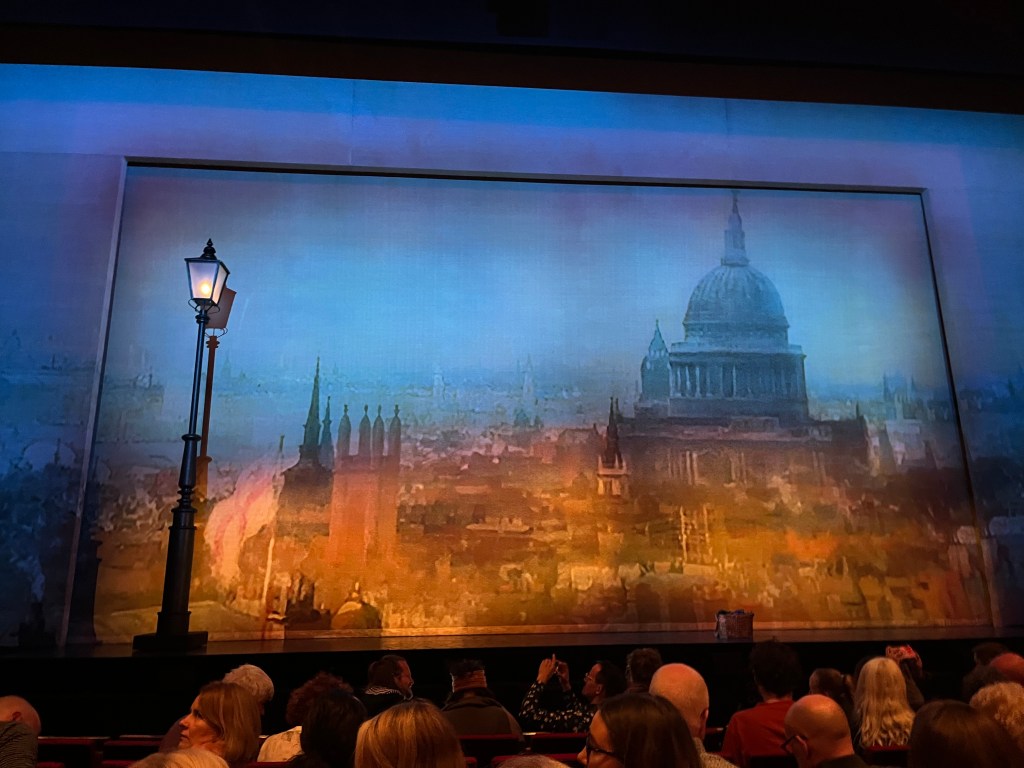

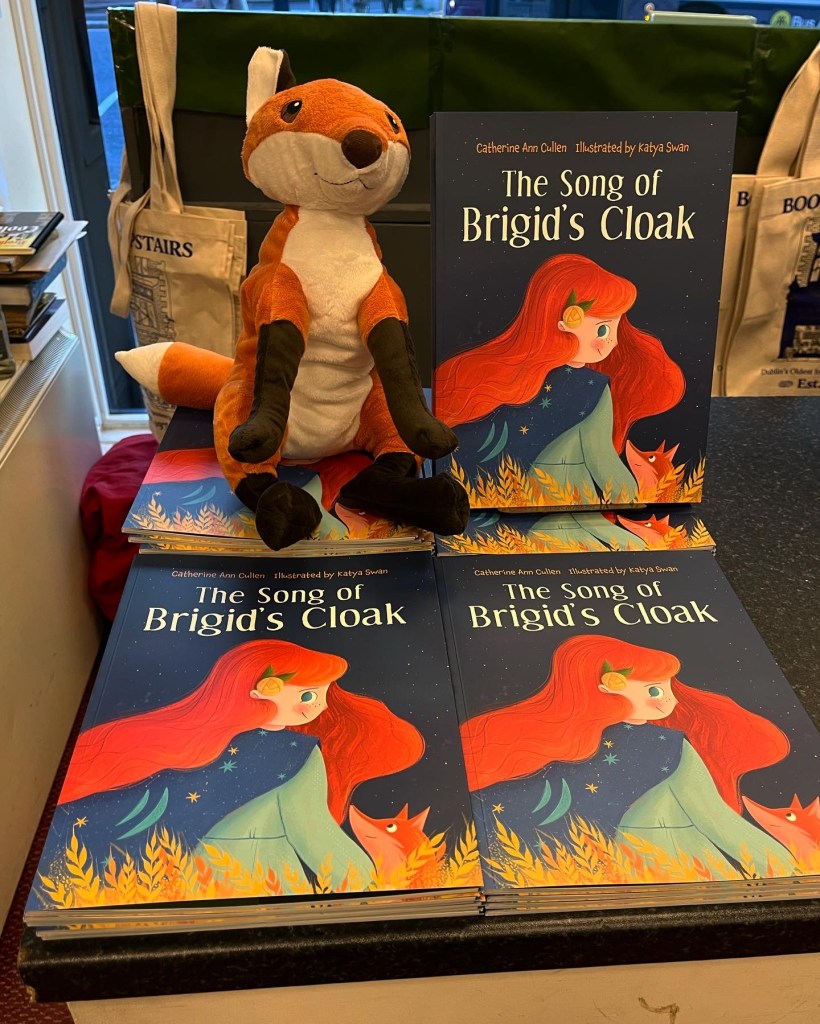
 Katelovesliterature.com