Featured

Carmilla: Early Vampire Fiction

A book review by Kate O’Brien

Would there be Dracula if there was no Carmilla? 

A dark and sensual story, set in an old castle in a dark forest, always sitting under dreary, grey skies. 

What could be a better October read? 

Young Laura lives with her retired father in the Styria forest. All is picturesque until an unknown house guest arrives. Carmilla is myserteous and beautiful. She spends most of the day asleep and her moods can be unpredictable. It appears that she and Laura have met before, in a dream that Laura had as a child. But was it really a dream? 

Not long after Carmilla’s arrival, young girls who live near the castle have started to die, seemingly from unknown causes. 

The story goes on, narrated by Laura, we follow her first-person account of what it was like being in a vampire’s gaze. Each page is filled with desire and dread, and dark secrets eventually emerge. 

It was interesting going into this book knowing that Carmilla is a vampire. Despite never having read the book before, I knew that it was an early work of vampire fiction, and I knew that the story predated Dracula, so I feel that perhaps some of the suspense was dampened. I’m sure it would have been thrilling to read this book when it was first published, when vampire traits were not so culturally established. The mystery of Carmilla’s character would have been heightened if I didn’t know anything about her before reading. 

This didn’t hinder my enjoyment of the book, it is just a thought I had when preparing to write down my thoughts. 

There are many roads that one could go down when discussing Carmilla. 

The book dives into important key themes such as sexuality, specifically female sexuality as Le Fanu presents a sapphic relationship to readers in a way that is extremely straightforward for the time that this work was published in. I would argue that vampires have an established reputation as being very sensual figures, and I think that you can see this trope being carved out in Carmilla because the act of draining someone’s blood is presented as an act that always combines pain and pleasure. Carmilla chooses beautiful young women to prey on and she enjoys biting their necks and sucking their blood, and Laura in particular, enjoys the feelings even though she is sometimes unnerved. The other major theme that this book presents is the idea of extreme class divides. 

Le Fanu takes the idea of the rich “feeding off the poor,” to a literal place. 

I want to talk about the character of Carmilla specifically, because in so many ways she is a significant literary figure that represents so much power, but she is also a villain. I found this duality the most interesting when I was reading the book. 

When you consider the gender roles and the strict societal rules of the 19th century, it is easy to look at Carmilla and identify her as a female character who defies the patriarchy. Due to her immortality, she is powerful all by herself. She comes from an aristocratic background yet she did not have to marry or have children or continue any sort of bloodline. (Pardon the pun). She uses her attractiveness to her advantage. People, (men) welcome her into their homes because of her status and because of her beauty, and she is able to take advantage of the fact that people do not see her as a threat. She is also completely unapologetic about her sexuality. There is nothing repressed about her sensual acts or her expressions of desire. 

In ways she reminds me of Milady de Winter in The Three Musketeers, yet Carmilla displays absolutely no concern towards the poor. In fact, she sees them as simply meals. She goes as far as scolding Laura for showing empathy at the funeral of a peasant girl who died due to an “unknown illness.” Carmilla states that she doesn’t concern herself with “peasants.” 

There is a disconnected attitude displayed towards the poor in general in the novella. Laura and her father describe themselves as “middle-class,” yet it is clear that they live a luxurious life in their castle. They also do not worry at all about the mysterious illness that is killing young girls, because even though they do show some sympathy towards those girls, they never see themselves as being under any threat. They view the mysterious disease as an illness that peasants simply spread among themselves. This disconnected attitude highlights how privilege creates bubbles for people to live in. Laura is not as vicious as Carmilla, who views herself as superior due to her aristocratic lineage, but she does recognise that her father’s position protects her in many ways. Carmilla’s comments at the poor girl’s funeral appear even more callous when you learn that it is she who is feeding on those young girls. There is also the implication that people were not too concerned about whatever was plaguing the villages until Laura started displaying symptoms. Now a middle-class girl is unwell, so doctors must try harder. 

It is very telling when you see some people’s lives being presented as disposable. 

It is important that we stop and ask why that is? It is also a theme that can be found in other works. 

In Jekyll and Hyde, the musical, the rich are terrified when Hyde starts murdering people in their social circles, but they are relieved later when he kills Lucy, a prostitute, showing that they don’t mind that there is a vicious murderer still on the loose, as long as he is not targeting them. 

If one removes the vampire element for a moment, it is the same when a poor person gets sick in a period piece vs a rich person. The rich person is taken seriously, and often provided with the best care. A poor person may not be able to receive any medical attention at all due to money, and there often isn’t much sympathy given. It is an example of how anyone can get sick, but not everyone can recover in the same manner and this can be due to finances alone. A rich person may arrogantly assume that an illness will not impact them, but if it does, they have a better chance at surviving due to money and care. 

I’m a big fan of the supernatural elements of Carmilla. I don’t wish to spoil the ending, but I will say that I enjoyed the ambiguity. The idea that even though a figure has been “beaten,” but they may not be fully gone is always intriguing. This idea suggests that danger could return at any time, so the “safety,” found at the supposedly happy ending is always sitting under threat. I particularly like this because I think it perfectly illustrates that gothic trope of safety being subverted. 

I would recommend Carmilla if you have not already read it. It is a great read that is not too long and the suspense builds beautifully. It is a literary classic for a reason. Even if vampire fiction is not usually your cup of tea, it is a dark and engaging tale that will captivate readers, and it is interesting to see early works of vampire fiction before mainstream tropes were commonly established. 

Be sure to follow me on Instagram if you don’t already for all updates about katelovesliterature.com 
Book Chats: Interviewing Dr Claire Hayes.

Book Chats: Interviewing Dr Claire Hayes. 

A book discussion by Kate O’Brien. 

I am very excited to share this news! So excited, in fact, that I have made a schedule change. 

If you follow me on Instagram @katelovesliterature then you will have noted that I said that this week I would be discussing poems for the summer season on Katelovesliterature.com. 

That piece is #comingsoon so stay tuned! 

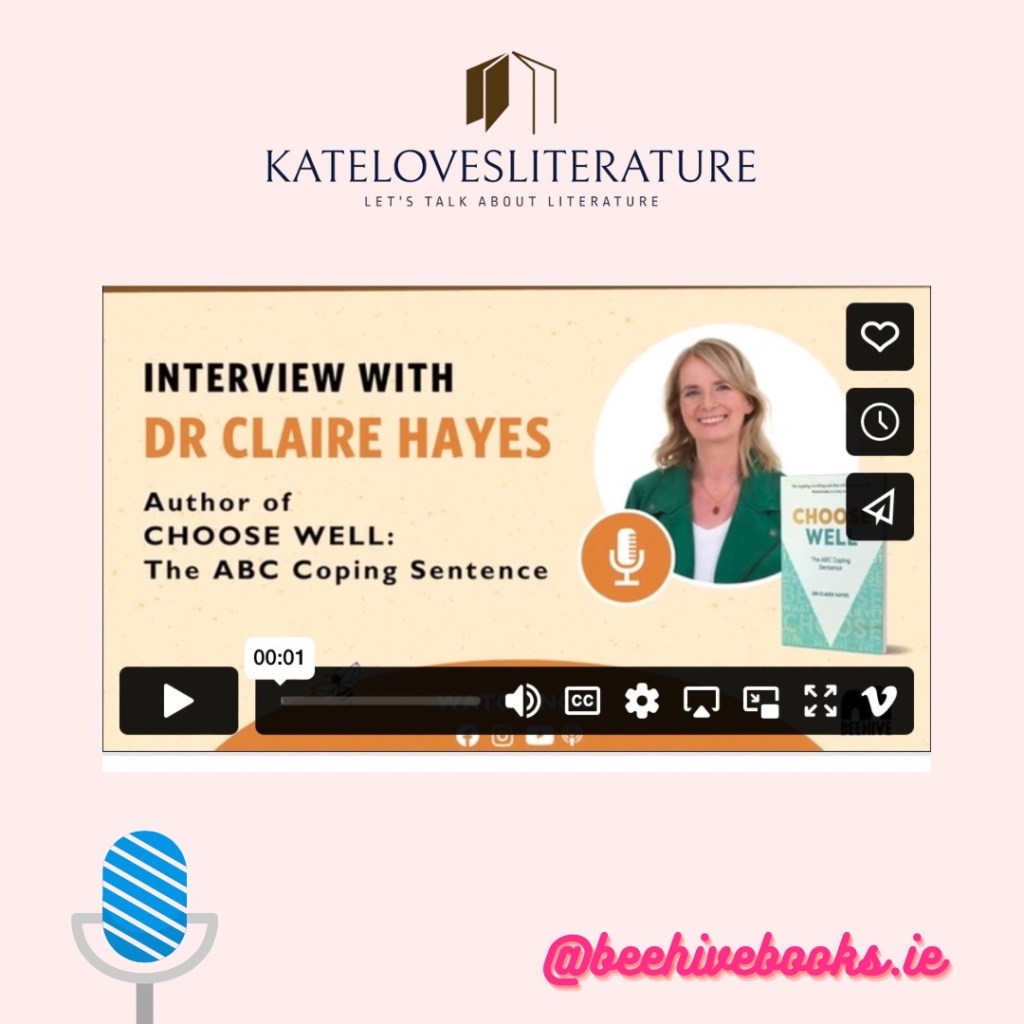
I’m delighted to share that I had the opportunity to interview Dr Claire Hayes, author of Choose Well: The ABC Coping Sentence. This is her latest book that has just been published by Beehive Books @beehivebooks.ie 

Dr Claire Hayes is a consultant, clinical psychologist, and in her newest book Choose Well: The ABC Coping Sentence, she provides readers with simple and effective tools that are designed to help people manage stress and anxieties. Her book is short and sweet, and very easy to read as her language is simple and succinct. This is an excellent book and I believe it could be a really helpful tool when used to help someone acknowledge the stress they are feeling, identify what is the cause of that stress, and then use that knowledge to find new ways to cope and deal with that stress. This book is a particularly great read for any students and parents/guardians of students who are sitting their Leaving Cert Examinations as these exams are usually one of the first big stressful situations that young adults face, and due to this book’s simple, straightforward style, this book would be a brilliant starter book when it comes to introducing mindfulness techniques to young adults. The techniques they will learn about in Choose Well: The ABC Coping Sentence, are techniques that they can carry with them as they enter adulthood. For those of us who have left the Leaving Cert behind many years ago, this book is still a fantastic read, as we are never too old to learn to take better care of our mental health. For example,  when I was reading this book in preparation for my interview with Claire, I found myself really enjoying her tips on how to reframe certain thoughts in more positive ways. 

Dr Claire Hayes was a delight to chat to. Kind, enthusiastic, and full of great advice all about coping with stress and anxieties, and of course, it was brilliant to hear about some of the behind-the-scenes aspects of the book writing process. 

I loved conducting this interview and I hope that you’ll click the link below and tune in for yourselves! Thank you so much to Dr Claire Hayes, and to Beehive Books. 

Click on this image to be taken to the full interview!

*Please note – this current discussion on Katelovesliterature.com is not an AD and not sponsored. I’m simply sharing something that I really enjoyed doing.* 

I hope you’ll enjoy my full interview with Dr Claire Hayes, author of Choose Well: The ABC Coping Sentence. 

For more info about Dr Claire Hayes, be sure to visit her website https://drclairehayes.ie/

To grab your own copy of the book, you can visit https://www.beehivebooks.ie/ 

Roman Holiday.

Roman Holiday,

A film review & discussion by Kate O’Brien.

This time last year I was getting ready to jet off to Italy for my very own roman holiday, so I am very excited to be talking about this classic Audrey Hepburn film this week on Katelovesliterature.com

Roman Holiday was released in 1953, directed by William Wyler. The film stars the iconic, elegant, Audrey Hepburn & Gregory Peck. This film was quite the success, Hepburn took home the Oscar for best actress & the costume design also won awards. Roman Holiday is considered by many to be one of the most romantic films in history.

When the film was originally released it was in black & white, the version I own is in black & white however I believe that there are versions of this film that have been colourised. While this film was not Hepburn’s first ever role, it was her first time to appear in an American film.

Roman Holiday is a romantic comedy which follows Princess Ann (Hepburn) who, while on a tour of European cities, manages to run away from the confines of royal life when in Rome. Exhausted by the constant schedules, the constant smiling, the constant very scripted answers to questions & routine, Princess Ann just wants a break. She wants a chance to see the city she is in, & she wants to spend the day doing exactly what she pleases. While on her escape from royal life, she meets Joe Bradley, a reporter for the American News Service. At first Joe does not recognise her, but when he learns that his new friend is actually the Princess, he’s determined to get the hottest scoop of the summer. He teams up with his friend Irving Radovich, a talented photographer. The pair bring the disguised Princess on a fun filled tour of Rome, snapping photos all day long as they go. Needless to say, hijinks ensue, & feelings develop, & by the end of the film, the reporter & the Princess are very much in love. Spoiler! Apologies, although I think if you’ve watched any romantic comedy before then you knew where this plot was going before I told you.

This story is nothing new, it is nothing revolutionary. It is simply good fun.

It is a straightforward, charming, easy to follow story about two people from different worlds who find a connection while they explore a beautiful city. They eat, they drink, they laugh, they dance, they famously ride a Vespa through the streets of Rome, & Hepburn is elegant in every step she takes. 

The film has no huge stakes. We worry that Princess Ann will be caught while she is exploring & later, we worry that she will be betrayed by the people she thinks are her new friends, however it soon becomes clear that Joe is falling for her too. As I said, the stakes are not huge & yet in my opinion the film manages to still subvert expectations.

In a film like this, romantic comedy conventional norms as we know them in 2023 lead us to expect certain things. As an audience, we expect a huge fight when Princess Ann learns that Joe is actually a reporter & he’s been using her all along to get a scoop. That scene never comes.

We expect Princess Ann to renounce royal life, unable to return to the schedule, instead she leaves it behind in the name of love. That scene also never comes. Instead, after bidding Joe a tearful farewell, the pair depart after a passionate kiss. The Princess returns to her life of royal duties, & Joe leaves to return to work. A press conference is held. The Princess’s absence was put down to sickness, but now she is “better,” & ready to meet the press. Joe is in the crowd.

For the first time ever, the Princess is honest in her answers. When asked what her favourite stop on this European tour has been, she begins her usual diplomatic speech about how each stop is special in its own way, but then she stops. She looks straight at Joe, & she exclaims proudly that her favourite stop was Rome. It is a memory that she will always treasure.

The film ends with Joe & Irving giving Princess Ann the envelope of all the photographs they took on their roman holiday, & the Princess is reassured that their secret adventures are safe. Joe will not be using her for his story, as by now she is more important to him than any hot scoop. The pair go their separate ways once more, exiting the press conference, walking away in opposite directions before we fade to “The End.”

I really enjoyed rewatching this classic as it is a favourite of mine. I think the film is charming. It is a light, summer watch. I think Hepburn is dazzling onscreen, & I do think that despite the stakes not being too big or too stressful, the film does manage to be very poignant especially at the end. Two people who have bonded so much, who have grown to love each other, are going in separate directions. It is likely that these two characters will never meet again, but they both will always cherish the memory of their roman holiday, particularly Princess Ann as this trip symbolises so much for her. It was her freedom, she was doing what she wanted when she wanted, she was expressing herself. She was not representing anyone or anything, she was not doing a duty. For this short time, she was living just for herself, she had so much fun. She found love & adventure in Rome & she will always look back on that time with fond memories. Yet it could not last. She had to return to her royal life & I think there is a true poignancy in that.

If you’ve never seen Roman Holiday, then I would highly encourage you to watch it.

It is a fun, poignant, bright & charming film. You’ll fall in love with Audrey Hepburn & you’ll want your own Vespa!

Stay tuned as there is much more coming up on Katelovesliterature.com
If you’d like to read all about my very own roman holiday, then click the link to read my literature inspired travel guide from last summer.

Be sure to follow along on Instagram @katelovesliterature for more.

The Book Of Lost Things: Dark, Twisted, & Utterly Moving Fairy Tales.

The Book Of Lost Things by John Connelly.

A book review by Kate O’Brien.

This book was published in 2006 by Hodder & Stoughton.

I have the beautiful, illustrated edition that was published in 2017.

The illustrations were created by Anne M. Anderson.

The Book Of Lost Things is a dark & twisted fairy tale written in the third-person that tells the story of David, a twelve year old boy who is mourning his mother. David’s world is turned upside down when his mother dies & his father remarries another woman very quickly. Not only does David have to get used to his new stepmother & a new home, but he also must adjust to having a new baby brother. David understandably really struggles to accept his new home life as he desperately misses his mother & he feels that his father moved on too quickly. David fears that his father does not miss his mother at all & he’d rather reinvent life with his brand-new family.

David finds solace in his books as he & his mother shared a passion for reading, but David’s world changes & he learns that stories are not always what they seem when the fictional world of his beloved fairy tales bleeds over into his reality. When David finds himself stuck in a fairy tale of his own, he must go on a journey to learn that good & bad, right & wrong are not always so straightforward.

I have always stated that I find age ratings difficult to apply, because a child’s reading level does not always adhere to their age & some children are more mature than others so they might be interested in, & able to handle more mature topics earlier than their peers, however I will say, & I do not say this lightly, that The Book Of Lost Things is not a children’s book. It sits on the line between being a YA novel & just a novel, full stop. I do think that fans of YA narratives would enjoy this novel as it does present tropes that are typically presented in YA narratives.

David feels like an outsider & so he goes on this journey believing that he is the outsider. In many ways, he does fulfil the archetypal YA role of “the chosen one,” there are some dystopian ideas at play because the fairy tale land that David is facing is in danger, but in many ways this novel steps beyond the realm of YA tropes. One example is the adults in this novel are not useless. The adults that David encounters play a very important role in shaping his journey as ultimately, I would argue that The Book Of Lost Things is a coming of age story & it particularly focuses on David maturing & growing from a young boy into a man.

The reason I say that this book is not a children’s book is because there is a very dark, & at times a very sinister undertone present throughout the book. This book deals with very mature & violent themes that some readers may find very upsetting and/or disturbing. This book focuses very heavily on lost & missing children, & there is a focus on the fact that there are people who do have ill intent & wish to harm children so while this book tells a very moving tale, it is not one for younger readers.

In terms of style, I would suggest that this novel is somewhat similar to A Monster Calls by Patrick Ness. Both texts feature a young boy who is becoming a man. Both boys are mourning their mothers, & both boys learn through stories that life is more nuanced than we think it is when we’re young, & right & wrong is not always so clear. Storytelling is a huge part of both texts too, as both boys have stories told to them as a way to help them grow & learn. At times I felt that David came across like he was clearly a twelve-year-old whose perspective was being written by an adult, yet at other times, he felt extremely realistic & his feelings & actions matched his age & his struggles which made him very easy to sympathise with & root for.

I think that fairy tale lovers especially will really enjoy this book because it features elements of classic fairy tales such as Snow White, Rumpelstiltskin, Hansel & Gretel, but John Connelly adds his own spin to these well-known tales & there is one twist in particular that I won’t spoil, but I thought it was really clever.

The key themes explored in this novel are ideas of overcoming grief & anger, maturing from boyhood into manhood, family & a sense of belonging, & most importantly, the key theme of this book in my opinion is the lesson that right & wrong is not always as black & white as we might assume it is & as we grow, it is up to us to learn how to see beyond our emotions & make decisions that are right for us, but that are also right for the people around us. This book really illustrates how the choices that one person makes can really impact, & even really hurt another person & if we choose to do something knowing that it will really hurt someone else then we must be able to face the consequences that come with that decision.

Overall, I really enjoyed this book & I would highly recommend The Book Of Lost Things

By John Connelly. It was an exciting, poignant read that felt like a homage to classic, dark, & Grimm fairy tales. It was a very moving tale & I was highly invested throughout. I read this entire book in one evening as I kept having to turn the page, so I would absolutely encourage readers to pick up this book but be aware that it does feature some dark themes & topics that some may find upsetting & it is not a book for younger eyes.

Stay tuned as there is lots to come here on Katelovesliterature.com
Be sure to follow me on Instagram @katelovesliterature if you don’t already.

You will see all the updates about what is coming up.

The Canterville Ghost by Oscar Wilde.

The Canterville Ghost by Oscar Wilde. 

A Short Story discussion by Kate O’Brien. 

Oscar Wilde’s The Canterville Ghost was his first story to be published in two parts. 

The story was published in 1887. This short story is set in the 19th century. 

This story is extremely popular and it has been adapted many times. 

The plot follows the Otis family as they move into Canterville Chase, an old English country house. They’ve been warned that the house is haunted, but the Otis family do not believe in ghosts … that is, they don’t believe in ghosts until denying a ghostly presence is impossible. 

I really enjoy short stories because they are snippets in time, snapshots of characters, and even though sometimes I wish this story was longer, I actually think it is almost a perfect short story. (That is, if a story can ever really be perfect, because that of course is a matter of opinion.)

This story is mysterious, it is intriguing, it is at times very witty, and there are enough different characters to keep readers hooked, without being too many for a short story. I find sometimes that if a short story is too packed with lots of different characters, it can be hard to follow and it can also feel like some people just get lost at times. There could be a really intriguing character introduced but then because it is a short story and there is not as much narrative time, that character just sort of fades away and that is always a shame – unless it is a mystery and that is the intention, but I hope what I’m getting at is clear. 

Ambiguous endings sometimes face the same issue. I need an ambiguous ending to feel intentional, I need it to feel like and read like the ambiguous ending was being built up all along,  otherwise I feel cheated because it seems like the author was just not sure how to end their tale, so therefore it is ambiguous by default which just feels unfinished. (In my opinion.)

I’m a fan of Wilde’s writing style in general, but I especially enjoy The Canterville Ghost. 

I believe this work is a piece of satirical writing, as Wilde uses gothic tropes in quite an exaggerated way. Satire or not, I’m a fan of the eerie, foreboding atmosphere that Wilde creates, and as I’ve said many times, I always love when a story is set in a creepy, old, towering house on the hill. 

In a way I think that The Canterville Ghost could be called the ultimate ghost story. 

The setting is perfectly ominous. The central characters don’t believe in ghosts and this fact makes the story’s ghost Sir Simon de Canterville extremely determined to scare the family away.

I think that this short story is incredibly layered. Three hundred years before the Otis family moved into the house, Simon de Canterville killed his wife, Lady Eleanor. Why?

He killed her because she was “too simple, too plain, and didn’t prepare his clothing properly.” 

After Lady Eleanor was murdered, her brothers decided to avenge her by murdering Simon de Canterville in an act of revenge. They locked him in a room with food and water just beyond his reach and left him to slowly starve to death. This is quite a grim prospect so you can see what I mean when I say that this short story is very dark. The fact that a character could murder his wife so casually is extremely dark too. 

Simon de Canterville takes great pleasure in being a ghost. Nothing delights him more than scaring the people who enter the house. He is able to take on various forms and he has no problem scaring people until the Otis family arrives. I would call him a sadistic figure as he seems to relish in causing fear and pain. 

The Otis family are unmoved by the bloodstains he leaves on the floor, they simply wipe them away. They do not flinch when they hear his rattling chains, they simply tell him that the noise is too loud. Virginia Otis, the daughter of the family, even scolds Simon de Canterville for trying to scare them so much and she scolds him for killing his wife. 

Simon de Canterville confesses to murdering his wife, and he tells Virginia that he has not been able to truly die for three hundred years. He has not been able to quench his thirst or satisfy his hunger. He simply wishes to die. Virginia feels pity for him. I do wonder how this would be handled if the story was adapted again in 2023 – it is very hard to sympathise with a figure who so nonchalantly murdered his wife. Simon de Canterville also scared some people so horrifically that they committed suicide. So while I do believe his confession to Vriginia is meant to be one that evokes sympathy, in all of my readings of this tale, I’ve never been able to view him as any kind of victim. Virginia however, does feel pity for him. She is told of a prophecy, Simon de Canterville can truly die if a girl cries for him and prays for him. She agrees to help him and during this time, she goes missing. She returns safely and goes on to happily marry after leading the rest of her family to the skeleton of the Canterville ghost. She informs everyone that he is truly dead now and the house is haunted no longer. She lives a happy life – but she never reveals what happened when she went missing. I suppose we are left to use our own imaginations about this.  

This story makes me think about many things. Wilde does include wit and humour in this story, highlighting how perhaps we make light of things in order to get through them. Dark humour and black comedy also tends to take very dark situations and make them somewhat funny- even though they are often topics that we can’t imagine laughing at. I also think the fact that Simon de Canterville became a ghostly figure that people were warned about is very interesting. I’d argue that he could almost be called an urban legend. Again, I think there is something deeply human here. Audiences tend to be drawn in by violent stories, and this is because they seem too violent to be true. Why is true crime popular? Because people cannot believe that acts like that actually happened. People are fascinated by true crime, people get enamoured with all the details, people want to know what happened and how? Hearing about crime, be it true or fictional, and even being taken in by a ghost story is a way of experiencing something frightening in a safe way. 

You can’t physically get hurt if you’re listening to a story, but you can get scared and spooked, and some people love a thrill. 

I think the fact that this story was published in 1887 and it still highlights how tragic or violent situations can be turned into a story is really interesting and perhaps this shows that in some ways, human nature will stay the same. Simon de Canterville killed his wife, but over time this tragic and violent act became nothing but a ghost story – and I think is a really interesting point of discussion. This story may be fiction but there are parallels of this happening in reality, for example, there is a Jack the Ripper tour in London. 

Overall I think it is a great read. Wilde’s language is imaginary and evocative. He weaves humour and satire into a mysterious and dark tale. If you want a good short story then pick up The Canterville Ghost. 

Be sure to follow me on Instagram @katelovesliterature if you don’t already as that is where I publish all updates about Katelovesliterature.com – schedule changes, upcoming pieces, mini-recommendations etc. There is lots to see and read so follow along. 

 I will be #outofoffice next week because I am going on a little adventure so there will not be a piece published on 01/03/23 – however I do have an exciting week planned and I will be active on Instagram so follow along to see a sneak peak of what is coming up very soon.

Merry Christmas Everyone.

Merry Christmas & Happy New Year

Festive wishes & a Christmas book review by Kate O’Brien. 

Christmas is my favourite holiday. It is a time that I associate with family, friends, and lots of love. I really enjoy being festive. I enjoy buying and wrapping gifts, I love Christmas lights. I love when my home is filled with Christmas decorations. I love candy canes, I will have hot chocolate even though it is not my favourite…I do however, love a Baileys hot chocolate. 

Tis the season after all. 

I can’t believe that it is this time of year again. I feel like the year has flown by. 

It has been a busy year, but I am very thankful that I can say that it has been a great year. 

This will be my last review/discussion of 2022. I will be discussing two books. 

After I publish this piece I will be taking a break for Christmas. I love Katelovesliterature.com. It is my passion project, but I work on my laptop, I’m doing my master’s which consists of lots and lots of research and essay writing, and I am always writing reviews so even though I love what I do, and I consider myself very lucky, I’m constantly typing so I think it is important to take time away from the laptop screen every once in a while. I will be writing and publishing reviews and discussions again in the New Year. 

Thank You. 

Before I jump into my final review of 2022, I want to take a moment to say thank you so much to all of my readers. You know who you are. Thank you so much to everyone who has subscribed to Katelovesliterature.com. I really appreciate it, and I hope that you all have been enjoying my reviews and discussions so far. I hope that you continue to enjoy them as we move into 2023. There is so much more to come. Merry Christmas to everyone who celebrates. I hope that you all have a happy and healthy New Year. Here’s to 2023. 

I want to say a special thank you to the Children’s Books Ireland team and to the Beehive Books team. I’m honoured to be a member of the Children’s Books Ireland reviewer team. I’m such an advocate when it comes to encouraging young people to read. I really believe that the books we read when we are young can open up so many doors. Everything that I do now can be credited to  the fact that I was an avid bookworm when I was young, and I am so glad that the adults in my life encouraged my love of reading and ensured that I always had books. This is why I am such a fan of the Children’s Books Ireland ethos, which is that every child has the right to be a reader, and every child should have access to good quality reading materials. Every school should have a library. I have huge admiration for everyone at Children’s Books Ireland, and for all of the work that they do, and so I am delighted that I can say that I am involved in some way. #everychildareader. 

I’ve also been so lucky this year as I have gotten to know some members of the Beehive Books team. I’ve had the opportunity to attend some book launches and to review some of their books. Everyone whom I have met has been so kind, so lovely, and so welcoming, which is something that I really appreciate. I have a keen interest in the publishing industry, and when you meet people who are doing what you are striving towards, and they are so encouraging, it is really lovely. Thank you to everyone at Beehive Books. 

I’m adding social links below. Be sure to check them out!

Websites.

https://childrensbooksireland.ie/?gclid=CjwKCAiA7vWcBhBUEiwAXieItj9Qhw1ZoCxI_IrMRWoQY7T-t-_ZnTJiIuACed95FJtowh7WkdHk_hoClE0QAvD_BwE

https://www.beehivebooks.ie/

Instagram. 

@kidsbooksirel

@beehivebooks.ie 

A Christmas Carol by Charles Dickens.

(The first of two book discussions.)

The Christmas season never passes me by without reading A Christmas Carol by Charles Dickens. It is a classic that is synonymous with Christmas in my opinion. I think it is such a significant read. Everyone should have to read this book at least once, and I do believe that it should be taught in English classes at this time of year. It is extremely hard for me to choose a definite favourite Dickens’ text. He is my favourite classic author. I loved studying his fiction and his journalism. Writing about his works was challenging, but it was a challenge that I really enjoyed. I would highly recommend reading A Christmas Carol first if you have never read any of his other works before, as although it is a dense text, I think it is a straightforward story to get into. The book also does a great job of introducing readers to the writing style of Charles Dickens. He is a very descriptive, evocative writer, and some of the scenes in A Christmas Carol are incredibly vivid because they are filled with such detail. I would argue that is why this book is so cinematic, and why a story like this lends itself to so many film adaptations. 

I have discussed A Christmas Carol by Charles Dickens in much more detail in a previous book discussion. You can read it by clicking the link below. 

I’m also looking forward to watching Christmas Carole starring Surrane Jones. This show will be airing on Sky on Christmas Eve, and based on the trailer, I think it looks quite good.

Surrane Jones is obviously taking on the role of Scrooge. She appears to be an uptight businesswoman who scoffs at Christmas and kindness. Following the classic Dickens plot, she will be visited by three ghosts. Some may call this plot predictable by now, and this is somewhat true because even if you have never read the original text, A Christmas Carol has been adapted so many times that by now almost everyone knows the story and how it plays out. It is a little formulaic, but that is okay. That is the nature of a story like this. It is predictable, it does follow a set structure, but nevertheless it is a heartwarming, and very important tale. I’m excited to see this new take on it, even though I already have clear ideas about how the show will play out. 

I’m a fan of Surrane Jones, and it looks as though this adaptation has a fantastic cast so I am looking forward to sitting down and tuning in this Christmas Eve. I will do a mini #watchtvwithme on the spot review as I’m watching so be sure to follow along on my Instagram stories @katelovesliterature

The Holly Pond Hill Christmas Treasury by Paul Kortepeter. 

(The second of two book discussions.) 

The Holly Pond Hill Christmas Treasury, illustrated by Susan Wheeler and written by Paul Kortepeter is a book that I have had since I was a little girl. I flipped through it again a few days ago, and I was reminded of just how charming this book is. 

This delightful book is a collection of festive recipes, Christmas stories, poems, and songs. It is filled with charming illustrations and it is the perfect read for when one is counting down the days until Christmas. The characters of Holly Pond Hill are getting into the Christmas spirit and readers will too when they flip through the pages of this Christmas treasury. I think it is such a sweet keepsake. I’m so glad that I still have it after all these years. I think that a book like this would make a lovely present for a young reader, because it is something that they can have forever. A book like this can become a Christmas tradition because it is one that can be returned to every year. I think my favourite poem in this book is A Call for Snow! It is short and sweet, and perfect for young readers who want to practise reading independently. 

I’m delighted that I came across this book. It made for a fun trip down memory lane, and I just had to share it here on Katelovesliterature.com. 

I am looking forward to 2023. I have a feeling it will be a great year. There is so much more to come, and I believe that there is no way to go except onwards and upwards. 

For now, thank you all for reading. I appreciate every like, and every comment. I love what I do, and it is so lovely that people engage with what I write. Until next year…

Merry Christmas. 

Kate xo.

The Holiday Before Christmas: Leipzig.

A travel diary by Kate O’Brien.

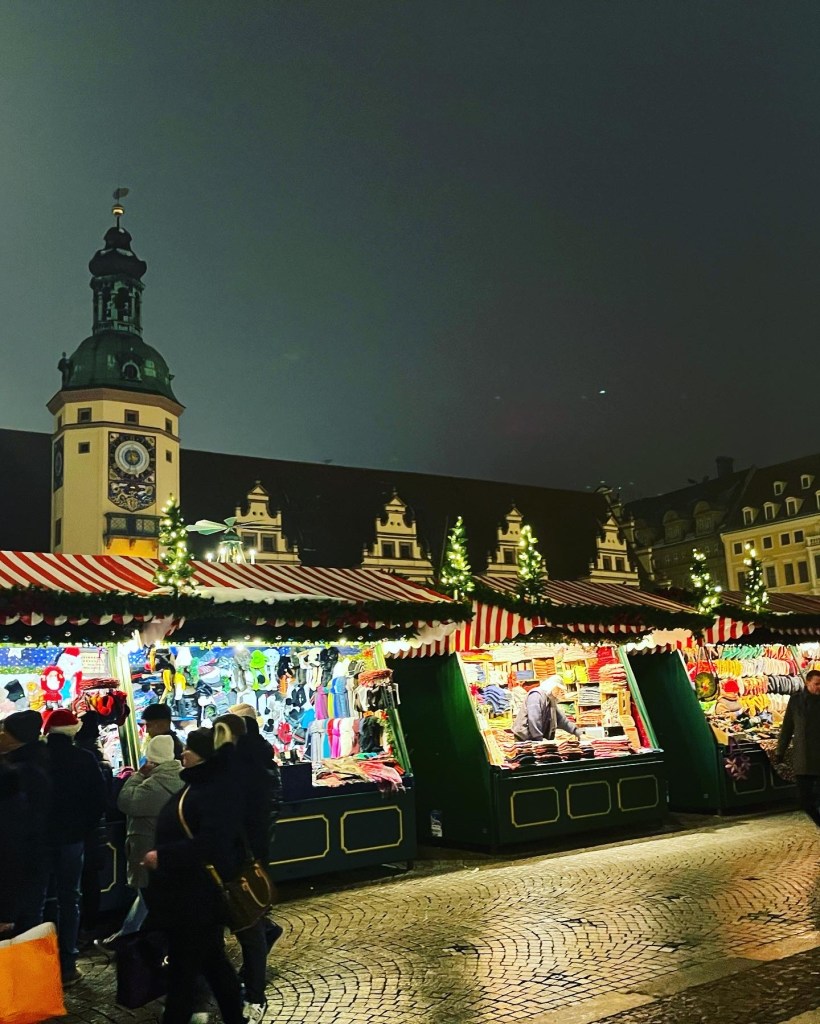
Christmas trees, fairy lights, gluhwein, and more. The Christmas markets in Leipzig were a magical sight. Germany has been on my travel wishlist for a long time, and I was so excited to spend a snowy few days in Leipzig. 

I wasn’t expecting to travel again before Christmas, but my Mam surprised me with a trip to Germany. It was cold, it was snowy, it was a trip filled with festive fun. 

I couldn’t wait to go, especially because Leipzig is a city that has a rich literary history, and there is nothing I love more than exploring a #literarycity. 

We flew out on a Sunday and we flew back to Dublin the following Wednesday. 

It is fantastic that Ryanair now has direct flights from Dublin to Leipzig. 

It may have been a short trip, but it was filled with amazing food, lovely drinks, some shopping, and we explored some fantastic sights. I had the best time, and Leipzig is a city that I will most definitely be returning to, but for now, I’m delighted to be able to add Leipzig to the travel diaries. 

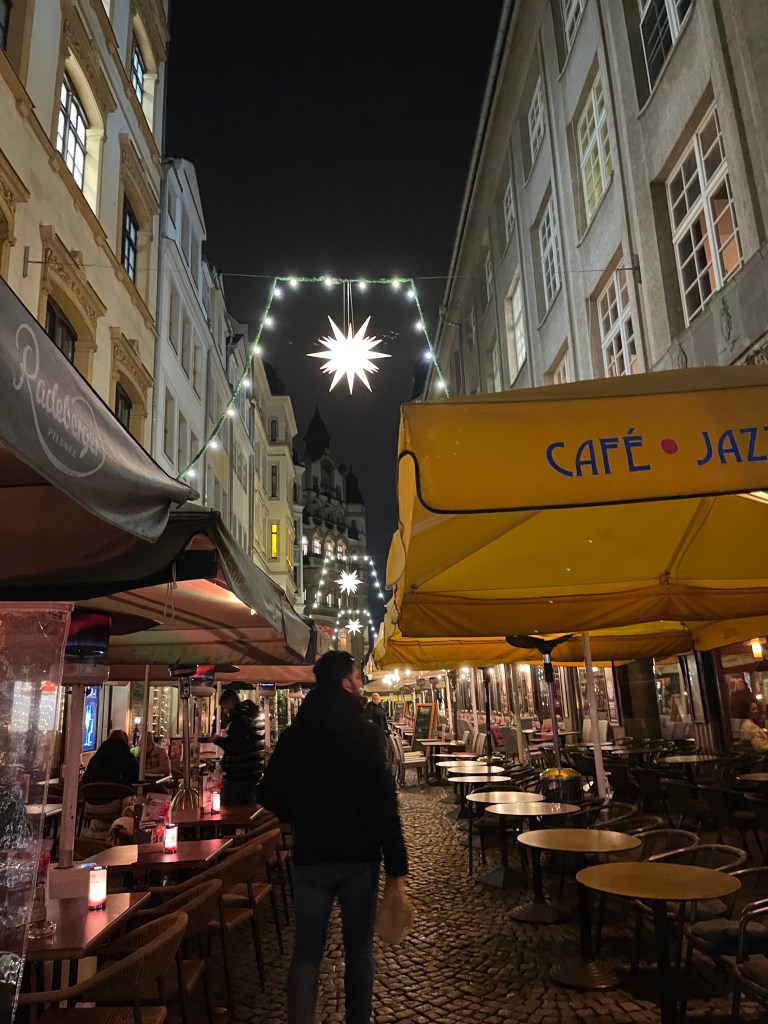
If you enjoy reading about literary inspired trips then read on, because I’m going to outline some of the exploring we did, and I’m going to share some of the snaps I took. This city is a photographer’s dream, especially since the entire city was decorated for Christmas. 

It was glittering, sparkling, and all things festive. 

Leipzig is a cultural hub, and I was especially excited about the city’s musical history. 

The city has often been called the city of music, and if you’re a fan of classical music then this city is one you won’t want to miss. 

Please note – All images shared are photographs that I have taken myself, with my own phone. They may not be shared without my permission. 

St. Thomas Church. 

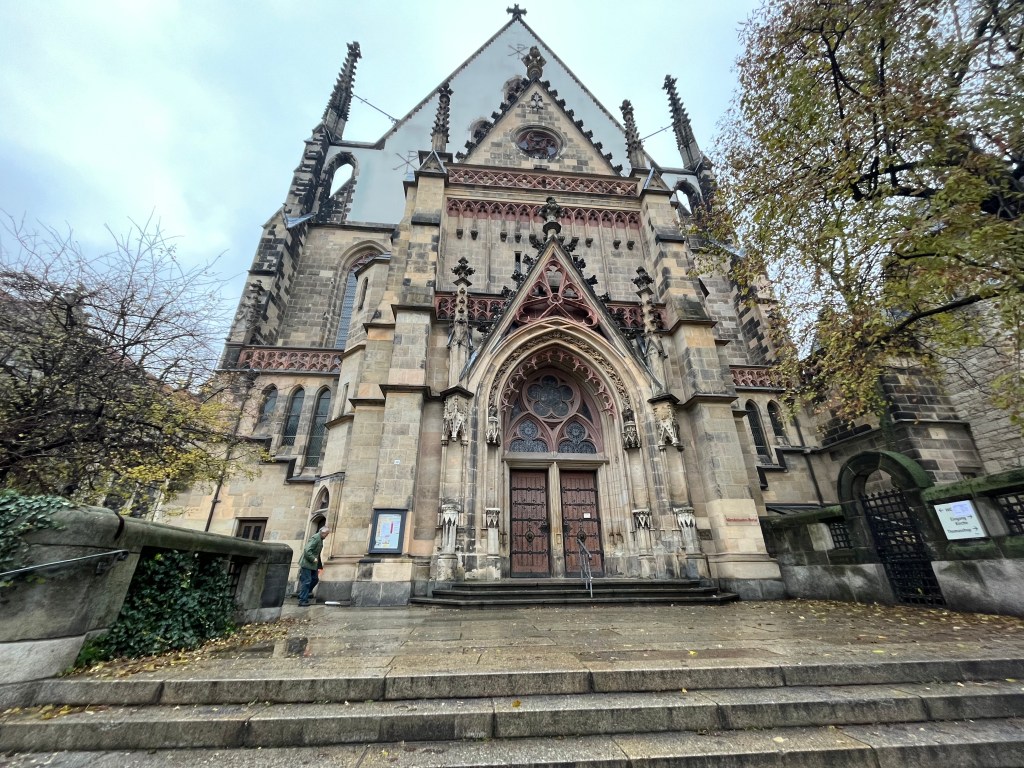
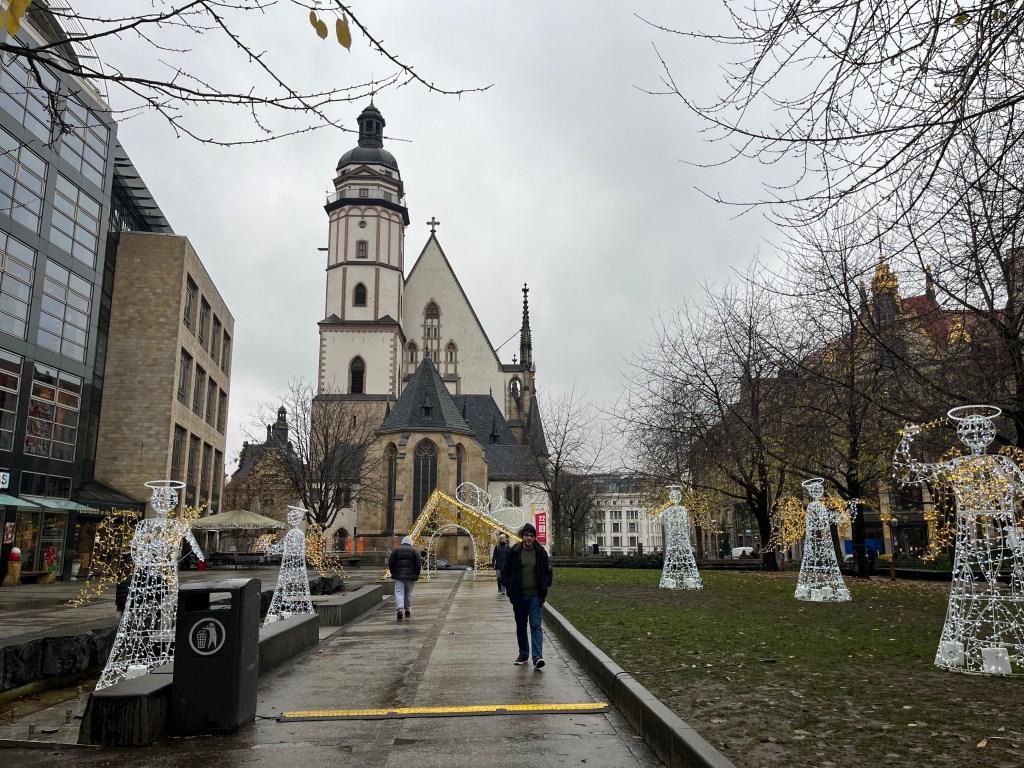
One of the places that I was most excited to visit was St.Thomas Church. (Thomaskirche). 

This church is said to date back to the 12th century, and although it has seen some changes over time, it is hard to imagine that a structure has stood in the same spot for such a long time. 

After some renovations, today the church is a beautiful, gothic building. It is a sight to behold. 

St.Thomas Church is home to one of the oldest, and most renowned boys’ choirs. The St.Thomas Boys’ Choir has sung in these halls since the year 1212, and at one point in time the choir was led by the one and only Johann Sebastian Bach. 

Johann Sebastian Bach has a reputation as one of the best composers of all time. He has been called a genius due to the way he composes counterpoints. A counterpoint refers to when melody lines are woven together, creating the harmony at the same time as the melody. Bach was also a particularly talented organ master, and during the church’s renovations, a new Bach organ was installed. This is the impressive organ that visitors will see when they visit the church today. 

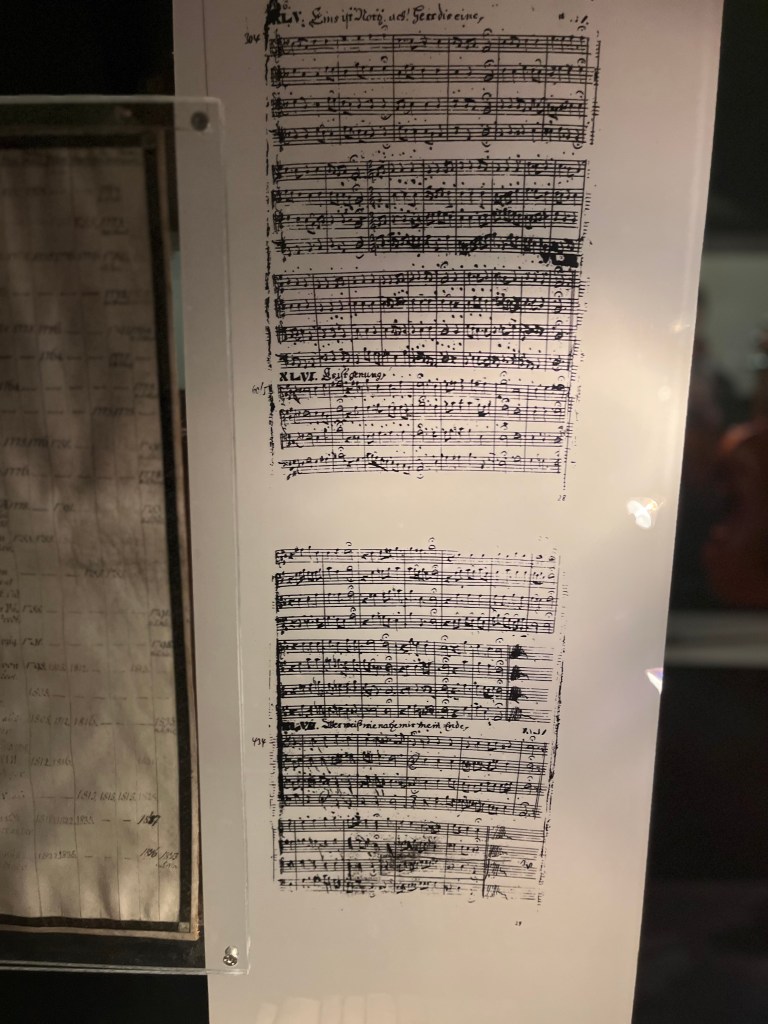
In a little corner room in the church, I found my dream come true. Instruments and sheet music, all saved and displayed in cases. It was amazing to see handwritten scores that have been saved for all these years. I love music, I studied music, and while I don’t discuss it as much as I should, I adore classical music and music theory. 

I love scores. I think that there is something incredible about seeing the work that someone put on paper. Someone sat down and created song, and that is a talent that I wish I had. 

Music is universal and immortal. It seems unbelievable that the music of a choir master from centuries ago is still being played, remembered, and respected today, but Bach has left behind an impressive musical legacy and reputation. 

I was really hoping to see some sheet music and scores, so I was not disappointed. 

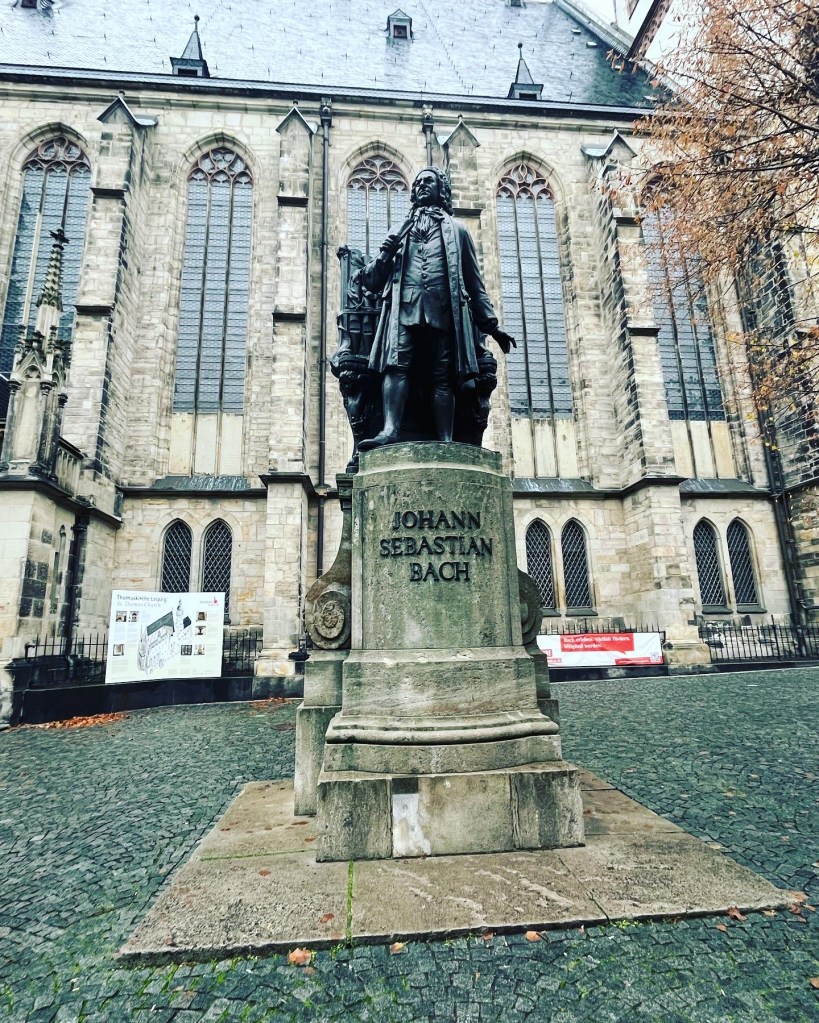
Outside the church, a statue of Bach sits overlooking the grounds. I think it is lovely that he is being remembered in St.Thomas Church in Leipzig after all of his musical service there. 

It is said that Bach is buried there too. The Bach museum is directly across the street so all of these must-see sights are very easy to find. 

This is a stop that music lovers won’t want to miss. Lovers of architecture will really enjoy it too, as this building with its high ceilings and stained-glass windows is just stunning. 

I bet that hearing a choir echoing through these walls would be absolutely amazing. 

I also want to note that visitors can also view the tower, but unfortunately I could not do this as this tour does not run past November. Oh well! This gives me yet another reason to return to Leipzig, not that I needed much convincing. 

I’d also like to share one of my favourite Bach quotes. 

The aim and final end of all music should be none other than the glory of God and the refreshment of the soul.” – Johann Sebastian Bach. 

I think that music is something that touches the soul and pulls on one’s heartstrings in a way that not many things can. It is absolutely incredible how a piece of music can resonate with a person so much. That is why I love this quote. 

St. Nicholas Church. 

The second church we visited was St. Nicholas Church (Nikolaikiriche). 

At this church, visitors are not permitted to take photographs.

This church is absolutely stunning, it is a sight you won’t want to miss, however it is a sight that you cannot take photographs of. You can buy a private photo pass in the gift shop for €1, which I did, however these pictures are for private use only. The church states that pictures are not permitted to be shared online or on any social media platforms. I’m sure that people share their pictures anyway, however I’m not going to do so, as I would not like any of my own photos to be shared without my permission. 

This church is a gothic building with baroque elements, and I would say that this building has a delicate, almost romantic feel to it. The interior is pink and white, and a huge silver organ sits overhead, looking down at all the pews. This organ is the largest organ in all of Saxony. 

Several of Bach’s pieces premiered in this church. This church is only a few minutes walk away from St.Thomas Church so it is definitely worth making a stop at both. 

Mephisto Bar. 

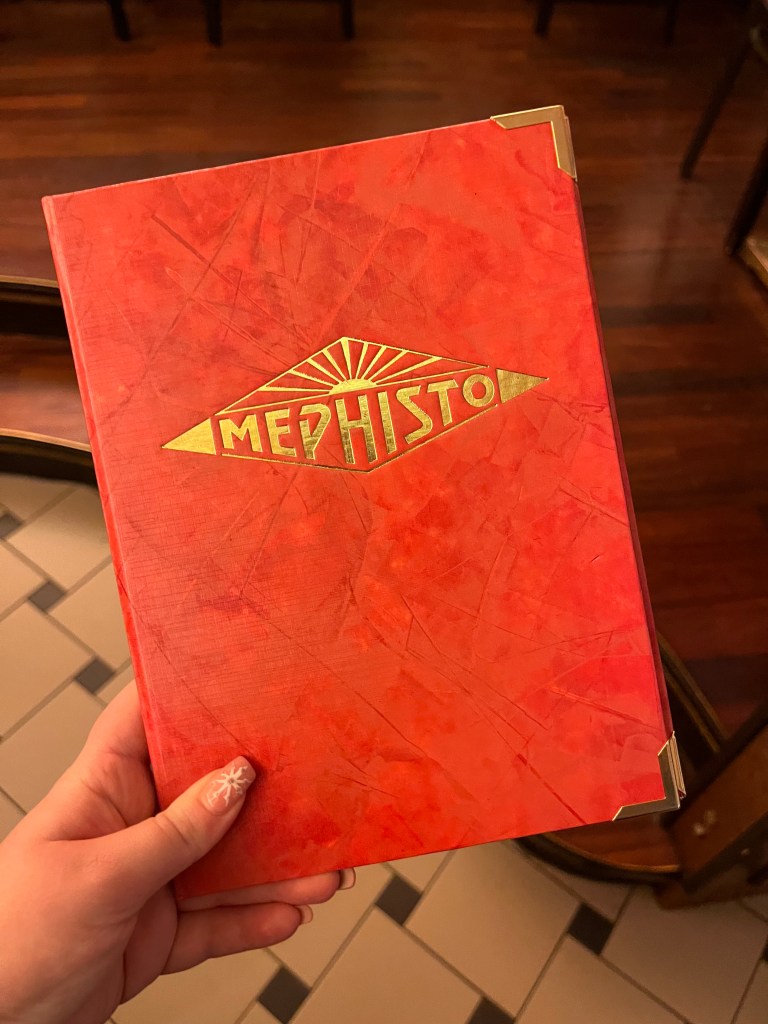
Mephisto is an elegant bar that you’ll find if you walk through the famous Mädler-Passage. The arcade was built between 1912-1914, and it is a sight of beauty and grandeur. At this time of year, it is also a sight of Christmas trees. Mephisto is a bar that has a wonderfully eccentric atmosphere. The stylish bar is home to Mephisto, who is a demon figure that can be found in German folktales. I just had to visit here as a lover of fairy tales and folktales. 

The bar is elegant, with a devilish touch. Mirrors change, and at certain times, smoke and lightning flashes as Mephisto himself makes an appearance on the ceiling. 

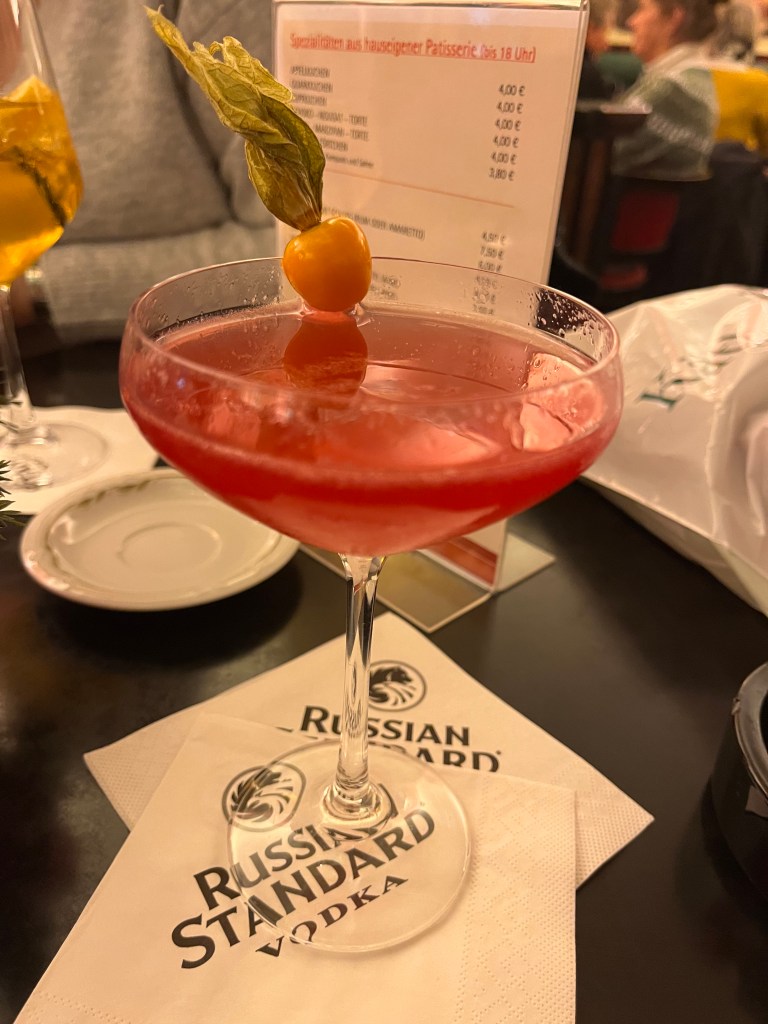
It is such good fun. Cocktail lovers need to make a stop here, as the menu is absolutely delicious. 

Christmas Markets. 

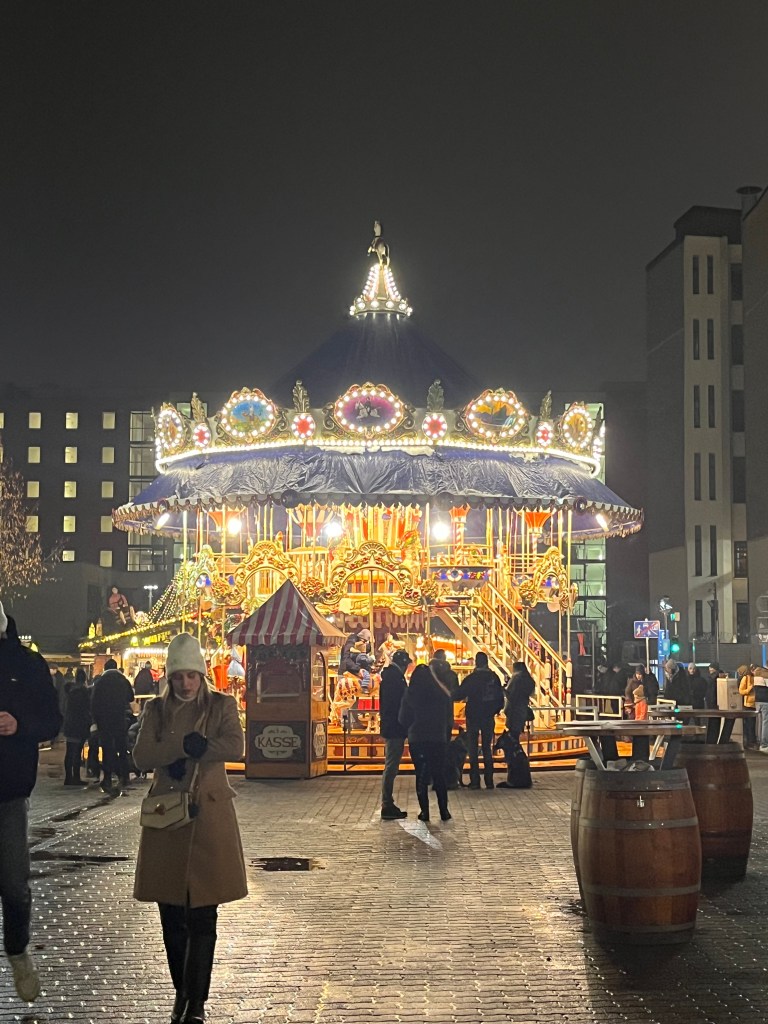
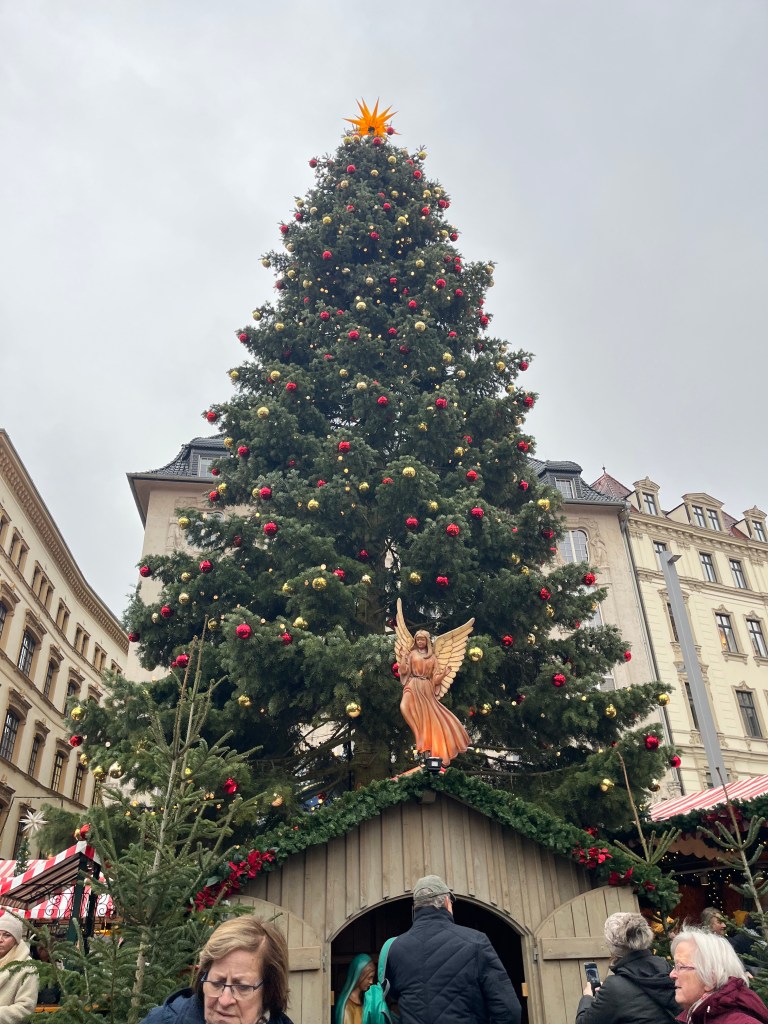
The highlight of my trip was exploring the Leipzig Christmas markets. These markets are the second-oldest Christmas markets in Saxony as they date back to 1458. The markets are huge, and at every turn you’ll find fairy lights, Christmas trees, decorations, gluhwein, toffee apples, and more. There are treats at every stall. Mugs, cakes, ornaments, jewellery, I could go on and on. 

Exploring the markets while Christmas music played was absolutely magical, and there was a festive joy in the air. I absolutely loved all of the hustle and bustle, even though it was very cold. 

I am so happy that I had the chance to tick Germany off my travel wishlist, although I definitely want to return to Leipzig as I know there is much more to do and see. I really wanted to see the Opera House, but unfortunately the schedule was tight. Next time that will be my first stop. 

I would absolutely return to the Christmas markets in Leipzig although I do think that the city would be lovely to explore in the summer, and I want to explore other places in Germany too, so be it in the cold or in the sun, I will be visiting Leipzig again. 

I really enjoy travelling to places that are filled with rich literature, history, and beauty, and I really enjoy writing about these trips. If you enjoy reading my travel diaries, then be sure to read all about my past trips to Oslo, London, Pompeii, Naples, Florence, and Rome as I did lots and lots of literary things in these literary cities. 

Links below: 

Banned Books Week.

Banned Books Week is coming to an end. Over the past few days, I’ve been thinking about why talking about books that have been banned, and talking about the reasons why they have been banned is so important to me. The aim of Banned Books Week is to celebrate the freedom to read, the freedom to express ideas and thoughts, and it is extremely important that we acknowledge how crucial it is that we are able to access information. 

If one looks back through different time periods, it is clear that banning and challenging books has always been an issue that the literary world has to contend with. In 2022, the banning and challenging of books, particularly in schools, is happening at a disappointingly high rate. 

I am conducting research currently while working on my MA thesis, and within the broad scope of reading that I am doing, I found a list of books that have been banned or challenged recently and this list details the reasons why. I’ve also been examining some of the books that I studied in detail while I was doing my BA because many of the books on that course have been banned at one point in time. This is a fact that baffles me because after studying some of these texts, I would argue in detail why each one of them needs a place on academic curriculums. 

It is very interesting when you read about why certain books have been banned or challenged. 

After reading several lists of books that have been challenged and the reasons why, I’ve quickly put together three categories that I’m affectionately calling “Banning Bingo” categories. 

In no particular order, it has become clear that a book will likely face banning and challenging issues if it contains any of the following:

  • Sex/Sexuality 

If a book contains any content regarding sex or a character’s sexuality, the questionisng of one’s sexuality, exploring, experimenting, intimacy etc. then the book is likely to face some challenges. 

In my opinion, when a book talks about sex/sexuality, the complaints about the book get divided into two sections. 

There are people who feel that teens in school should not be reading anything about sex or sexuality at all, because the information is not age appropriate, or they feel that the classroom is not an appropriate place to access this information and see it as a parent’s job to educate their own children about sex. This complaint seems to be about sex in general. 

There are other people who very specifically have a problem if a book explores what it is like to be a member of the LGBTQ+ community. So if a character is questioning their sexuality, wondering if they are gay or bi for example, if a character is thinking about their gender identity as well, or sadly even if a book focuses on a same sex couple or same sex parents then this book is unfortunately likely to face challenges. This complaint is due to some people believing that anything besides heteronormative is somehow “wrong” or “inappropriate”. 

It is 2022. Many children have same sex parents, and many people explore their sexuality and their identity and it is a shame that some people have the opinion that someone else’s family structure is “wrong” just because it is different to their family structure and I really hope that as a society, we get to a place where if someone challenges a book and their reason for challenging that book is because they have an issue with same sex relationships for example, then that complaint should be dismissed. Focusing on anyone who is not heteronormative is not a valid reason to ban or challenge a book. 

I would put forward the question: is there truly any reason to ban a book? 

This is an entirely different, and very complex conversation as many people will have many opinions on this, but I don’t believe in banning books or limiting somebody’s education or their ability to access different information about everything that goes on in this world. 

  • Flaws & Failings of Society: Critiquing social issues,  flaws, & failings. . 

If a book explores issues and failures in our society then this book will likely face challenges. 

Many books have been challenged or banned if they discuss racism. Books such as To Kill a Mockingbird, The Colour Purple, Roll of Thunder, Hear Me Cry have all been challenged or banned at one point in time, they are still challenged today. If books discuss how a system can be inherently and implicitly flawed, if they make readers look inwards and force readers to confront their own biases, if they open conversations about diversity and injustice in the classroom then these books will face challenges because some people just do not want to discuss those things. 

Another point is that some books contain very racist and hurtful language and stereotypes and people have challenged these books because of that derogatory language. 

Literature reflects society, the good, the bad, the things we wish never happened. 

History cannot be erased. Horrible things were said and done. Books written in a certain time period will reflect the language and attitudes that were prevalent at that time. You can’t read a Mark Twain book for example, and pretend that the racist language and racist attitudes illustrated in his works did not happen. You read Huckleberry Finn and the purpose of reading this book is to reflect upon the abysmal actions that happened in this book, and discuss how wrong those actions were. You read the book and should be appalled that certain attitudes were just the norm and the book teaches us that this kind of prejudice against other people is unacceptable, and as a society, we have to learn from history so that society changes, so that history does not repeat itself. 

Banning these kinds of books from the classroom is actively banning people’s history and that is wrong. Suffering occurred, suffering is still occurring, and to ban someone’s ability to speak about their suffering or the suffering of their ancestors is just wrong. It should not be allowed to happen. Some people should not be able to decide that they simply don’t want to hear about or know about another’s person’s experiences just because those experiences are difficult to hear about. 

Racism is just one topic that causes some people to want to challenge a book, other topics such as climate change, class differences, bodily autonomy and the right to make decisions about one’s own body, inequality in many forms, and consent are all topics that cause some people to want to challenge a book. 

The reasons for wanting to challenge these topics, again fall to the opinion of some that consent for example, is a topic that should be taught at home. 

This is a conversation that needs to be more nuanced, because there is a way to deliver information in an age appropriate way, and some kids handle things earlier than others, some kids mature later than others and so they may need more time before they learn about certain topics, but there is a huge difference between wanting to make sure your own child is ready to hear certain information vs feeling that kids in school just should not be taught about certain things. 

Some people want to have the right to teach their own kids about topics in their own homes, but then they do not have those crucial conversations and then we have eighteen year olds who are leaving secondary school and high school and they’re going off into the world without a proper understanding of consent and personal boundaries etc. 

There is also the point that education is meant to be broad. You are supposed to learn about different people, different places, different cultures, different ideas, different beliefs, and some of the things you learn about may be different to what you personally think, but that does not mean that education should be hindered. 

  • Violence 

Violence of any kind in books will usually be challenged. Violence in movies will be challenged. 

People will always question whether or not a book or film is too violent for kids to read/watch. 

If a book containing violence is to be taught in schools, people will question if the book is too violent for a classroom. 

This type of questioning happens in other mediums too. People question whether or not people should play violent games. People question if violence in the media glorifies and encourages violence etc. Violence will most likely always be challenged.

I think it is important to give readers, particularly younger readers more credit. People are not just passive viewers or passive readers, you can watch a movie or read a book that contains violence without automatically going and doing something violent yourself. If anything, many narratives promote the message that violence is wrong and it is shocking that this violence happens. To say that violent content automatically makes viewers and readers behave violently severely insults the viewer/reader because we are not mindlessly consuming content. We can still make our own decisions about our actions. Violence and how the violence shown is contextualised is very important, and I do believe that it is a subject that should be handled with care, tact, nuance, and respect but I don’t think violent content should be challenged automatically because it is violent. 

I also think that no matter what the topic is, if a book is about relationships, or racism, or inequality, or about coming of age, it does not matter what the topic is, the topic should always be handled with care, tact, nuance, proper research, and respect. 

So those are, in my opinion, the three main areas of topics that will lead to a book facing challenges. Sex/Sexuality, Flaws and Failings in Society, and Violence are headings that contain a very broad, very layered, very nuanced range of topics and ideas that tend to face challenges for the reasons I have discussed above, and many more. 

  • Other Areas. 

There are also two other areas that tend to cause issues as well, and those areas are magic and the idea that animals may be equal to humans. Alice in Wonderland was challenged because of the nonsense in the book, and because Carroll placed animals in the text as being equal to Alice.  Books that contain magic are challenged in so many ways, as like fairy tales, people question are they unrealistic? Do they promote unrealistic life expectations? Do they tell children magic is real and should they? Books that contain magic can also face criticism based upon religious objections and others question if the magic being done is promoting bad behaviour, encouraging pranks etc. 

So it is clear that there are many different reasons as to why someone might want to challenge or more extremely, ban a book, and as I’ve discussed, there are certain topics that tend to face these challenges very often. I think it is so important that we study why books get challenged because to take a book out of a classroom or a library, to not allow someone to read or watch something, it may seem like not a big deal to some, because people think that what a kid does not know won’t hurt them, but to block access in any way to a topic, is actively hindering somebody’s growth. If a topic is not allowed to be explored, education is being limited. If a person cannot learn wholly about the world, then their knowledge of the world and how to handle the world is being limited, their ability to grow emotionally is being limited, their ability to develop their own opinions, and their own critical thinking skills is being limited, and a message is being presented that if your experiences and thoughts and ideas don’t fit certain boxes then your ability to express yourself will be limited, censored, and silenced. So book banning is not a casual thing, and the fact that some people will discuss removing a book so flippantly is a problem. Banning, challenging, censoring, is a very serious thing and it has serious repercussions and so a much bigger conversation needs to be had. That is why Banned Books Week is so important, the right to access ideas and express ideas is so fundamental, and the right to access information should always be acknowledged as highly significant, and the right to express oneself and read about anything and everything should be celebrated. 

Cited Below are articles of interest that I have reread many times during this week. 

“Shhhh! These Kid’s Books Have Been Banned (or Challenged).” Evanston Public Library, 24 Sept. 2021, https://www.epl.org/booklist/shhhh-these-kids-books-have-been-banned-or-challenged/. 

Heidi. “Banned! – Alice’s Adventures in Wonderland: J. Willard Marriott Library Blog.” J. Willard Marriott Library Blog |, 11 Oct. 2018, https://blog.lib.utah.edu/banned-alices-adventures-wonderland/#:~:text=In%201931%2C%20the%20work%20was,beings%20on%20the%20same%20level.%E2%80%9D. 

Do you have a book that resonated with you? Has it been banned? Think about it. Look it up. It is important.

Kate xo.

Defending Damsels: Encouraging All Emotions in Modern Heroines.

I don’t think there is anything more nostalgic than sitting down with a book I enjoyed when I was little and reading it now with adult eyes. My studies have allowed me to dive into the world of children’s literature, and I’ve found that I have a new appreciation for all of the books that I read as a child. I’ve always been one to encourage reading in childhood as having a love for literature can open so many doors and benefit us in ways we may not even realise. 

Lately I’ve fallen down a bit of a fairy tale rabbit hole, as you will have noticed if you keep up with me on Instagram. If you haven’t already, you can follow me @katelovesliterature

Fairy tales always provoke very interesting conversations in my opinion, and I think that classic fairy tales are often treated unfairly in today’s media. Literature will always reflect the time that it was written in, that is in many ways the role of literature, to shine a light on all aspects of society, the good, the bad, and the things we wish didn’t happen. I will admit, many fairy tales are imperfect. There are aspects of some older fairy tales that would likely not be included if they were written today by a modern writer. I find it interesting that fairy tales are readapted and reimagined so often, because new adaptations tend to bring out critics who enjoy tearing the original to pieces. I’ve found that sometimes in an effort to correct some outdated ideas that an original story may present, the adaptations in question can sometimes swing too far the other way and present a different idea that is not exactly ideal either, however that is a much broader conversation and one that I will share another time in a different discussion. 

I will give a very brief example of what I mean, and I just want to be clear that in this example, I’m not referring to any story in particular, instead I’m speaking generally about an idea that I’ve seen in various different pieces. 

I’m an advocate for female empowerment and female agency in stories. 

I love seeing female characters who know their own mind, and speak confidently about their own desires and interests. I understand the idea behind wanting to show young children stories about women who are well-rounded, complex, dimensional characters. This is great. For a long time female characters were subjects of the male gaze and I think it is fantastic that there seems to be a shift and finally we are getting to see female characters exist and function beyond how they’re viewed by men. I always like to say that there is nothing wrong with being a love interest, but you shouldn’t only be a love interest. That should not be a female character’s only purpose, however I dislike the trend of calling the heroines in original fairy tales nothing more than “damsels in distress who do nothing but wait to be saved.” 

The heroines in older Disney movies face this kind of criticism as well, and I think it is very unfair. In my opinion it is too simplistic. That kind of critique completely ignores the fact that these stories were written in a very different time. It is the same with period pieces, people complain if female characters don’t act in a way that perhaps a modern woman would, but this critique again ignores the fact that many period pieces take place in times when women were at the mercy of the men in their lives. If you didn’t have access to any money, if you didn’t have anywhere to go, if you didn’t have any kind of education depending on one’s status, if you didn’t have any say in who you married, then it is almost impossible to just up and leave. I still think it is inappropriate to say that today in 2022, because the truth is that we cannot know everybody’s private circumstances and to say “just leave” is ignorant and dismissive. I will not scoff at original heroines. I will not call them passive, helpless, and I will not say that they did nothing but wait for a Prince. If you actually read the original fairy tales properly, you will see that many of the original heroines did their best despite being in dire circumstances that were beyond their control. I also don’t like the idea of promoting a narrative that says accepting any kind of help means you’re weak. I think there needs to be a balance. It is important to have complex, realistic, layered female characters who know they can speak their mind, assert boundaries, and take control of their lives the way a male protagonist would without question, but I think one must also acknowledge that it is okay to have friends, it is okay to accept help, it is okay to cry and be vulnerable sometimes, and it is okay to need people and have romantic desires.

I’ve noticed that female characters shutting out love because “they’re perfectly fine on their own” has become a bit of a trend. The idea behind this is wanting to show a character who doesn’t need a romantic relationship to be happy. That is great, but the idea is often undermined by the fact that she will almost always end up in a romantic relationship anyways, often with the man that she’s been shutting out for the entire story. I think this is a bit contradictory and reductive. Plenty of people are happily single and plenty of people genuinely don’t want a romantic partner and that is perfectly fine, but I’d rather see a character who is happily single throughout instead of seeing a woman actively shut down any romantic feelings or desires because she feels she has to, because she feels that allowing herself to be romantic somehow makes her weaker. Again, in my opinion, it is a question of balance. All independence should not be lost because you are in a relationship and these characters should still be able to function independently and chase their dreams and thrive at work even if they do admit that they really like someone else. Independence is very important. I think it is vital to be able to be alone and enjoy one’s own company, however I don’t think it is reasonable to expect anyone to be alone all of the time. These types of narratives tend to involve characters learning that it is okay to let people in, and it is okay to share feelings and be vulnerable, and it is okay to want someone or people in your life – these discoveries don’t always have to be romantic, they can come from relationships with friends, families, and mentors too, and all of that is great, but I’m a bit tired of that being the lesson. 

To sum up this point, the gist of what I’m saying is that of course I do want female characters to be well-rounded and dynamic and to be more than just a love interest, however I also don’t want to venture into a territory that says emotions or accepting help or being in love automatically equal a loss of strength and/or independence. 

This is a topic that I want to explore/write about in much broader detail with fleshed out examples so stay tuned for more discussions like this if this is a topic that interests you.

My book review of Kenneth Grahame’s The Wind in the Willows is coming soon.

Have you read this book? Let me know.

Kate xo.

Literature Lovers Gift Guide.

Hello everyone. Happy Friday. 

Today’s #fridayschoice is a little bit different. 

I am putting together a “Literature Lovers Gift Guide.”

Lately I have celebrated some personal milestones as well as completing the first year of my masters degree which is why I was absent for a little while here on Katelovesliterature.com. 

The end of a semester is a very busy time. There’s assignments and final essays, dissertation and thesis discussions alongside research and research proposals and so even though I love talking about movies, books, plays, poetry, etc, I had to take a break and focus on deadlines. 

After I met those deadlines, I was exhausted. I love what I do, but I needed a proper break so instead of jumping straight back to publishing discussions here on Katelovesliterature.com,  I took an extended break and now I am ready to start doing what I love again. 

I would like to stress how important breaks are even if you love what you do. Breaks are good, they are needed, they allow you to breathe and become inspired again, and it is so important to rest and enjoy downtime because otherwise burnout occurs and it is so much harder to rebuild from being burned out then it is to stop, relax, and then get into a rhythm again. 

The end of February was a super busy time, and on top of all the other milestones I was celebrating, it was also my birthday, which meant that I was ridiculously spoiled by my family and friends. 

They all made me feel so special, and they support me in everything I do and they always support me by checking out the website, you all know who you are, so thank you. 

All of the above brings me to my Friday’s Choice discussion and it is a gift guide for those of you who have movie lovers or book lovers or theatre lovers in your life. 

My friends and family know me so well, and I have received some beautiful gifts recently, I’ve also treated myself to a few things as well and I don’t think it’s ever too early to get ready for Christmas. 

So let’s dive into my Literature Lover Gift Guide. 

  1. Sheet Music. 

I love music and I love musicals. I studied music all through school, I was a member of every choir, I did musicals, I love to sing, and music theory was one of my favourite parts of drama class so my friends know that I love sheet music. I have three scores now, all from shows that I love, and I think that this is such a good gift idea for a music lover. The scores are beautifully presented and they have lots of information inside about the composers and about the songs and I love reading about how a song was written and composed. I love reading about any insight into a show’s score, because when it comes to musicals especially, the music is so integral to the story, the show would not be the same without it. Even if you don’t read sheet music, I think that if you love music then this is a cool present to receive, and it’s not all about getting presents, if you know someone who loves music then a score could be a brilliant gift to give them. 

  1. Special Editions of Books. 

I have a beautiful edition of A Christmas Carol and Other Christmas Writings by Charles Dickens. The cover is white with beautiful navy snowflakes. My best friend got it for me the Christmas after I wrote a Dickens dissertation. It was so important to me at the time, and it still is now, but at the time I was reading Dickens all the time and getting my thoughts together for this dissertation and it was so important to me, and then after being so delighted with the grade I got, this present was so meaningful. It was so thoughtful of her, and this book will always sit on my classics shelf and make me smile. 

Last Christmas my boyfriend gave me the most beautiful editions of Alice in Wonderland and Through the Looking Glass by Lewis Carroll. They are laminate collector’s editions with Victorian inspired dust-jackets. They are absolutely gorgeous, and they are very important to me at the moment because they also tie into different things that I am currently studying. 

Literature is very important to me, it’s the thing that I am most passionate about, and I think it is so lovely that my friends and family get me things that represent something I love so much. These special editions are sentimental because I’ll remember a specific thing and time when I look at them. 

Of course you don’t have to be studying literature to get a special edition of a book. If you know what someone’s favourite book is and you see a beautiful edition of it, then I think that is such a good gift idea. It shows how well you know them, you’re getting them something that you know they love, the presentation of a special edition is always stunning, it is a collector’s item and a display piece, and it is something that the person will always have. 

  1. Bookmarks. 

I have been given some beautiful bookmarks over the years. I have one with my name on it, I have a beautiful resin one, and I have ornate little Alice in Wonderland page markers that are so stunning because they are John Tenniel’s illustrations in bookmark form so they look amazing in my classic books on my classics shelf. I think bookmarks are a cute gift to give a reader because you know they will be used, you can never have too many when you read so much, and there are some really gorgeous ones that you can get now so if you’re already thinking of getting someone a book then a bookmark is such a good little add on to get as well. Bookmarks also make a brilliant stocking stuffer. 

  1. Literature inspired artwork/cards.  

I bought a Scream themed Valentine’s Day card this year and it was brilliantly received. I think that getting someone a card or a piece of art inspired by something that they love is a great idea because again, it shows you know them, it shows you listen and care about their interests, a card inspired by their interests is really sweet and very personal. Art inspired by their interests is really cool because again, it could be a collector’s item, it could be a display piece. I have some framed pieces inspired by movies I love that I absolutely love, and they were not ridiculously expensive. There are so many sites now that buying art does not have to be super expensive, so if you know someone who would appreciate something like this then this could be a great idea. 

  1. A Notebook/Notebook Cover. 

Last Christmas my best friend gave me a beautiful leather bound notebook. It is perfect. I use it. She knows how much I love writing, so once again, she got me something that she knew I would love. I can take the notebook out of the cover when I’ve used it all and then I can put a new notebook into the cover, so it is something that I will always have and always use. 

If someone is a student or a writer or if they like to journal, then a notebook/notebook cover is a great gift idea because it is something that will definitely get used. 

  1. Novelty Items. 

One of my best friends gave me a book of movie inspired cocktail recipes for my birthday. 

I love cocktails. I love learning how to make them. I love movies, so this really was a brilliant gift. There is a Legally Blonde inspired cocktail, there is a Some Like It Hot inspired cocktail. There is a Breakfast at Tiffany’s inspired cocktail. There is a Batman inspired cocktail. I could go on because there are so many incredible movies featured in this book and I am so excited to test out some of these iconic cocktail recipes. This kind of gift is great because it goes on beyond one specific interest, mine being movies and literature, and it incorporates other interests of mine. This is a gift that I will be able to use, it is a gift that will help me develop a skill. I am planning on learning how to make cocktails properly and the fact that I could whip up a drink based on a friend’s favourite movie will be really cool and it’ll make for a really fun night. 

I hope that you enjoyed reading through my gift guide. These are ideas that I would use myself, I have given these kinds of gifts to people before and I will again in the future, and these are the kinds of gifts that I usually receive and I am always delighted. 

I hope you’ve gotten some great gift ideas. Even if you’re shopping for someone who is not a lover of literature or movies, I still think this is a helpful guide as the best gift giving advice I can give is to give a gift that shows you know the person really well. That may seem really obvious, but you’d be surprised how many people tell me that they struggle to pick out gifts for people. 

This has been Friday’s Choice. I hope you all have a lovely weekend. Keep an eye on my Instagram page @katelovesliterature because I will most definitely be sharing snaps of the movie inspired cocktails that I create. 

If you were ordering a cocktail inspired by a movie, what drink would it be and what movie would it be from? Let me know!

Kate xo.