Every Theory Thursday I will be discussing an aspect of theory such as form, theme, imagery etc. simply so that anyone can warp their heads around Shakespeare if they want to. Stay tuned!
It has been quite a while since I’ve published a longer blog piece. This is because I have been so lucky to be very busy in my literary corner of the world. If you follow me on Instagram @katelovesliterature, then you’ll be as up-to-date as one can be. I’ve been reviewing lots of books for Children’s Books Ireland as usual, and I’ve gotten to be a Book Doctor at some CBI Book Clinics which is such a pleasure. I feel so privileged to get to speak to young readers about books that they love.
It’s been a creative time in many ways. I’ve been watching many movies as always, I’ve been writing, and I’m so thrilled that we have relaunched Your Book or Mine?
In our latest episode, Seán, my co-host and I, discussed all things fantasy as we chatted all about A Court of Thorns and Roses by Sarah J. Maas. You can listen now on Spotify.
Alongside general literary chats, if you follow me on Instagram then you will know that I am very passionately anti-AI. Over the past few months, I’ve had the opportunity to write about this topic and express my thoughts and concerns about the use of generative AI specifically.
I am very thankful that my experience and my qualifications in the realm of English literature have given me the platforms that allow me to highlight my concerns around this topic, especially highlighting my issues with the decline in media literacy, and while I feel that it is important that our imaginations are preserved rather than having generative AI use pushed on us through false assertions that using AI is the same as being creative and writing or articulating ideas ourselves.
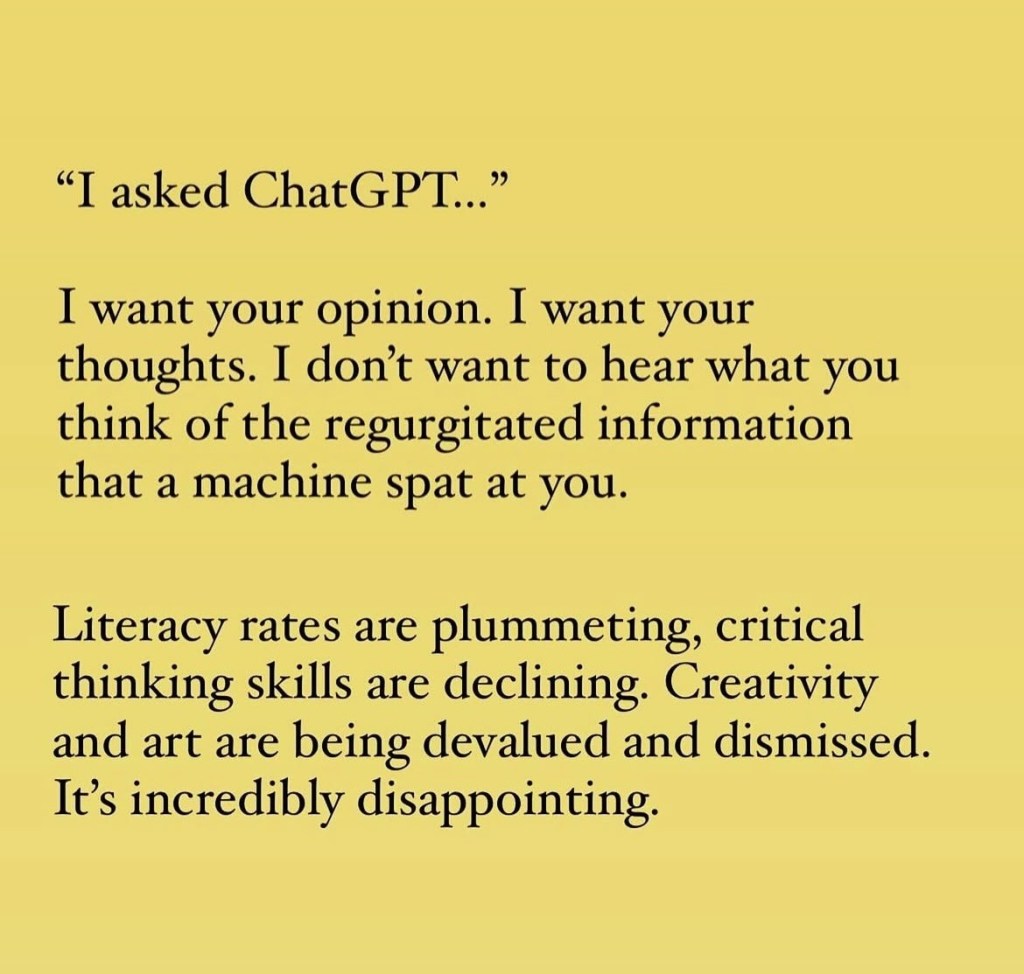
I created and shared this post on @katelovesliterature a while ago. It has been viewed over 14 thousand times, and I feel it really sums up my feelings on this topic.
I really encourage you to read further and learn about why so many people, particularly those of us who are writers, editors, illustrators, and creatives, feel so strongly about why using generative AI is incredibly disappointing. There are many wonderful pieces out there, and I am lucky enough that I have been invited to share my perspective on more than one occasion.
I’m very proud of the time I spent studying at DCU, and this MA programme truly made me feel fulfilled. I loved my time on the course. I have remained connected with my classmates, I’ve gotten to explore brilliant opportunities, and I’ve forged some fantastic connections through my time on this MA programme in DCU’s School of English, so I was honoured and proud to be invited to contribute.
Not only have I gotten to further delve into this topic that I’m passionate about, but I have been allowed to explore this topic in a three-part series that will be published on DCU’s MA in Children’s and YA Lit blog. I’m very proud of the work that has gone into this series, and very grateful for the collaboration that took place with Alex at DCU. We went back and forth to make sure the pieces were just right.
I look forward to seeing parts two and three being published soon, and I hope to return to writing longer literary discussions here on Katelovesliterature.com very soon, but for now, I’m enjoying being so busy in my own little literary corner. If you know that reference, please do leave a comment!
If you’re satisfied with a draft that was spat out in seconds then I fear you don’t love writing as much as you think you do.
I could not resist sharing this quote from my first blog post in the series. It has resonated with a few people so far, and I hope it continues to. May we always keep our wonder.
Last month I was chatting to a friend and he brought it to my attention that there were apparently some discussions about “toning down,” or removing Tinker Bell’s presence from the Disney parks. An official Disney rep has since dismissed this news, claiming it is entirely false and while Tinker Bell does not appear in character meet and greets in Florida, she still features heavily in parades and firework shows and does appear at meet and greets in other parks.
Now despite an official rep saying the statements about Tink being removed due to her being a “problematic character,” are false, the topic really inspired me to write about Tink. The idea that she is a “bad role model for girls,” is the point that specifically bothered me. Tink was allegedly labelled this way because of her being “body conscious,” and “constantly seeking the attention of Peter Pan.”
I feel these labels are unfair, and I feel that I am constantly noticing a rising trend of audiences making comments about characters and texts, seemingly, without fully understanding them. There is so much nuance in children’s literature and lately I find that is being completely missed.
Tink is a character who has been part of the children’s literary canon since she first appeared in the original version of Peter Pan. J.M Barrie’s staged play was published in 1904 and since then Tink has made her way into the hearts of many. She is feisty, she is cheeky, she is stubborn, she is determined, she has her flaws of course, but who doesn’t? I am also aware that Peter Pan is a problematic text in other ways. J.M Barrie’s highly stereotypical and ignorant portrayal of Native Americans is an aspect of the text that newer adaptations seek to counteract. I also think that in 2024, Wendy’s character arc needs to be presented carefully because she is a Victorian character who was created in the 1900’s, meaning that her aspirations have been moulded to fit the societal norms and values of that time. Wendy dreams of being a mother, and while there’s nothing wrong with wanting to be a mother in 2024, I feel it is important to present motherhood as a personal choice rather than presenting it as obvious that Wendy would want to be a mother simply because she is a girl. Wendy is a storyteller, Wendy is nurturing, Wendy is romantic, and I want her to be all of these wonderful things because that is who she is, not because she’s a girl so she must be. It is a nuanced line and many adaptations struggle with it. So we’re dealing with a text that has some undeniable flaws, why am I defending Tink specifically?
I want to take a look at the alleged reasons behind why she is problematic.
It doesn’t matter to me that this seems to be fake news, there are some points raised that I want to explore.
Tink is Body Conscious, and She is An Example of Unrealistic Body Standards.
In my opinion, this is an easy one, because I know what is being referred to here. Instantly I think of the 1953 Walt Disney animated version of Peter Pan. Margaret Kerry, actor, dancer, singer, and all-around artist served as the character model for the 1953 animated version of Tink. In true 1950’s fashion, Kerry had a figure that was considered the ideal of the time. Small waist, generous cleavage, and curvy hips. If you look up some of the behind-the-scenes images of Kerry posing as Tink, you’ll see she is wearing an outfit that would not be out of place in the wardrobe of Marilyn Monroe.
Immediately, without even having to rewatch the animation, a scene came to mind. There are scenes where Tink is appreciating or expressing frustration about her figure. When she can’t fit through certain spaces, she angrily looks at her behind, and there’s another moment where she is quite proud of her hips in the mirror. I feel it is important to remember here that this cartoon was released in the 1950’s (and in production earlier,) and she was created by a team of men. They are even called “Disney’s Nine Old Men.”
There are a few points to make here. Body standards and beauty standards and societal norms are always changing, so while we can acknowledge that a lot of things would not be written the same way today, remembering the time, place, and context of when certain things were created is important. The moment something is written down or captured on film, it is out of date, and who knows what will be out of date in fifteen years that are considered fine today? That is always going to be an ongoing issue to consider when it comes to consuming media. So of course, the beauty standards of the 1950’s are out of date and highly informed by the patriarchy, but I fear that is a point that we will always have to contend with in some way. This is why I feel it is unfair to critique Tink for her body consciousness, when actually, it was a team of men in the 1950’s who animated her that way. The scene of her expressing frustration with her behind was animated by a group of men who likely found that highly amusing, and I just don’t think it is fair to place the blame for that on Tink. The other issue I have with it is that I don’t think Tink admiring her own curves is necessarily a bad thing. If the message we want to send is that we should always be comfortable in our own skin and that all shapes and sizes should be celebrated, Tink being happy with how she looks and outwardly expressing that should be a good thing.
This point leads me to another alleged issue – Note that I keep saying alleged as I’m aware these articles about Tink have been declared click-bait.
Tink Constantly Wants Attention from Peter Pan.
Tink has been accused of relying on male validation because she constantly wants the attention of Peter Pan. There have also been notes about Tink’s jealousy towards Wendy, and the fact that Tink does not always have Wendy’s best interests at heart. These points grate on me for a few reasons. The first being that I feel these points are overly simplistic and they ignore the source material.
In 1911 as part of a fundraiser for Great Ormond Street Children’s Hospital, Peter Pan was published in the form of an illustrated book. It is often credited as the first version as well as being the most beautiful one. In this version, readers can find the following quote about Tink …
“Tink was not all bad: or, rather, she was all bad just now, but, on the other hand, sometimes she was all good. Fairies have to be one thing or the other, because being so small they unfortunately have room for one feeling only at a time.”
Tink has been criticised for being a highly emotional character, one who expresses anger, jealousy, and frustration. There have been comments made alluding to the idea that these traits are not something that should be modelled to children. I take issue with this. Children are people. Children grow up and become adults, and they have a full range of emotions. We all feel anger. We all feel jealousy. We all feel frustration. Why? Because we are human. We don’t feel only good things 24/7 and that does not make us bad people. Children deserve to know that it is okay to have big, negative feelings. They’re allowed to get angry, they’re allowed to get jealous, they’re allowed to get frustrated, most of all, they deserve to know that they are allowed to express a negative emotion and that does not make them a bad person or a “bad role model.”
I actually feel that if Tink was to be “toned down,” because she dares to express her emotions that this would have a negative impact. Removing representation of negative feelings in works of fiction will not stop people, especially children, from having negative feelings in their real lives. Removing that representation will simply make people feel alone. I feel it is more important to showcase characters having those negative feelings and working through them. If characters act less than kindly because of those negative feelings, then I think it is important that we illustrate how sometimes actions may hurt others, but we can make amends. This is what Tink does.
Returning to the quote I’ve referenced above, it is crucial to note that Tink is not a person, but a fairy. She is a mythical, magical being, and because fairies are so tiny, she can only feel one emotion at a time. This means when she is angry, she is ONLY angry, and when she is jealous, she is ONLY jealous. That is why some of her actions are very extreme, it is because she is totally and utterly consumed by one feeling at a time. Another point I want to make is that when people accuse Tink of acting in extreme ways, I think they forget that Tink exists in Neverland which is a magical place based on extremities. I also feel that if we’re going to critique Tink then we need to also critique Peter Pan.
Peter Pan is an extremely interesting character. He is often hailed as the personification of childhood itself. He represents freedom, whimsy, imagination, and the carelessness of youth. He is also a cautionary tale. There are also darker, more tragic takes on the boy who would not grow up. Wendy represents all you gain when you grow up, and she poignantly shows what you lose too. When Wendy grows up, she is never able to return to Neverland, she is never able to fly again. This represents a child growing up from innocence to maturity. When children mature and learn things they did not know before, they can never go back to the carefree innocence of not knowing, of not understanding. Those of us who refuse to grow up, who refuse to mature, they miss out on all that adulthood gives us because immaturity means you cannot engage properly with those who have evolved. There are so many ways to explore the tale. Some imagine that Peter Pan represents children who died young, so he literally cannot grow up because he represents those who did not make it to adulthood. Neverland is sometimes viewed as a place where children go when they die and Peter Pan is a figure who helps them on their way. In other variations, he is a darker figure, a kind of authoritarian ruler of Neverland. In early drafts of the Disney adaptation, Peter Pan actually kidnaps Wendy because of how much he enjoys her stories, but ultimately Disney decided a kidnapping plot would be too dark.
If we’re saying that Tink acts very emotionally, then we must acknowledge that Peter Pan does too. He is hot headed, temperamental, and he is only happy to play if people play by his rules and his rules only. This authoritarian style is illustrated in the type of father he pretends to be when he, Wendy, and the Lost Boys are playing house. While Wendy is nurturing, warm, and full of stories and lullabies, Peter Pan is cold, distant, and rules with an iron fist. There are even times when the Lost Boys cannot eat because Peter Pan will not imagine food for them, and he is quite harsh in his demands of what the Lost Boys can and can not do.
They cannot speak of mothers, they cannot know more than him, and very early on in the story when Tootles shoots Wendy out of the sky, Peter Pan is prepared to stab him. Tootles shot Wendy with an arrow because in Tink’s jealousy she told him that Wendy was a “Wendy-Bird.”
While I am not suggesting in any way that what Tink did here was nice, it does bother me that audiences will label her a “bad role model,” because she hurt Wendy, but then they will run right by how Peter Pan was prepared to kill in anger to get revenge. All of these actions are part of the make believe of Neverland and it is also crucial to note that in these critiques of Tink, her heroism is being greatly overlooked. As the story goes on, she warms up to Wendy and in the end, she selflessly drinks the poison intended for Peter Pan to save his life. The point I’m making in this discussion is that if we’re going to discuss Tink, then mention it all!
There are two more reasons why the “Tink is too emotional,” critiques bother me.
The first is that I feel female characters should be able to express all emotions without being labelled in any manner, and the second is that Tink is expressing some very valid frustrations over Peter Pan’s treatment of her albeit she is doing it in an extreme way – again because she can only feel one thing at a time.
So let’s keep exploring …
The point I’m making here is very straightforward in my opinion. I really don’t like it when female characters are given labels because they are more than just happy. Peter Pan is many things throughout the story. He is happy, adventurous, jealous, angry, prideful, cocky, and then in the end, when Wendy is all grown up, he is devastated. Do we label him? No. His character is interpreted in many different ways, and he’s discussed in detail when those differing interpretations are explored, but he isn’t labelled in the way that Tink was allegedly labelled. His layers get appreciated, whereas all of Tink’s nuance gets ignored. This is annoying.
Female characters should be able to be as emotionally complicated as male characters, and appreciated for the many ways they can be interpreted instead of just being smacked with a one-dimensional label.
The other point that grates on me in regards to this idea is that up until Peter Pan meets Wendy, Tink was his best friend. They did everything together and then when Peter Pan meets Wendy and becomes enamoured by her and her stories, like a child with a new toy, he quite coldly discards Tink. He ignores her, he does not consider her feelings, but he is all too happy to use her pixie dust so everyone else can fly. I think Tink is absolutely right to express that she is upset and angry about being discarded. She expresses her frustrations in a fantastical, extreme way, yes, but that is because Neverland is a fantastical, extreme place. Crocodiles bite off hands, pirates chase children, mermaids swim in lagoons, and flying is possible. Tink’s fantastical expressions fit, they are part of what makes Neverland Neverland. At its core though, the point I’m making here is that I do not like the implication that Tink expressing valid frustrations over being cast aside makes her a ‘bad role model,’ nor does her wanting some respect and appreciation from Peter Pan mean that she is ‘constantly seeking his male validation.’
If we say that Tink is alway seeking male validation because she does not appreciate being tossed aside, then what we’re teaching children, what we’re teaching young girls specifically, is that if they stand up for themselves over being mistreated or ignored and if they say that this is unacceptable, then they are going to be labelled and that is not a lesson that I’m okay with teaching any child, especially not young girls. If you do a lot for someone, if you’re a loyal friend, if you’re always there to help, if you give parts of yourself – in Tink’s case, her pixie dust – then you are absolutely in the right to express anger and upset if you’re tossed aside in favour of someone else. Peter Pan is completely dismissive of Tink’s feelings and I think if she gets labelled as a ‘bad role model,’ because she does not let him dismiss her without standing up for herself then I think we’re heading down a slippery slope.
Tink’s Adventures Continue …
In all of my above points, I’ve been speaking about the version of Tink in the 1904 version of Peter Pan and in the Walt Disney animated film version. I have not even touched on the fact that Disney created an independent set of films, the first was released in 2008, centred around the character Tinker Bell.
Tinker Bell is a tinker fairy, which means her talent is fixing things, tinkering with things, she is an innovative, creative, inventor and her fiery, determined spirit is what fuels her to keep going despite any obstacles that block her path.
In these movies, Tink worries that she is useless because she can’t figure out her talent, and then she worries that being a tinker fairy is not exciting enough. She struggles to find her place, but she does not give up. She perseveres, she makes friends, and she learns that her skills are important. She learns how to best use her talents for good. The themes of these movies, particularly the first one, is that everyone has different skills and all those skills are important. We all can’t do the same thing and instead of doubting ourselves, we can find what makes us stand out and be proud of that talent. They’re full of feel good messages and in my opinion, they are great movies for young children to enjoy because they teach that even if you can’t do one thing, there will be something else that is for you to do and you will thrive. They teach young viewers to never give up. The ironic part of all of this is that when you go to meet Tink in the Disney parks, you’re meeting her and the other fairies in Pixie Hollow, which is from the Tinker Bell fairy movie franchise and not the original Peter Pan canon. So the version of Tink that was being judged (the 1904 version,) is not even the version that is supposedly being presented to audiences by Disney. We’re meeting the Tink who has starred in her own stories, and I think it is completely unfair to ignore all of the individual character development that Disney created for Tink.
To wrap up…
I think it is unfair to only critique one side of Tink while ignoring her heroism and determination.
I think it is a terrible idea to suggest that children should never see negative emotions in fiction and the idea that experiencing and expressing a negative emotion makes one a ‘bad role model,’ is one that I think is the truly problematic idea.
I don’t like the fact that these labels reduced Tink’s very valid anger at Peter Pan down to being her supposedly ‘constantly seeking male validation.’ I think there needs to be more care given to how we discuss these kinds of characters, because if we’re going to say that Tink should never have expressed any sort of bad feeling or upset over how Peter Pan treated her, then I think we need to stop and question what sort of message that would teach young readers and viewers.
If anything, we should want to teach them to speak up when they feel someone is being mean or treating them unfairly. We don’t want them to allow themselves to be dismissed.
I’m aware that this discussion was fuelled by what ended up being click-bait, however I don’t care. I felt the points raised were worth exploring and there were points that I wanted to make even after learning that the initial article was, thankfully, false. I strongly believe that we need to remember that nuance has to exist in children’s literature, and I really feel that material needs to be understood before labels are thrown around. Children are highly intelligent and I don’t want their literature to be talking down to them, which I worry will become the case if we continue to label stories and characters in this way. There needs to be good and bad, light and shade, stakes and triumphs. There needs to be characters like Tink!
As the sunny days start creeping in, I’ve found myself reading different poems all about this season.
Personally, I prefer winter. There’s something magic in the colder air in my opinion, however I have always loved dreamy summer nights. There is a sense of freedom and romance that is always associated with summer. I think it comes from when we’re young and we can’t wait for school to end for the year so we can do what we want during the summer holidays. Nights get longer and brighter, usually kids get to stay up later, and there is a sense of joy that comes with knowing that you have time to do whatever you want. That changes as we get older, that guaranteed summer break is not always guaranteed when we’re working etc., however I do believe that the ideas of freedom and fun will always be associated with the summertime.
Poetry can scare a lot of people, but poems don’t have to be intimidating. They can be short and sweet, and very easy to read, and sometimes a poem can just say exactly the right things and make you feel something. Happy, sad, in love, giddy, anything, but whatever the feeling, a poem can make you feel connected in just a few words.
So with that being said, I’m listing four of my favourite poems for the summer and hopefully after reading this list, you’ll feel inspired to read them too!
Fireflies in the Garden by Robert Frost.
Ah Frost, perhaps the ultimate nature poet.
This poem is so short and so sweet that it is only one stanza long. A perfect starter poem for those who don’t want anything too long. It is a lovely poem about summer nights, starry skies, and fireflies. Easy, and very sweet. I always manage to seek it out every summer. It is classed as a children’s poem so it is perfect for younger readers too.
Summer’s Melody by Eden T. Copeland.
A beautiful, quite lyrical poem all about the beauty and magic of summer. The way the sun glitters off the water, the way the air is sweeter as it is filled with bright, summery scents, the way everything feels lighter, almost like a song.
This is a poem that is sure to put you in a summery mood.
A Time of Freedom by Abbey Silent.
Another poem that captures that sense of freedom that arrives alongside June. This idea of fun and freedom and longing for that feeling is a common theme among poems about summer. This poem dives into how we throw our cares away in the summer and celebrates that wild, outgoing sprit found in the season.
Summer Solstice by Stacie Cassarino.
This is a love poem, and while all poems can be interpreted differently, I’ve always felt that this was a poem about unrequited love, about someone who is trying to understand what love is and how to experience it themselves. The speaker describes their love as a bright, green day in June, and so I’ve always felt that this poem plays with that sense of romance that is often associated with summer. People can long for the summer, and I think that this poem’s speaker describes the person they love in a longing, slightly out of reach way. They describe them in a way that is not permanent, which is fitting because summer is wild, free, romantic, and fun, but it is also fleeting.
I’m going to keep it simple and stop here after four poems.
I hope that you’ll be inspired by this list and hopefully you might come across other summer poems that you will enjoy too.
The above listed poems are just a few examples of poems that caught my attention because in some way or another, they touched at my emotions and made me feel something, and I feel that each poem mentioned above does have an innate summer feeling about it. When I’m reading poetry, I usually visit the Poetry Foundation.
Festive wishes & a Christmas book review by Kate O’Brien.
Christmas is my favourite holiday. It is a time that I associate with family, friends, and lots of love. I really enjoy being festive. I enjoy buying and wrapping gifts, I love Christmas lights. I love when my home is filled with Christmas decorations. I love candy canes, I will have hot chocolate even though it is not my favourite…I do however, love a Baileys hot chocolate.
Tis the season after all.
I can’t believe that it is this time of year again. I feel like the year has flown by.
It has been a busy year, but I am very thankful that I can say that it has been a great year.
This will be my last review/discussion of 2022. I will be discussing two books.
After I publish this piece I will be taking a break for Christmas. I love Katelovesliterature.com. It is my passion project, but I work on my laptop, I’m doing my master’s which consists of lots and lots of research and essay writing, and I am always writing reviews so even though I love what I do, and I consider myself very lucky, I’m constantly typing so I think it is important to take time away from the laptop screen every once in a while. I will be writing and publishing reviews and discussions again in the New Year.
Thank You.
Before I jump into my final review of 2022, I want to take a moment to say thank you so much to all of my readers. You know who you are. Thank you so much to everyone who has subscribed to Katelovesliterature.com. I really appreciate it, and I hope that you all have been enjoying my reviews and discussions so far. I hope that you continue to enjoy them as we move into 2023. There is so much more to come. Merry Christmas to everyone who celebrates. I hope that you all have a happy and healthy New Year. Here’s to 2023.
I want to say a special thank you to the Children’s Books Ireland team and to the Beehive Books team. I’m honoured to be a member of the Children’s Books Ireland reviewer team. I’m such an advocate when it comes to encouraging young people to read. I really believe that the books we read when we are young can open up so many doors. Everything that I do now can be credited to the fact that I was an avid bookworm when I was young, and I am so glad that the adults in my life encouraged my love of reading and ensured that I always had books. This is why I am such a fan of the Children’s Books Ireland ethos, which is that every child has the right to be a reader, and every child should have access to good quality reading materials. Every school should have a library. I have huge admiration for everyone at Children’s Books Ireland, and for all of the work that they do, and so I am delighted that I can say that I am involved in some way. #everychildareader.
I’ve also been so lucky this year as I have gotten to know some members of the Beehive Books team. I’ve had the opportunity to attend some book launches and to review some of their books. Everyone whom I have met has been so kind, so lovely, and so welcoming, which is something that I really appreciate. I have a keen interest in the publishing industry, and when you meet people who are doing what you are striving towards, and they are so encouraging, it is really lovely. Thank you to everyone at Beehive Books.
I’m adding social links below. Be sure to check them out!
The Christmas season never passes me by without reading A Christmas Carol by Charles Dickens. It is a classic that is synonymous with Christmas in my opinion. I think it is such a significant read. Everyone should have to read this book at least once, and I do believe that it should be taught in English classes at this time of year. It is extremely hard for me to choose a definite favourite Dickens’ text. He is my favourite classic author. I loved studying his fiction and his journalism. Writing about his works was challenging, but it was a challenge that I really enjoyed. I would highly recommend reading A Christmas Carol first if you have never read any of his other works before, as although it is a dense text, I think it is a straightforward story to get into. The book also does a great job of introducing readers to the writing style of Charles Dickens. He is a very descriptive, evocative writer, and some of the scenes in A Christmas Carol are incredibly vivid because they are filled with such detail. I would argue that is why this book is so cinematic, and why a story like this lends itself to so many film adaptations.
I have discussed A Christmas Carol by Charles Dickens in much more detail in a previous book discussion. You can read it by clicking the link below.
I’m also looking forward to watching Christmas Carole starring Surrane Jones. This show will be airing on Sky on Christmas Eve, and based on the trailer, I think it looks quite good.
Surrane Jones is obviously taking on the role of Scrooge. She appears to be an uptight businesswoman who scoffs at Christmas and kindness. Following the classic Dickens plot, she will be visited by three ghosts. Some may call this plot predictable by now, and this is somewhat true because even if you have never read the original text, A Christmas Carol has been adapted so many times that by now almost everyone knows the story and how it plays out. It is a little formulaic, but that is okay. That is the nature of a story like this. It is predictable, it does follow a set structure, but nevertheless it is a heartwarming, and very important tale. I’m excited to see this new take on it, even though I already have clear ideas about how the show will play out.
I’m a fan of Surrane Jones, and it looks as though this adaptation has a fantastic cast so I am looking forward to sitting down and tuning in this Christmas Eve. I will do a mini #watchtvwithme on the spot review as I’m watching so be sure to follow along on my Instagram stories @katelovesliterature.
The Holly Pond Hill Christmas Treasury by Paul Kortepeter.
(The second of two book discussions.)
The Holly Pond Hill Christmas Treasury, illustrated by Susan Wheeler and written by Paul Kortepeter is a book that I have had since I was a little girl. I flipped through it again a few days ago, and I was reminded of just how charming this book is.
This delightful book is a collection of festive recipes, Christmas stories, poems, and songs. It is filled with charming illustrations and it is the perfect read for when one is counting down the days until Christmas. The characters of Holly Pond Hill are getting into the Christmas spirit and readers will too when they flip through the pages of this Christmas treasury. I think it is such a sweet keepsake. I’m so glad that I still have it after all these years. I think that a book like this would make a lovely present for a young reader, because it is something that they can have forever. A book like this can become a Christmas tradition because it is one that can be returned to every year. I think my favourite poem in this book is A Call for Snow! It is short and sweet, and perfect for young readers who want to practise reading independently.
I’m delighted that I came across this book. It made for a fun trip down memory lane, and I just had to share it here on Katelovesliterature.com.
I am looking forward to 2023. I have a feeling it will be a great year. There is so much more to come, and I believe that there is no way to go except onwards and upwards.
For now, thank you all for reading. I appreciate every like, and every comment. I love what I do, and it is so lovely that people engage with what I write. Until next year…
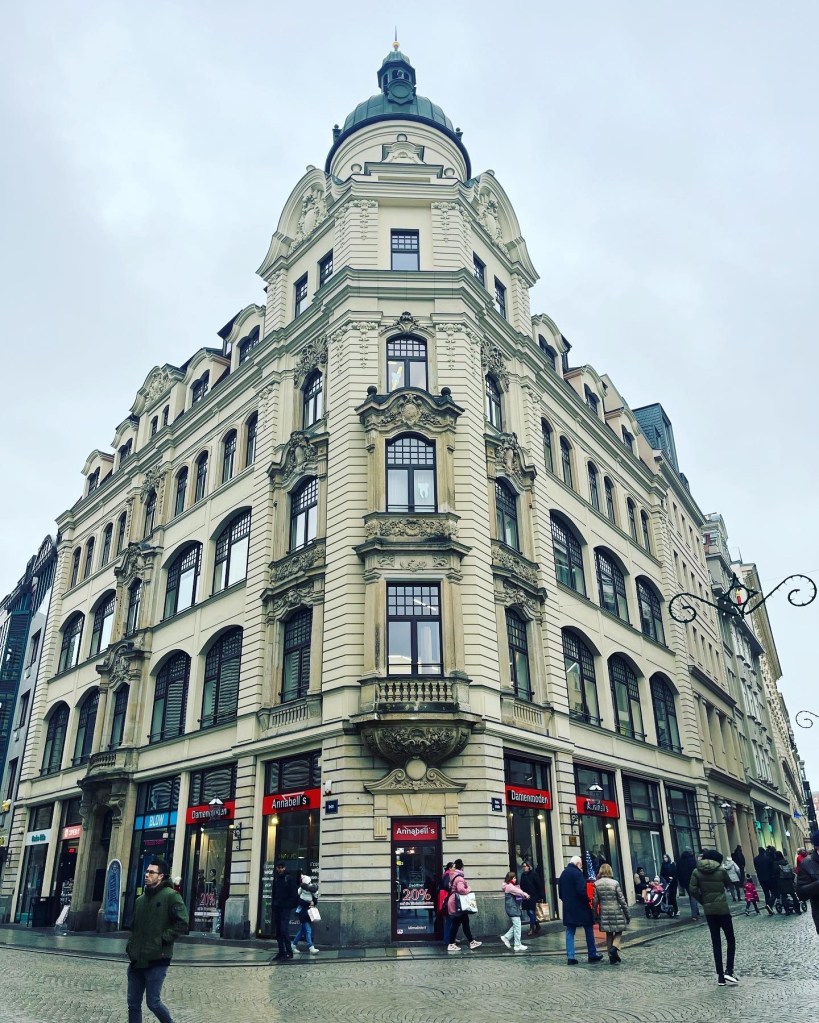
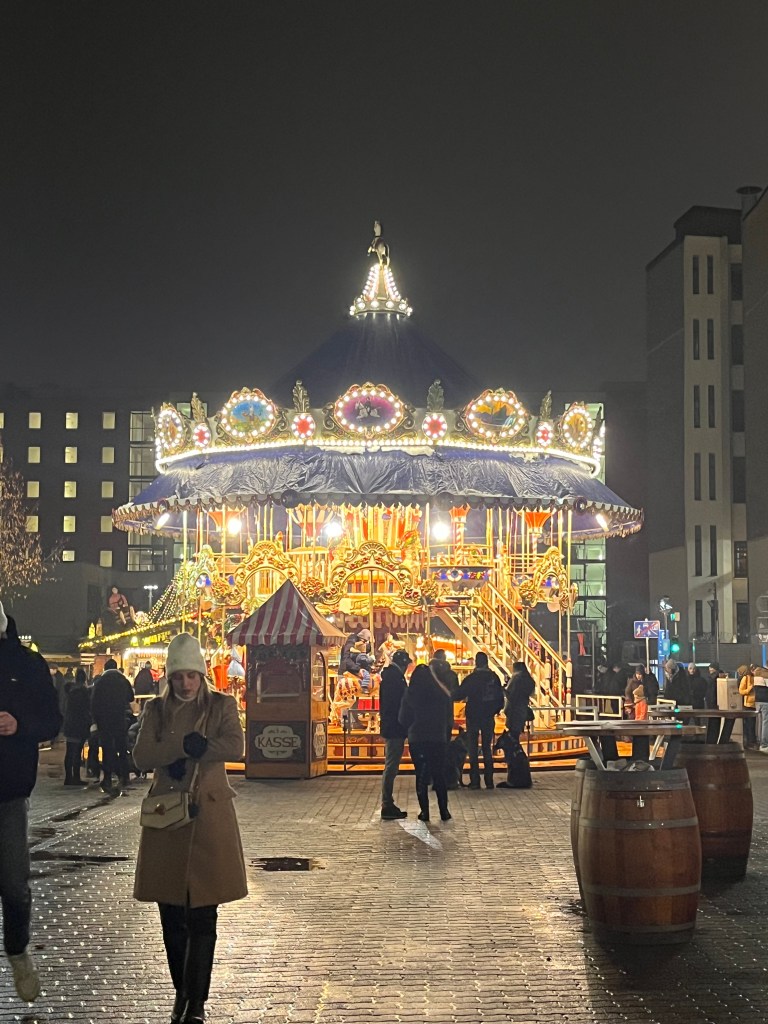
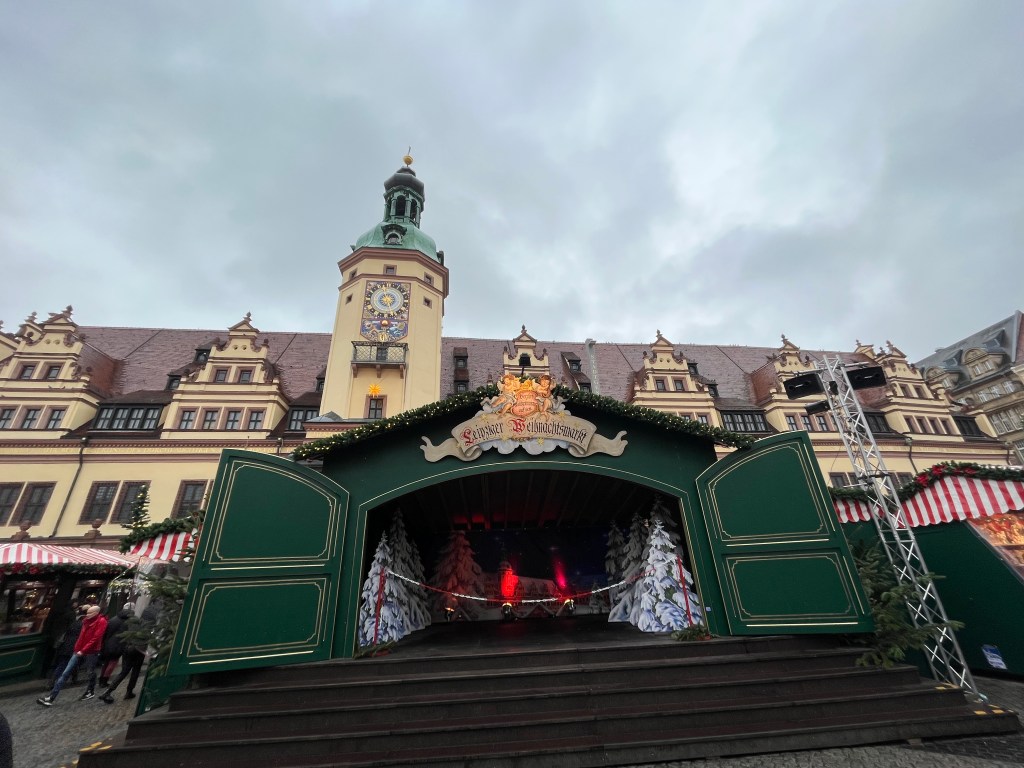
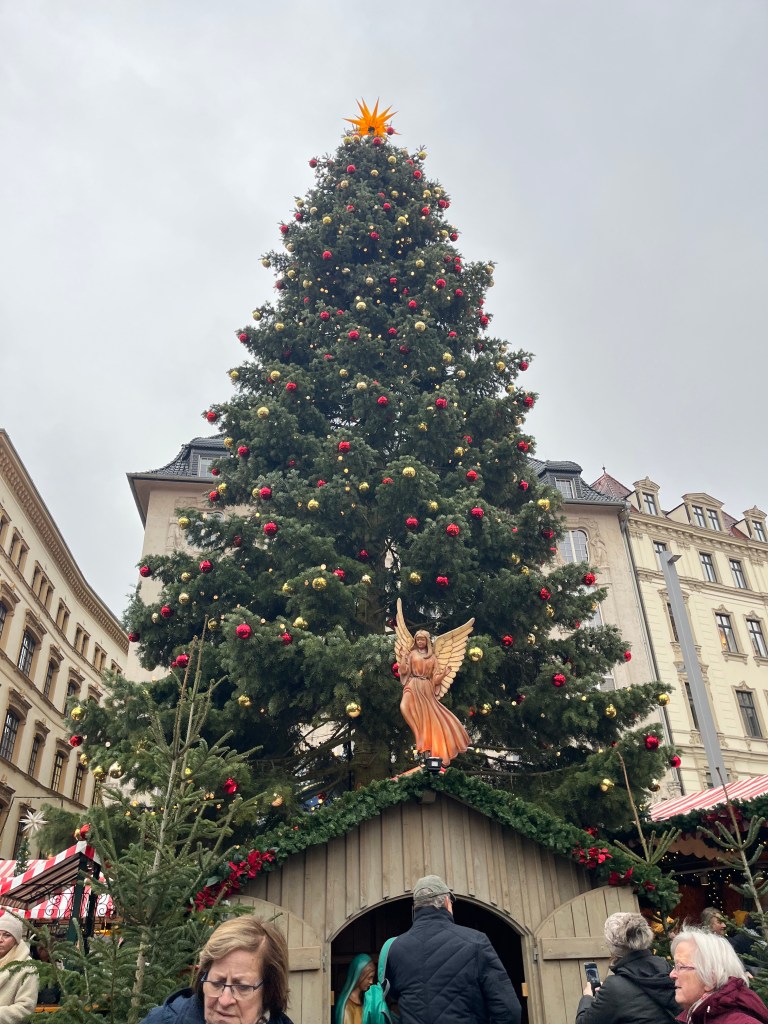
Christmas trees, fairy lights, gluhwein, and more. The Christmas markets in Leipzig were a magical sight. Germany has been on my travel wishlist for a long time, and I was so excited to spend a snowy few days in Leipzig.
I wasn’t expecting to travel again before Christmas, but my Mam surprised me with a trip to Germany. It was cold, it was snowy, it was a trip filled with festive fun.
I couldn’t wait to go, especially because Leipzig is a city that has a rich literary history, and there is nothing I love more than exploring a #literarycity.
We flew out on a Sunday and we flew back to Dublin the following Wednesday.
It is fantastic that Ryanair now has direct flights from Dublin to Leipzig.
It may have been a short trip, but it was filled with amazing food, lovely drinks, some shopping, and we explored some fantastic sights. I had the best time, and Leipzig is a city that I will most definitely be returning to, but for now, I’m delighted to be able to add Leipzig to the travel diaries.
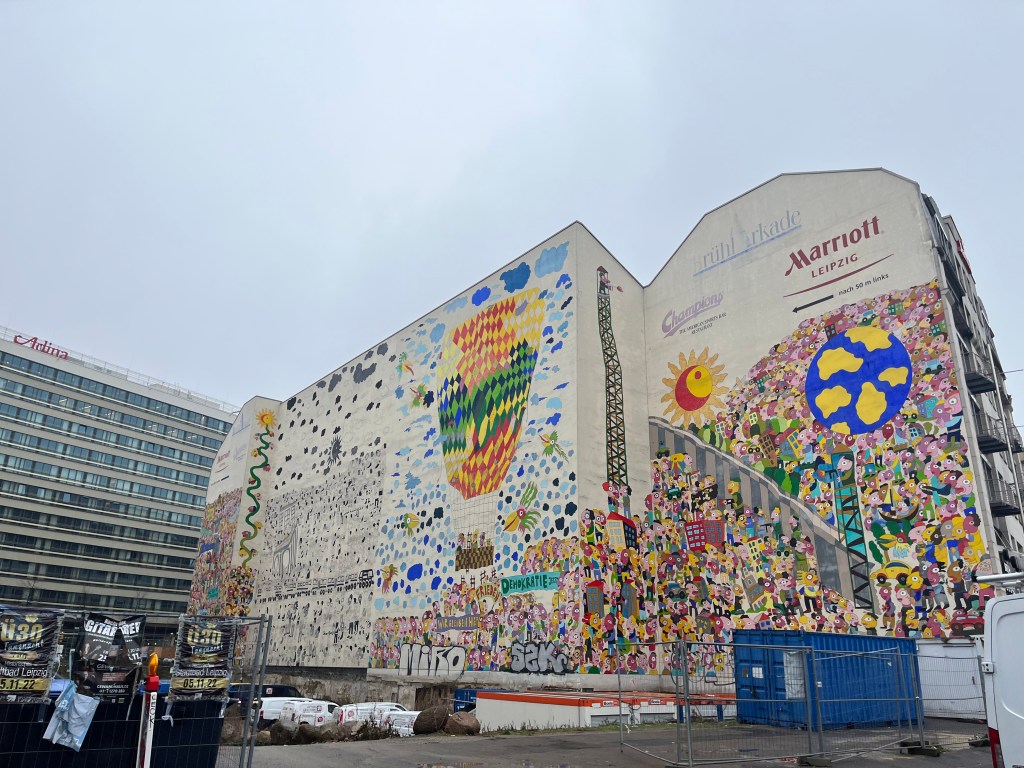
If you enjoy reading about literary inspired trips then read on, because I’m going to outline some of the exploring we did, and I’m going to share some of the snaps I took. This city is a photographer’s dream, especially since the entire city was decorated for Christmas.
It was glittering, sparkling, and all things festive.
Leipzig is a cultural hub, and I was especially excited about the city’s musical history.
The city has often been called the city of music, and if you’re a fan of classical music then this city is one you won’t want to miss.
Please note – All images shared are photographs that I have taken myself, with my own phone. They may not be shared without my permission.
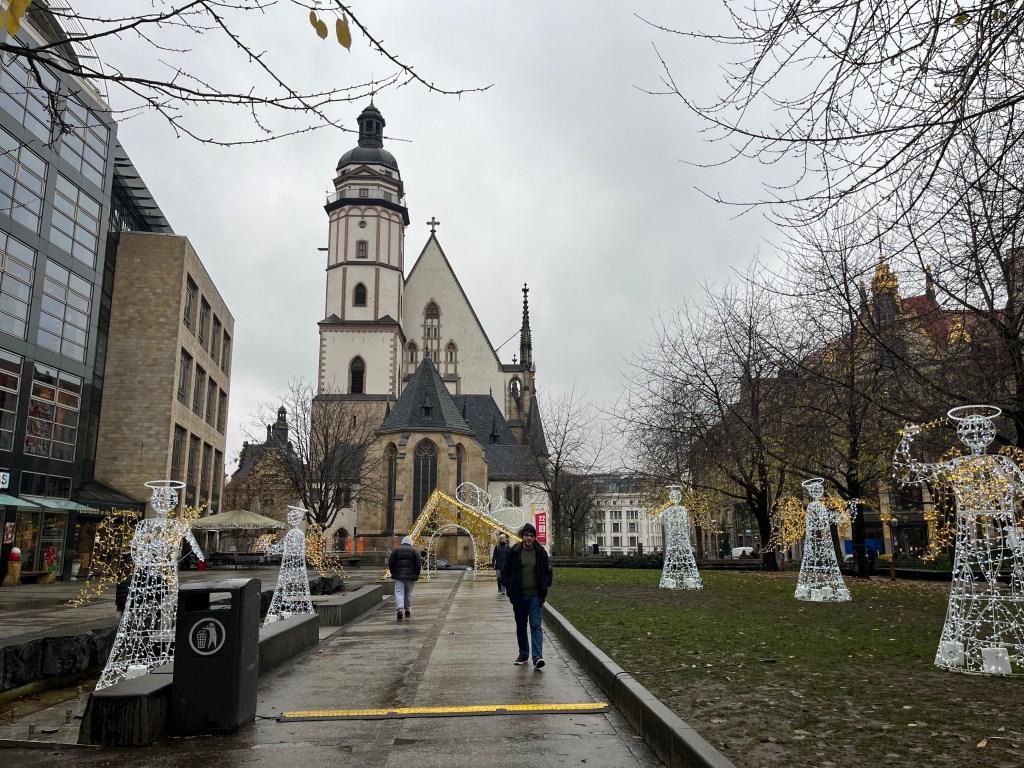
St. Thomas Church.
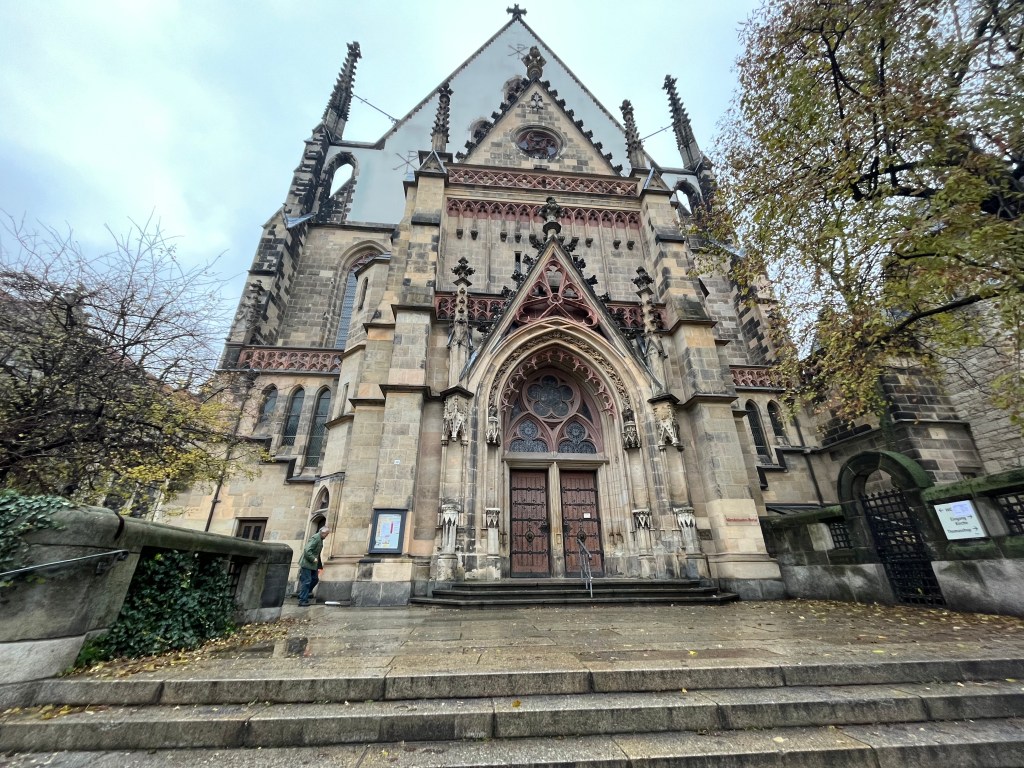
One of the places that I was most excited to visit was St.Thomas Church. (Thomaskirche).
This church is said to date back to the 12th century, and although it has seen some changes over time, it is hard to imagine that a structure has stood in the same spot for such a long time.
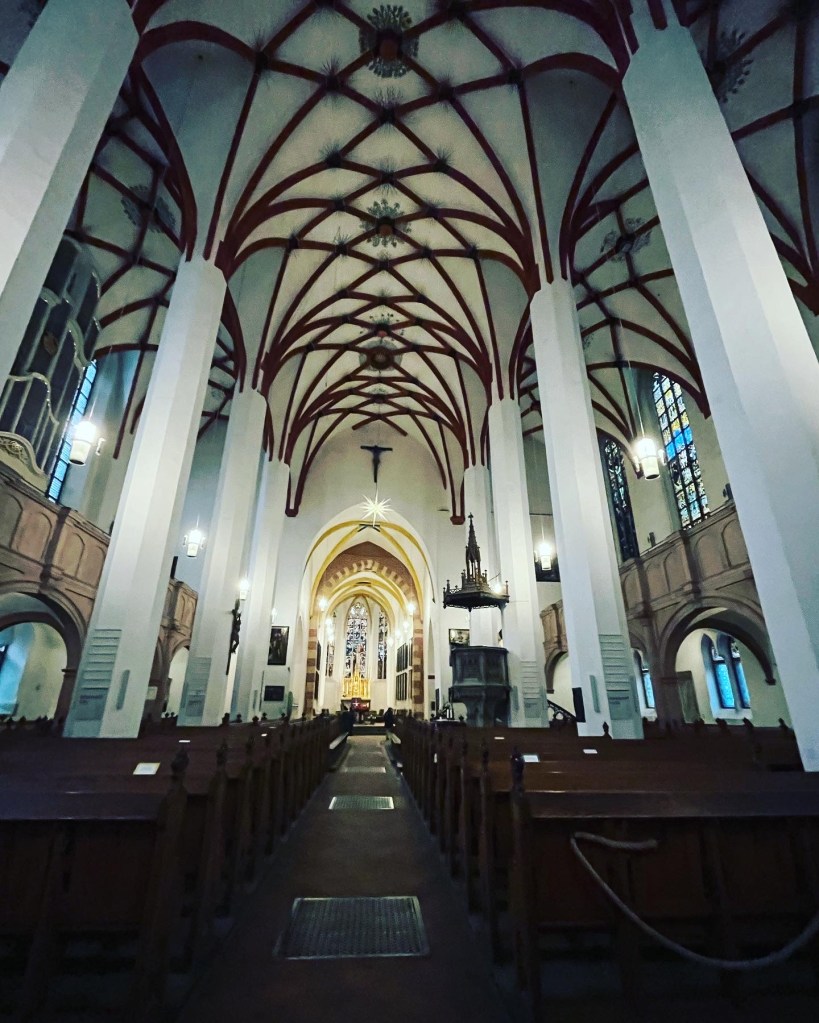
After some renovations, today the church is a beautiful, gothic building. It is a sight to behold.
St.Thomas Church is home to one of the oldest, and most renowned boys’ choirs. The St.Thomas Boys’ Choir has sung in these halls since the year 1212, and at one point in time the choir was led by the one and only Johann Sebastian Bach.
Johann Sebastian Bach has a reputation as one of the best composers of all time. He has been called a genius due to the way he composes counterpoints. A counterpoint refers to when melody lines are woven together, creating the harmony at the same time as the melody. Bach was also a particularly talented organ master, and during the church’s renovations, a new Bach organ was installed. This is the impressive organ that visitors will see when they visit the church today.
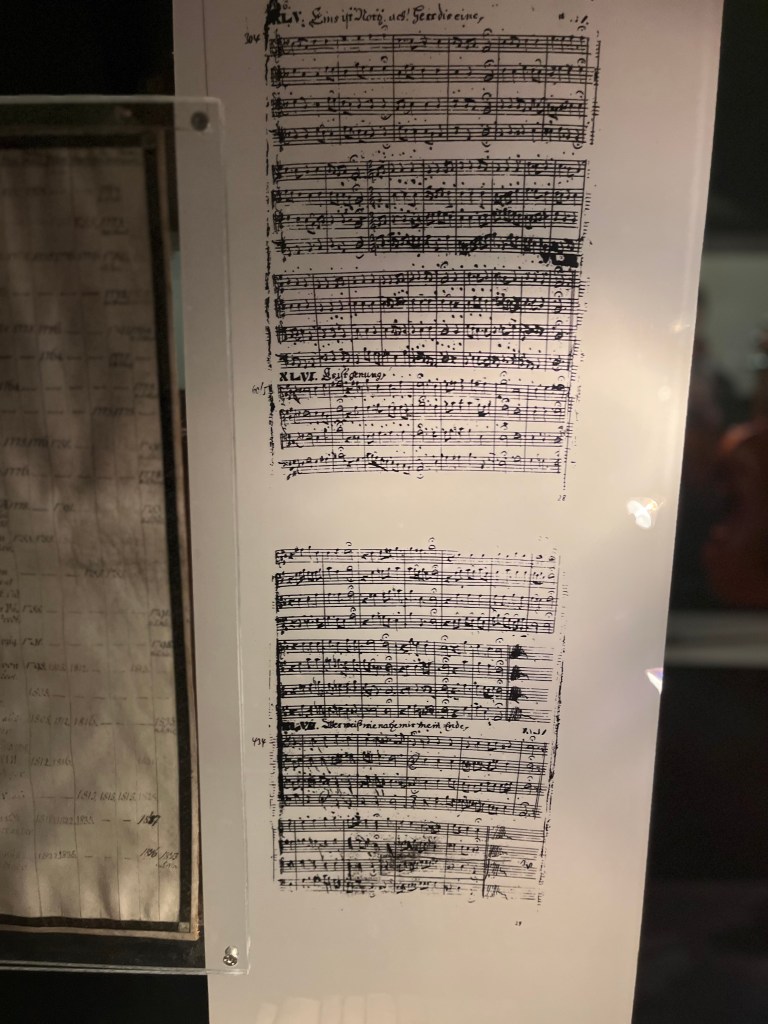
In a little corner room in the church, I found my dream come true. Instruments and sheet music, all saved and displayed in cases. It was amazing to see handwritten scores that have been saved for all these years. I love music, I studied music, and while I don’t discuss it as much as I should, I adore classical music and music theory.
I love scores. I think that there is something incredible about seeing the work that someone put on paper. Someone sat down and created song, and that is a talent that I wish I had.
Music is universal and immortal. It seems unbelievable that the music of a choir master from centuries ago is still being played, remembered, and respected today, but Bach has left behind an impressive musical legacy and reputation.
I was really hoping to see some sheet music and scores, so I was not disappointed.
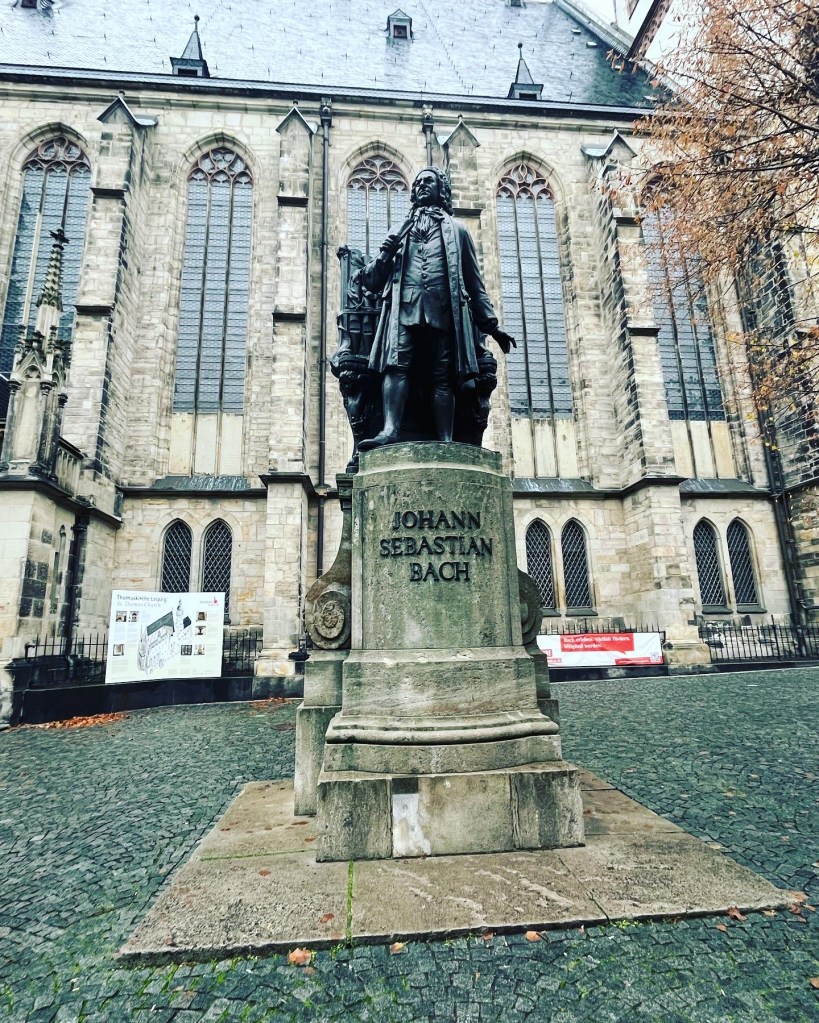
Outside the church, a statue of Bach sits overlooking the grounds. I think it is lovely that he is being remembered in St.Thomas Church in Leipzig after all of his musical service there.
It is said that Bach is buried there too. The Bach museum is directly across the street so all of these must-see sights are very easy to find.
This is a stop that music lovers won’t want to miss. Lovers of architecture will really enjoy it too, as this building with its high ceilings and stained-glass windows is just stunning.
I bet that hearing a choir echoing through these walls would be absolutely amazing.
I also want to note that visitors can also view the tower, but unfortunately I could not do this as this tour does not run past November. Oh well! This gives me yet another reason to return to Leipzig, not that I needed much convincing.
I’d also like to share one of my favourite Bach quotes.
“The aim and final end of all music should be none other than the glory of God and the refreshment of the soul.” – Johann Sebastian Bach.
I think that music is something that touches the soul and pulls on one’s heartstrings in a way that not many things can. It is absolutely incredible how a piece of music can resonate with a person so much. That is why I love this quote.
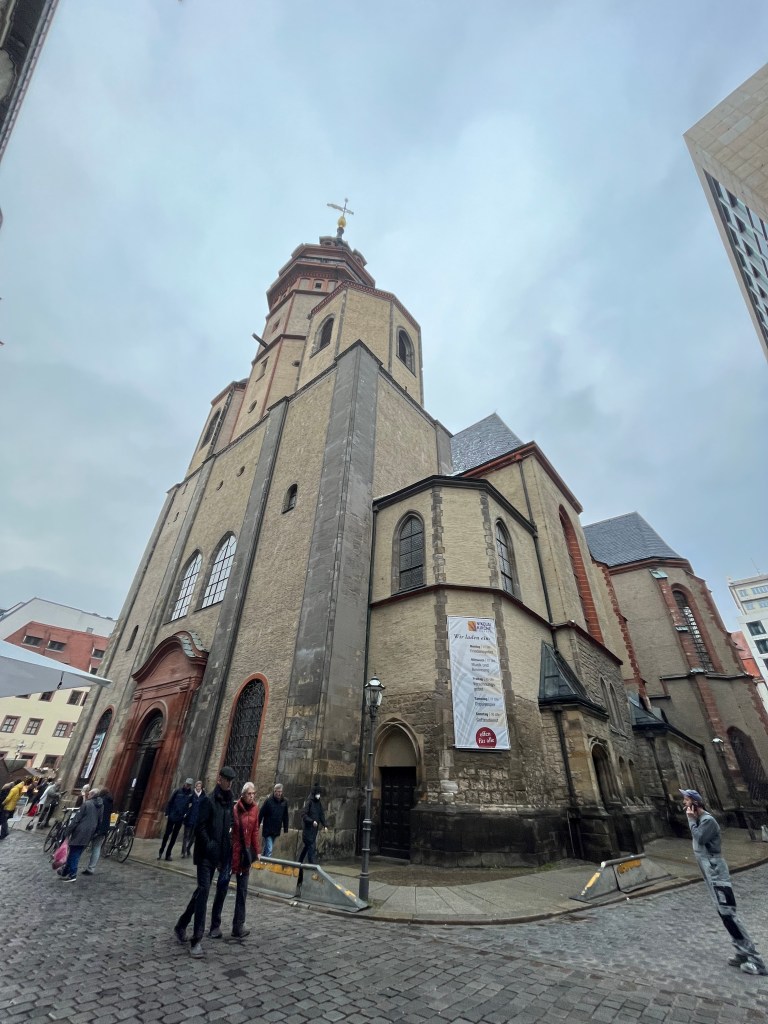
St. Nicholas Church.
The second church we visited was St. Nicholas Church (Nikolaikiriche).
At this church, visitors are not permitted to take photographs.
This church is absolutely stunning, it is a sight you won’t want to miss, however it is a sight that you cannot take photographs of. You can buy a private photo pass in the gift shop for €1, which I did, however these pictures are for private use only. The church states that pictures are not permitted to be shared online or on any social media platforms. I’m sure that people share their pictures anyway, however I’m not going to do so, as I would not like any of my own photos to be shared without my permission.
This church is a gothic building with baroque elements, and I would say that this building has a delicate, almost romantic feel to it. The interior is pink and white, and a huge silver organ sits overhead, looking down at all the pews. This organ is the largest organ in all of Saxony.
Several of Bach’s pieces premiered in this church. This church is only a few minutes walk away from St.Thomas Church so it is definitely worth making a stop at both.
Mephisto Bar.
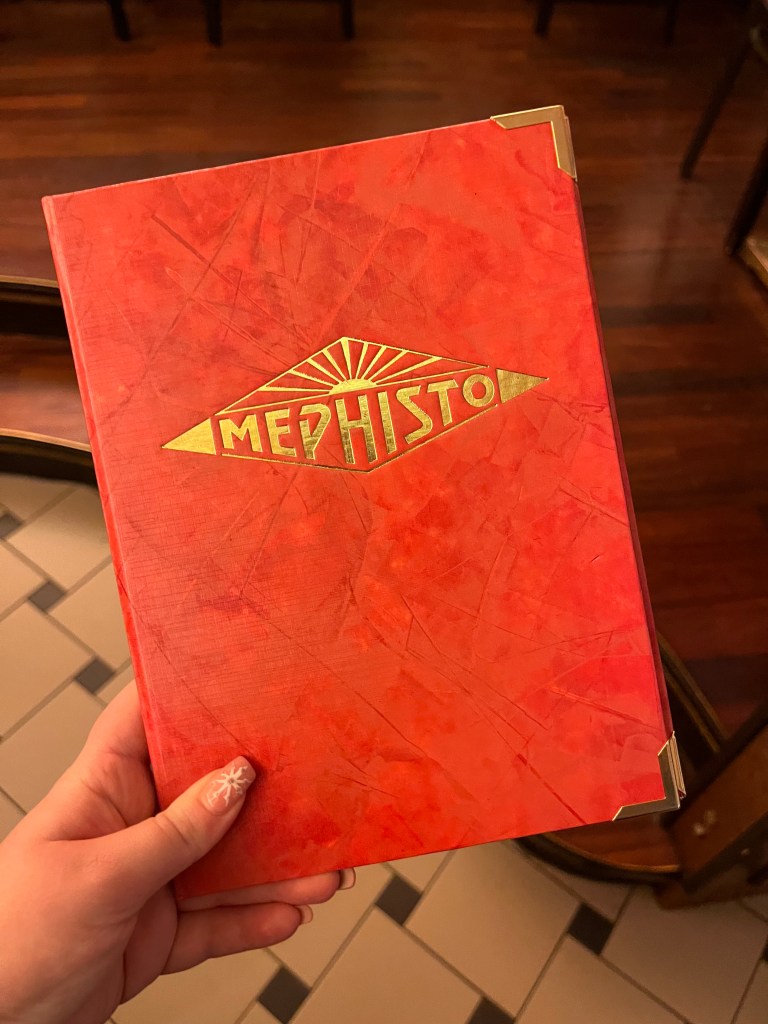
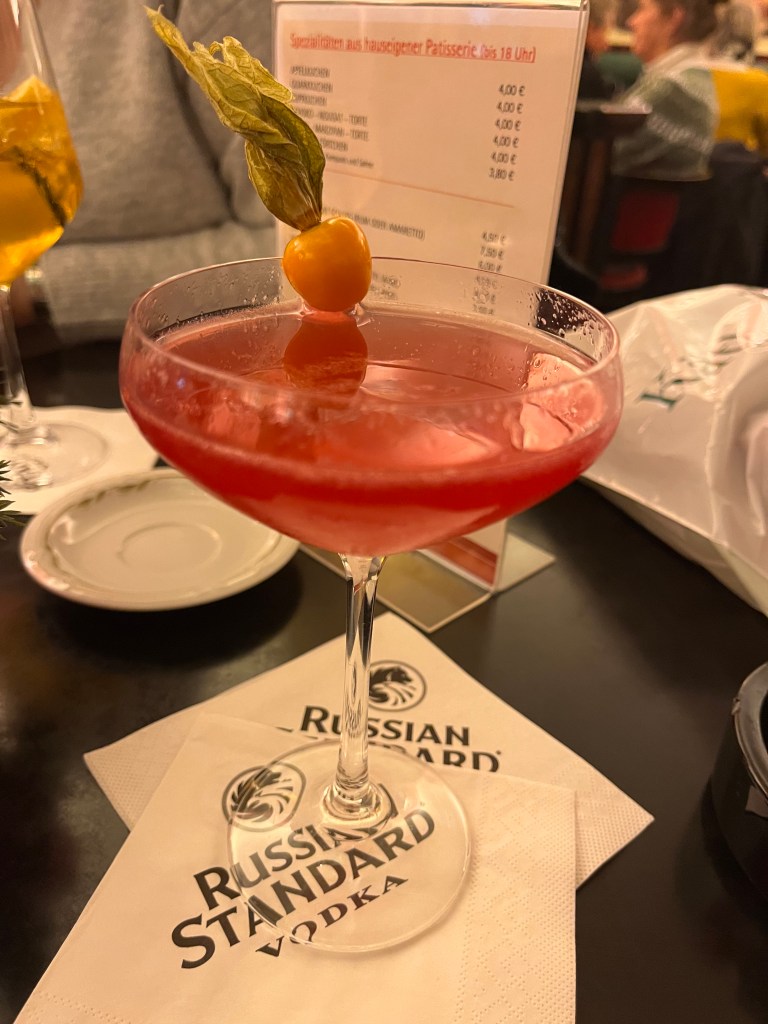
Mephisto is an elegant bar that you’ll find if you walk through the famous Mädler-Passage. The arcade was built between 1912-1914, and it is a sight of beauty and grandeur. At this time of year, it is also a sight of Christmas trees. Mephisto is a bar that has a wonderfully eccentric atmosphere. The stylish bar is home to Mephisto, who is a demon figure that can be found in German folktales. I just had to visit here as a lover of fairy tales and folktales.
The bar is elegant, with a devilish touch. Mirrors change, and at certain times, smoke and lightning flashes as Mephisto himself makes an appearance on the ceiling.
It is such good fun. Cocktail lovers need to make a stop here, as the menu is absolutely delicious.
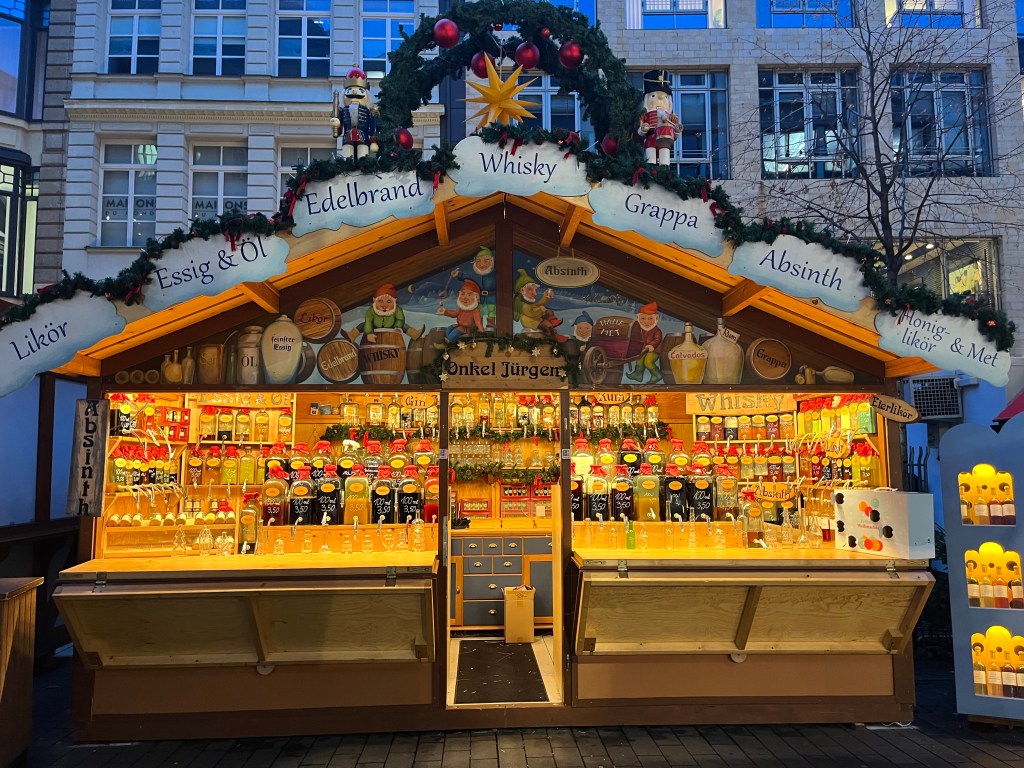
Christmas Markets.
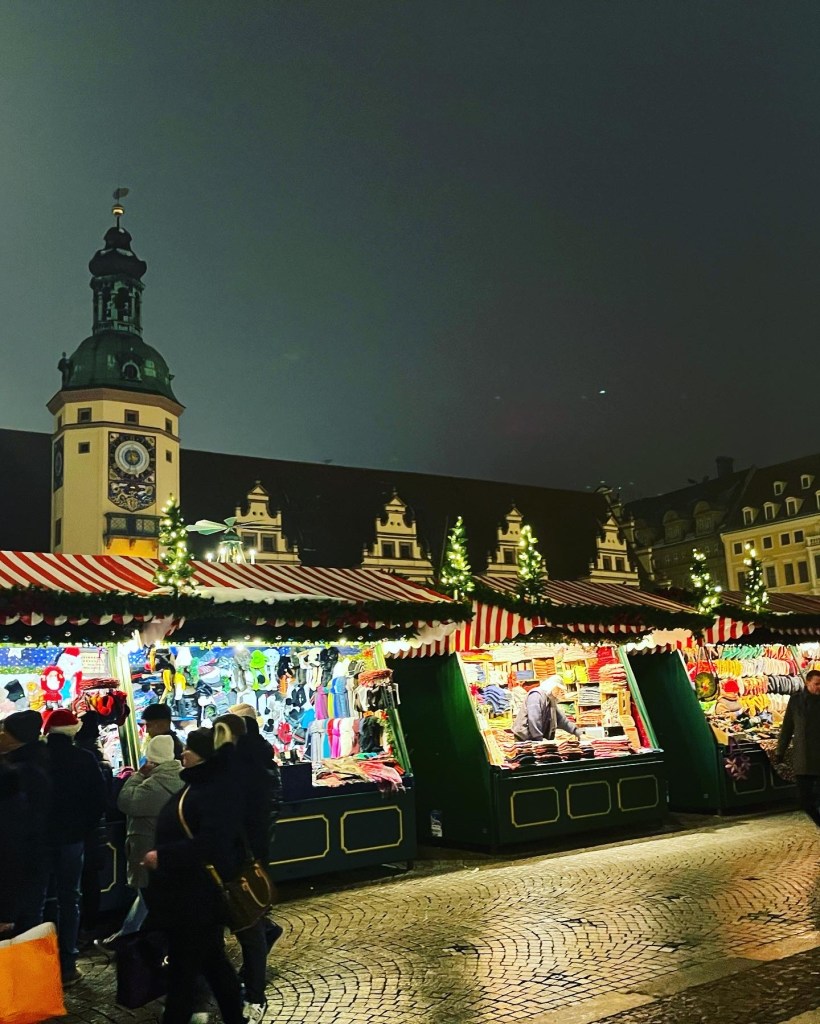
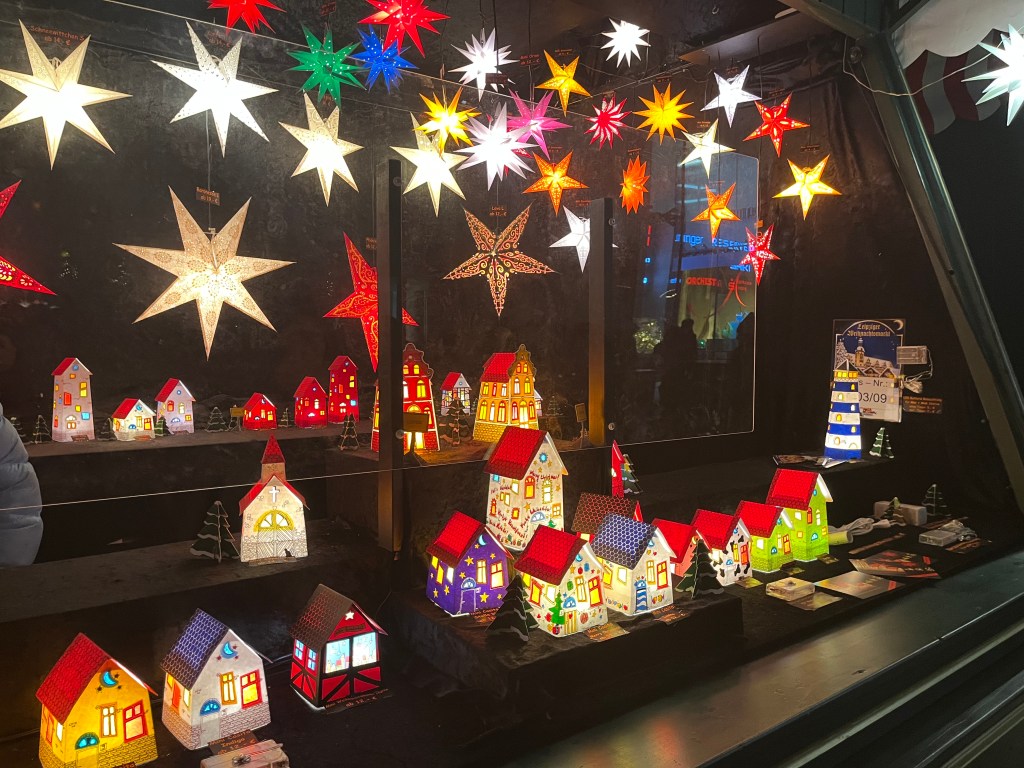
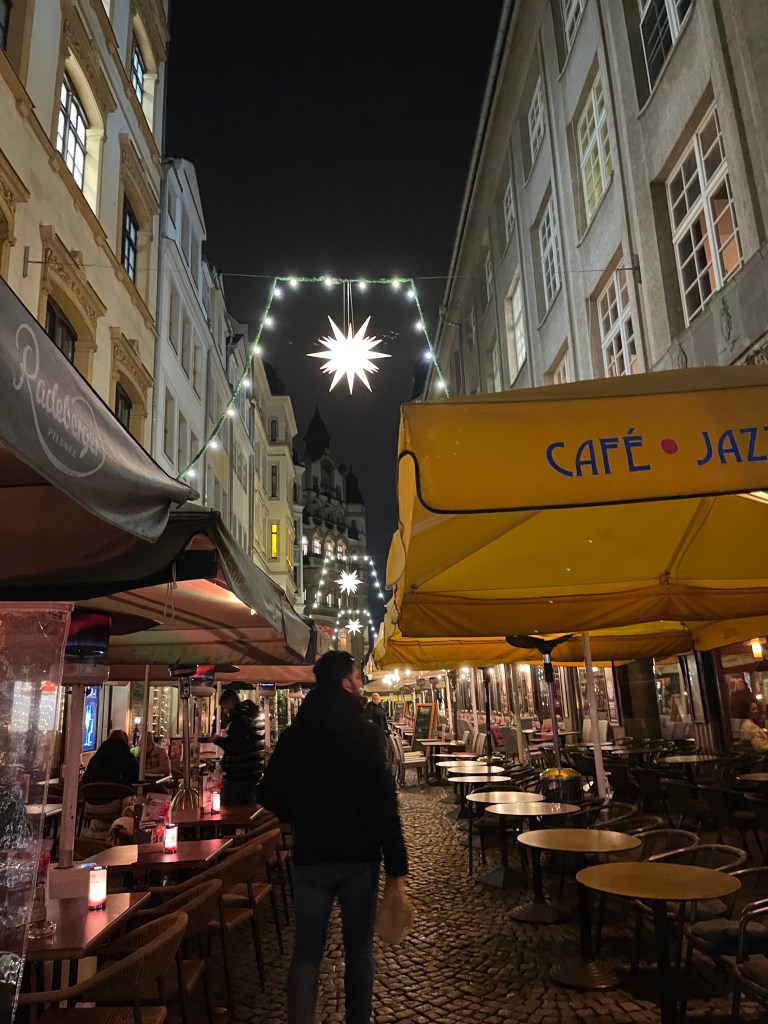
The highlight of my trip was exploring the Leipzig Christmas markets. These markets are the second-oldest Christmas markets in Saxony as they date back to 1458. The markets are huge, and at every turn you’ll find fairy lights, Christmas trees, decorations, gluhwein, toffee apples, and more. There are treats at every stall. Mugs, cakes, ornaments, jewellery, I could go on and on.
Exploring the markets while Christmas music played was absolutely magical, and there was a festive joy in the air. I absolutely loved all of the hustle and bustle, even though it was very cold.
I am so happy that I had the chance to tick Germany off my travel wishlist, although I definitely want to return to Leipzig as I know there is much more to do and see. I really wanted to see the Opera House, but unfortunately the schedule was tight. Next time that will be my first stop.
I would absolutely return to the Christmas markets in Leipzig although I do think that the city would be lovely to explore in the summer, and I want to explore other places in Germany too, so be it in the cold or in the sun, I will be visiting Leipzig again.
I really enjoy travelling to places that are filled with rich literature, history, and beauty, and I really enjoy writing about these trips. If you enjoy reading my travel diaries, then be sure to read all about my past trips to Oslo, London, Pompeii, Naples, Florence, and Rome as I did lots and lots of literary things in these literary cities.
Today I am going to talk about what an epigraph is.
Let’s dive in.
What is an epigraph?
Have you ever opened a book to find a phrase or a quote at the beginning of the story?
Most people have probably read many epigraphs without realising that there is a term for that quote that was at the beginning of a book.
That quote at the start of the book wasn’t just a quote, it was an epigraph.
An epigraph is a quote, phrase, or sometimes even a paragraph, found at the beginning of a book, article, or document.
Why do authors include epigraphs?
An epigraph can set the tone for what the text is about. Usually an epigraph can help establish the theme and tone of a text, and sometimes the epigraph can even help to contextualise the work.
Why is this important?
I personally love when a text has an epigraph, particularly if the author has used a quote at the beginning of their work because in my opinion, this gives readers some insights into the author. When we see that an author has chosen to quote someone, this tells me that this quote has resonated with the author somehow, enough that they chose to use it in their own work. There is something about seeing who someone chooses to quote that can tell us a lot about them, it tells us what kind of writers that the author admires, and it can also give hints about what the style of the work might be like, or whose style of writing the author enjoys.
I think that knowing the term epigraph simply expands one’s knowledge of literary terms.
If you are ever at a pub quiz, and one of the questions asks, “What is the quote at the beginning of a novel called?”, now you know the answer. You’d be amazed by what might come up in a pub quiz, the last time I participated in one, the theme was horror and my knowledge of gothic literature certainly got us a few points.
One of my favourite epigraphs can be found in Neil Gaiman’s Coraline.
Gaiman begins his novel with a quote from G.K. Chesterton.
Fairy tales are more than true: not because they tell us that dragons exist, but because they tell us that dragons can be beaten.
G.K. Chesterton.
This has been Theory Thursday. I hope you enjoyed it.
If you were writing a novel, what would your epigraph be? I’d love to know.
Hello everyone. Welcome to another #theorythursday discussion.
Last week I talked about acrostics. Check that out if you haven’t already. Today I am going to talk about another aspect of grammar. I am going to talk about word order and why it is important.
Let’s dive in.
What does word order mean?
Word order refers to the way words are traditionally arranged in a sentence.
The most common or standard word order that one will come across in English is Subject, Verb, Object.
You can break this down into letters so that it is easier to remember – S-V-O.
I am going to create a few examples.
The man (subject) parked (verb) his new car (object) in his driveway.
The girl (subject) ran (verb) the race (object) and won.
The subject is what the sentence is about, which is why the subject tends to come first in the word order. The verb usually follows because a verb is a doing word and so it makes sense for the verb to follow the subject because that tells us what the subject is doing.
Here is another example.
The dog (subject) digs (verb) holes (object) in the garden.
Why is word order important?
Word order is important because word order is what leads to a sentence making sense.
You can say “The dog eats dinner at seven”, because grammatically that makes sense. You cannot say “Eats the dog at seven dinner”, because in this order, these words are messy, they don’t make much sense although you can still find meaning in those words.
When the word order is correct, the sentence will make much more sense and it will be easier to read. It will be cleaner. It will be easier for a reader to follow.
It may seem obvious or insignificant or even a little boring, but word order is one of things we naturally learn and sometimes we don’t know there is a name for it. When we learn to speak and when we are in school, we are taught to compose sentences and then when we get older, we do this naturally and we might not even realise that word order is in fact an aspect of grammar, and an important one too. If the word order is changed, then an entire sentence’s meaning can be changed and it is important to be able to recognise this as a reader.
I bought myself The Complete Illustrated Works of Lewis Carroll a few weeks ago. It is a beautiful book and I’m so happy to have it on my classics shelf.
The illustrations were done by John Tenniel and I would argue that his illustrations are just as iconic as Carroll’s writing.
I have a framed drawing of Alice sitting at the Hatter’s tea party and I would suggest that this image is one of the book’s most recognised images, alongside the image of Alice standing before the Cheshire Cat as he peers down at her from his tree.
The book features Carroll’s stories, verses, comic writing, puzzles and acrostics. I have really enjoyed reading the acrostic poems in this book so I have decided that today I would talk about acrostic verse. Let’s dive in.
What is an acrostic poem?
An acrostic poem is a poem in which the first letter of each line spells out a word.
The first letter of each line might spell out a name, a message, a word, or sometimes even the alphabet.
Here’s an example of an acrostic poem in which the first letter of each line spells a word.
(Brief disclaimer – I am making up this example myself, and I will not claim to be a poet, however I like to create my own examples when I am explaining things.)
Summer is on its way. We will sit in the sun.
Under the trees, in the shade, we will talk, laugh, drink, and smile.
Nothing will ruin our days, we will be happy, wild, and stress free. Summer is on its way.
The first letter of each line spells the word sun.
There are different types of acrostic poems.
Usually the first letter of each line is what spells out the message; however, the letters can be found anywhere in the poem so it becomes almost like reading a code. The letters will always be capitalised and sometimes they can be found at the end of a line or in different places in a line.
Here’s another made up example.
In summer, the air is sweet and people are Kinder.
In summer, the Air is hot and as we walk the beach the breeze is filled with salt from the sea.
In summer, we Talk all night because it does not matter how much or how little we sleep.
In summer, everyonE smiles a little brighter and laughs a little louder.
If you look at this example I made up, you’ll see that I’ve spelled my name as the letters I’ve chosen to highlight spell Kate.
Why is it important to learn about acrostic verse?
I think that an acrostic poem is a really fun poem to learn about. I always say that the more you know, the more you understand, and the more you understand, the more you enjoy something so I think that learning about acrostic verse simply widens one’s knowledge of literature and literary forms, but I also think that learning about acrostics is just fun. It is a creative form as you have to think carefully about how you’ll phrase certain things and where you will place your letters in order to spell out your chosen name, word, or message. I think it is really interesting to be able to read in the code that an acrostic verse creates as if you didn’t know why these seemingly random letters were capitalised then you could miss out. I think that knowing about acrostics and how they work can add to your enjoyment when it comes to reading the works of someone like Carroll because the writing is whimsical and nonsensical and this use of acrostic only adds to that.
I hope you enjoyed today’s Theory Thursday discussion. I really enjoyed writing it. If you have any questions then please do let me know.
Hello everyone. Welcome back to #theorythursday. I feel recharged after my break and I am so excited to keep moving onwards and upwards. I hope you all have a great month.
Today I am talking about the active voice in a text so let’s dive right in.
What is an active voice? What does this mean?
I have spoken before about verbs, nouns, adjectives, and how in a sentence there is usually a subject. When a sentence is written in the active voice, this means that the subject of that sentence will be performing an action.
I will now create an example.
“The dog chased the ball.”
“The waiter brought the drinks.”
Why is this important?
When an author chooses to use the active voice, it is usually so that it is clear to the reader who is taking action in the piece. Using active voice when writing is also a helpful tool because sentences tend to become shorter which makes them easier to follow.
I personally think that using active voice can give a character more agency. For example, if I were to write something like this – “The girl ran from her assailant as fast as she could, determined to escape unharmed.” – In this very short sentence, I have given a female character a lot of agency, she is running from someone, she is determined to get away, this demonstrates that she is very brave and if I were a reader, reading something like this in a text, I would hope that she does in fact get away.
This has been Theory Thursday. If anyone ever has any questions, please do let me know.
Hello everyone. Welcome back to Theory Thursday. I took an unplanned break last week as it had been an extremely busy day and I will never publish anything on Katelovesliterature.com that I am not 100% happy with.
There is a #theatretrip post coming up soon as last week I went to see the incredible Les Misérables in the Bord Gáis Energy Theatre.
Today I am talking about the concept of tense in English literature so let’s dive in.
What does the term “tense” mean?
In English grammar, the term “tense” refers to time. Texts will operate in categories of time, the past, the present, and in the future so the novel will take place in the past-tense, the present-tense, or the future-tense.
Past, present, and future are the three main tenses. There are different categories within each tense, however that is a more complex topic for another day.
The past-tense is used to describe things that happened before the present. The present-tense is used to describe things that are happening in the current moment, and the future-tense is used when talking about things that will happen in the future.
I am going to make up some examples below.
Examples of past-tense:
“I walked to the shop yesterday.”
“Three years ago, we moved house.”
“I lost my purse last week.”
Examples of present-tense:
“I am reading a very good book.”
“It is raining very heavily so I can’t go outside at the moment.”
“I am doing my homework while my dinner is in the oven.”
Examples of future-tense:
“I am going to sing in the talent show next week.”
“Tomorrow I am going to the library to study.”
“I will buy a new jacket when I go shopping next week.”
Why is it important to understand the concept of tense?
I think it is important to understand the concept of tense because tense tells readers when something happens in a narrative. The use of tense can connect the past to the present, or it can inform us about the future. Deciding which tense to write in is an important decision as it can impact how a story is told. Understanding tense means that you understand another literary technique and having a broad understanding of a wide range of techniques enhances our understanding and enjoyment of literature in general.
This has been Theory Thursday. I hope you enjoyed it. Do you have a favourite tense? Do you prefer narratives that take place in the past vs.in the present for example? Let me know.





 Katelovesliterature.com