Featured

Derek Landy’s “A Heart Full of Hatred”: Mature Themes in Skulduggery Pleasant

A Heart Full of Hatred by Derek Landy. 

A review by Kate O’Brien. 

Landy has brought us back to the world of Skulduggery Pleasant yet again. In this latest book,  Valkyrie Cain learns that she is the next target of a killer. Skulduggery and Valkyrie find themselves wrapped up in another murder investigation, but the most unsettling part is that this case feels all too much like a case they just closed. 

For the first time, Valkyrie reflects on the dangers of what she does as the last case nearly took the lives of both her sister and her girlfriend, and now the same pattern seems to be emerging. Are those whom she loves in danger again? The killer is working hard as more bodies are piling up and the clock is ticking. The elites of the sorcerer world are planning to gather on a remote island to witness a special ceremony that might change the society forevermore. As expected, nobody is safe. If you’re a fan of Landy, you know that you’re in for a book of twists and turns. 

The Skulduggery Pleasant series continues to evolve, and those who know Landy’s style to be action-packed and very funny due to his sarcastic wit and sharp, fast, and very dry humour, will be glad to see that A Heart Full of Hatred remains true to that known and loved writing style. 

I will say that I feel as though this book is more character focused than some of the previous books. It does feel more mature in tone, especially as Valkyrie is beginning to reflect more on her feelings, and notably, on her fears. I’ve often said that I think that readers who grew up loving the Skulduggery Pleasant series will definitely enjoy these books, perhaps a bit more than readers who are just discovering the series now. That’s not to say that new readers would not or could not enjoy the series now, but there is a special sense of nostalgia that accompanies a series when you started reading it as a child and you continue reading into adulthood. How we feel about the characters, and how we relate to them evolves as we age, and I think the fact that this series has been in the world for so long is part of why some of the arcs are so impressive. 

I do think that I would be recommending the books now to older teens because they do feel darker now, especially because of how the tone has begun to shift. There is always a political and social awareness that can be identified in Landy’s writing, and in terms of viewing things through a lens of childhood and YA reading, there is absolutely a notable shift in Valkyrie specifically, because this person who was once quite cocky and believed they were indestructible now understands that they very well could be killed, but Valkyrie looks danger in the face anyways. She will not be deterred from investigating these murders. In this shift though, I would argue that readers can relate to this arc because as we get older, we do become more aware of our own limits and how things can threaten us, and we don’t have the same fearless abandon that we had as children when we didn’t understand that there are threats that are very real. So, I do think that this idea of feeling fear but going forward anyways really appeals to long-term fans of this series, because although the world of Skulduggery Pleasant is filled with magic, mystery, and wonder, the personal arcs we get to see are still very relatable outside of the fiction. 

I think it is quite obvious that Landy is leaning into horror genres that he loves when writing these newer books. Based on Landy’s dedication alone, in which he dedicates A Heart Full of Hatred to Freddy, to Michael, to Ghostface, “to all of the slasher movie killers…to all of the wonderful ways they’ve thought of to kill somebody …also to those who survived their rampages, who stopped running, turned around and kicked their asses,” I do think it is fair to say that this book feels very much like a nod to all the slasher movies that Landy himself must love. The book could almost be a great way to introduce a teenage reader to the slasher genre, but beyond all of this, I do think that resilience is the key theme of this latest book. 

There will always be things to fear, dangers will lurk more often than not, and sometimes we will fear for the ones we love most, but we cannot hide from those dangers. We must face them head on and always find the light in the dark. 

I would recommend A Heart Full of Hatred to any long-term Landy fan and to readers 14+ 

Thank you to HarperCollins Ireland for sending me an advanced copy. Please note this is not a paid review, not an ad, not PR etc. I was not asked to write anything, but I wanted to share my thoughts and as always, all thoughts and opinions are my own. 

Stay tuned for more literary discussions coming soon on Katelovesliterature.com 

Follow me on Instagram @katelovesliterature if you don’t already. 
A Night with Jane Casey: Exploring The Secret Room

I had the most lovely, literary evening on Tuesday night in the Clarence Hotel, courtesy of HarperCollins Ireland. It was a pleasure to be invited to the “proof party” to celebrate Jane Casey’s upcoming new book. The Secret Room is a locked-room mystery, so fans of Agatha Christie are in for a treat. It is always amazing to be in a room full of very enthusiastic book lovers, and it was so lovely to meet Jane in person.

Coming out in April this year, The Secret Room follows the very privileged Ilaria Cavendish as she checks into a luxury hotel in London. The glamour promptly fades when she is found dead in the bath by her lover.

It must have been an accident. After all, no one went into the room with her and no one came out, and yet, all the signs point to murder.

DS Maeve Kerrigan enters the scene, happy to have a case like this to take her mind off of everything going on at home. When her partner, DI Josh Derwent, is arrested, Maeve must investigate the two cases side by side, not wanting to face what will come to be if she fails.

Jane said she hopes this book will be a “just one more chapter” page turner, and based on the fact that she has described it as a story that will appeal to classic Agatha Christie fans, I’m excited about diving in.

I’m a fan of crime fiction, and I can thank my mother for that. She has always been a fan of Michael Connelly and too many other authors to name. Our windowsills at home are filled with books all about mysteries and cold cases, impossible cases that just don’t make sense until they do. We also watch our fair share of detective series together. Some are better than others, some are quite formulaic, I can admit that, but we still always have a great time watching a story unfold.

As you might imagine when I came home with this proof, she immediately said she wants to read it after me, and I already know that the concept of Jane’s locked-room murder is going to have her racing through the pages.

So, what is a locked-room murder?

Popular in crime fiction, a locked-room murder is a type of crime that seems impossible to commit. It usually involves a crime scene that, appears to have only been entered by the victim. In this case, Ilaria checked into her hotel room and locked the door. She went into her room alone. Nobody else went in or out, and then she was found dead. How did that happen?

Another example is if someone enters a room that has been sealed from the inside, meaning that nobody could get in or out, and there does not appear to be another way in at all e.g. there are now windows, no backdoors, but when the body is found, it is clear that a weapon was used, but in the sealed room there is no weapon to be found. So, where is that weapon now, and how did the perpetrator get in and out after using it?

The locked-room mystery presents readers with an impossible case, one that couldn’t have happened and yet it did. That is what is so addicting when our detectives enter the scene because they have been presented with a very strange puzzle, and we go along with them as they unravel what went on. Nothing is as it seems when faced with a locked-door murder. Readers can expect lots of twists and turns, dead ends and strange nuggets that become leads, and before you know it, you’re hooked and desperate to know more.

I look forward to writing a full book review after reading The Secret Room by Jane Casey. As always, all thoughts and opinions shared will be completely honest and completely my own.

In the meantime, I would like to say thank you again to the HarperCollins Ireland team for inviting me on Tuesday evening.

If you follow me on Instagram then you will already know that I have two literary discussions coming up soon.

Having just seen Blue Velvet, I plan to discuss the intoxication of morbid curiosity, and I am looking forward to seeing King Lear in the Gate very soon, and I plan to write about the obsessive nature of integrity.

Stay tuned.

Featured

Balancing Passion Projects and Real Life in 2025

Happy New Year! I hope everyone has had a lovely and merry festive season. Before Christmas I decided to take a break from writing long-form literary discussions. I’ve stayed active on Instagram in the meantime, but now that we are heading into a new year, I think it is time to try to get back to one of my most favourite things – talking about literature. 

I’m not going to start the year with promises. I’ve always talked about how writing for my website is my passion project, but it is not my “real-life” job. This is still the case. I am very lucky to be able to say that I really enjoy my “real-life” job, and while I feel it is always important to maintain balance and fit in time to do things such as work on passion projects, sometimes the schedule gets very busy and full of events, and there have been some long-form topic ideas that I was really looking forward to writing, but I had to put them aside and take a break because there is only so much time in the day and you can only spend so long typing and looking at screens. (My “real-life” job involves writing too. I am one with my keyboard at this stage!)

So, while I would love to say that I will be publishing one long-form discussion every month here on Katelovesliterature.com, I don’t want to promise that and not be able to maintain it. 

My aim for 2025 is to publish a discussion at least once a month. I’m planning to write longer pieces as publishing will be less frequent than it once was. 

I will still be posting mini reviews/literary thoughts on Instagram so make sure you follow @katelovesliterature if you don’t already as my literary lover grid is the place to see what movies I’m loving, my current reads, theatre trips and much more. I love the bookish corner of Instagram, so when I’m not writing here on Katelovesliterature.com, I am more frequently active there. 

I am going to kick off 2025 with a reading recommendation. 

The Third Gilmore Girl: A Memoir by Kelly Bishop was one of my most loved books of 2024. 

In this book, the witty, incredibly intelligent, resilient, and loving force of talent that is Kelly Bishop aka Emily Gilmore of Gilmore Girls, shares her life story. From her earliest days of falling in love with dance classes as a child, to her performing days in Las Vegas and of course her Tony winning run on Broadway, to her Hollywood credits including Dirty Dancing and of course Gilmore Girls, Kelly Bishop shares the ins and outs, the ups and downs of her life. Her professional life and her personal life, and even if you have never watched one single episode of Gilmore Girls, this is a must read. Kelly Bishop is an incredible storyteller, and her memoir is so open, honest, funny, and very moving. I think I read this book in three days. I couldn’t put it down. 

I don’t read memoirs very often, but I loved every page of this one. It is refreshing to read about a woman who knows her own mind so well, because as you go through this book, with every chapter it becomes clearer and clearer that Kelly Bishop is a woman who knows herself. Even if she later decides that something was not the best decision, she knows exactly why she made the decision at the time. She talks about herself, her experiences, and the people in her life, at work and at home, with an amazing sense of clarity. It is impressive and it is a skill I’d love to further develop. There are also some absolutely beautiful photographs included in the book. It was stunning to see someone’s creative life displayed and celebrated in such striking shots. 

I highly recommend The Third Gilmore Girl: A Memoir by Kelly Bishop to anyone who is a fan of the theatre, of dance, of Gilmore Girls, because this is a book that you will love. I would also encourage any reader to give this a go, because Kelly Bishop’s life story is a fascinating, entertaining read and I think anyone who sits down to read this book will enjoy it. 

Here’s to 2025. Here’s to more literary chats. 

Wishing a very happy, healthy new year to you all. 

Kate xo.

Featured

Mini Media Reviews

Dear readers,

I have been away from my desk more often than I would like to be. While I still absolutely love discussing all things literature, and I am sad to have to pause some long-form discussion ideas for a while, I have decided that a break is needed.

Katelovesliterature.com has always been my passion project. I love my little website, and I love putting thoughts, ideas, and discussions about the wonderful world of literature and the arts out there for anyone to enjoy, and it is so lovely to see people engaging with thoughts I’ve published. It is hard to admit that a break is needed, because I am a person who enjoys doing many things at once, but my full-time, real life job involves writing every single day (I love it!), and so it is getting harder to find the needed time to put the effort I want to into pieces for my passion project. I’ve never just thrown out unfinished thoughts. I like to write notes on the ideas, the points I want to make, and then I write a first draft, I proof it, etc., etc.

I could be less strict about that process, but I never want to just throw anything online. That is not how I do things. If I am going to publish a review, or any kind of literary discussion, then I want to take the time needed to write it properly.

I am taking a break from publishing long-form discussions for the time being. I’m not sure when I will publish a piece here on Katelovesliterature.com again, but I will be remaining active on Instagram. I plan to publish mini reviews on my grid, and you can always follow along with what I am reading and watching as I share on stories frequently. While Instagram is not an overly serious social media platform, I do ensure that any kind of review I post there is well thought-out too, so if you do enjoy my longer discussions here (thank you!), hopefully you will also like my mini media reviews too.

You can follow along @katelovesliterature

Thanks so much to everyone who has ever left a comment or sent me a lovely message following a piece, you know who you are. I appreciate everyone who has followed along as I have built up my portfolio of reviews and literary discussions.

P.s.

Happy Halloween! Be safe, have fun.

Kate xo

Featured

Fahrenheit 451 by Ray Bradbury

A book review by Kate O’Brien. 

Can you imagine a world where books are deemed valueless by society? Can you picture living in a world where no one asks questions, where even walking outside is deemed suspicious? Can you imagine the chaos of what would happen if firemen were no longer heroic figures who put out flames and instead, they lit houses on fire instead? The scary thing is maybe we can picture this world. Ray Bradbury brings this world to life in Fahrenheit 451.

Guy Montag is a fireman. He has always been a fireman. His father was a fireman, his grandfather was a fireman, and these days it is almost like his hands move by themselves, pouring kerosene and lighting matches as though he has no part in the action. He is happy to be part of the world that never reads until he is not. Guy’s mindset begins to shift when his young neighbour Clarisse awakens a long-forgotten part of his mind, if it was ever awake at all, the part that likes to think, by asking a few questions. Then one day, a horrific fire forces Guy to admit that his hands do not move of their own accord. He does indeed start fires, he burns books and with them, he burns curiosity, he burns access to information, he burns wonder and stories until he can no longer burn anything anymore. Maybe he should take a look inside these books, maybe he should see what all the fuss is about, maybe he does not wish to be a fireman anymore. 

Fahrenheit 451 is rather bleak, and it explores heavy themes such as conforming vs questioning, the individual vs society, emptiness vs meaning. This dystopian book may be desolate and at times it is quite dark, however it does end on a hopeful note, one that notes the resilience of humanity after exploring how cold humanity can become. 

This book is about book burning, but not in the way that one might expect. Fahrenheit 451 is not about certain groups of people burning and banning certain kinds of books, this book is about a world where all books are deemed worthless. Fahrenheit 451 presents a world in which all emotions aside from happiness are repressed. You cannot have too many thoughts, you cannot have conflicting ideas, you cannot know about any dangers or sadness because none of those things are fun. Go speeding in your car, have walls of television, have constant media playing through earbuds, even when you sleep, escape all thoughts, escape all reflection, and just have fun. All fun, all the time should be great, shouldn’t it? We may think so, but within all this fun, within all this constant, relentless distraction, there is nothing but cold, empty, misery. 

I really enjoyed this book, despite it being more on the bleak side of the reading scale. 

I have always been in a position where access to books has never been a question. I have always been able to read anything that I wanted, and I recognise that this is a privilege. It is easy to take books and access to all kinds of books for granted sometimes, which is why I felt that Fahrenheit 451 was an especially important read. I would recommend this book to readers aged 14+. 

I had the opportunity to discuss this book even further alongside my podcast co-host Seán, and if you are interested in the themes I mentioned up above, you can listen to episode #04 of Your Book or Mine? now on Spotify. 

#JoinTheBookClub

Featured

The dandelion’s tale: An allegory of migration by Margaret Anne Suggs.

A review by Kate O’Brien. 

Sometimes it is the most simple stories that pull on our heartstrings the most. 

I often find that the books that are created with young readers in mind are the books that tell the most touching, poignant stories. Maybe that is because young readers are often the most open, accepting, and curious about different ideas. I do believe that cynicism attempts to take up more space as we get older, and I make a point to try to retain that open sense of childhood wonder. I never want to scoff at a new idea, instead, I want to try to embrace it with the same inquisitiveness that I would have when I was seven or eight. 

In The dandelion’s tale, through her use of beautiful watercolours, and lighthearted storytelling, Margaret Anne Suggs has created a lovely, much needed book that parents, guardians, and teachers can use when starting to have conversations with young readers about how sometimes, people must leave their homes and find somewhere else to live.  

One of my favourite pages can be found near the very end of this book. Margaret Anne Suggs has taken the time to share just how important dandelions are, and how they hold a valuable place in the world. I feel that this book is not just a tool to help children learn about migration, I also feel that this book could be used to encourage people, especially young children, who have taken the journey to a new place just as the dandelions did. 

I cannot speak from personal experience about migration, but it is not hard to imagine that having to leave one’s home because it is no longer safe and trying to find stability in a new place is not easy, and it must be especially hard for children who do not fully understand the extent of what is happening to them. I think having a book that represents their journey and highlights how important they are is a wonderful thing. If young readers get to see how strong and resilient the dandelions are, they can also think about how strong and resilient they have been. 

I speak about the power of books very often. I always discuss how books expand horizons by allowing us to understand other people, other places, and other experiences beyond our own. 

I believe it is very important to introduce bigger topics to younger readers in a way that they can manage, because I think the more we know, the more we can do, even at an early age. Children experiencing migration firsthand and children who are learning about it, deserve to be given high quality learning materials to help them understand what is going on in the world around them. The hope would be that the more they understand the different experiences that people face, the more understanding and caring they will be towards each other. 

Margaret Anne Suggs has created a story that can give readers flexibility. It can be a beautiful, quite literal story about the strength, beauty, and resilience that is found in nature, and as we open ourselves up more to viewpoints, and as young readers get that little bit more advanced, the book can be appreciated further, as we introduce young readers to wider conversations about migration in a very age-appropriate way. 

I want to thank Graffeg Books for sending me a copy of this book in the post, and I want to congratulate Margaret on a beautiful story. Those of you who follow me on Instagram will know that I have had the pleasure of working with Margaret before, so it is wonderful to see more of her creativity come to life, however it is important to note that all opinions discussed above are my own, and this is not a paid for review, nor is it sponsored in any way.

I would recommend this book to readers aged 6+. 
For more updates about what is coming up next, you can stay up-to-date on Instagram @katelovesliterature

Featured

2:22 -A Haunting Review

2.22: A Ghost Story 

Do you believe in ghosts? Why? Why not? Can you prove they exist? Can you prove they don’t?

What exactly happens at 2.22am? 

These are the questions that we explore in 2.22: A Ghost Story. Danny Robins’ play asks  audiences to consider if the supernatural is truly real or not, or do we just turn to ghost stories when something happens that we can’t explain? Maybe we don’t want to explain. Maybe blaming a ghost is easier. 

New parents, Jenny and Sam (Sammy), are at odds because Jenny has been waking up for four nights in a row to unsettling feelings, strange noises, and eerie energy in her baby girl’s room at 2.22am. Sam was away on business so he hasn’t experienced the strange events yet, nor does he believe in them because he is the sceptic of the play. 

The evening is already tense, but things go from bad to worse when Sam’s old friend from college Lauren (Loz) arrives for dinner with her new boyfriend Ben. Sam and Lauren are the scientifically minded pair, while Jenny and Ben are more open to believing that perhaps spirits do join us. They have a sense of faith. Maybe those who have passed do try to make some form of connection from an afterlife somewhere. 

The entire play is set over one evening. Jenny, an exhausted new mother who is sick and tired of her husband not taking her very real fears seriously, makes the group promise to sit up with her until 2.22 in the morning. Her plan is to prove that strange things happen at this time, things that appear to be targeting her baby. As the night plays out, egos are bruised, fights are picked, and tension builds and builds. 

I enjoyed the play. It is rare that I see something that I don’t know anything about. Usually I know the play already or I have some ideas about the plot, but I went to see this one blind. I felt it was well-written. I really enjoyed the conversations about tearing down houses and putting up “modern Ikea kitchens.” Places have layers and it is important to think about the history that people and places leave behind. Even if we don’t believe in ghosts, when people are alive in our memories, doesn’t that mean they’re still with us? 

The thriller/tension builds very well as there were several strange occurrences that felt completely unexplainable. Such as who drowned the teddy bear with white spirits? How did it get in the bathroom? Is Jenny’s exhaustion causing her to imagine things? Is she having severe anxiety because she is a new mother, determined to protect her child? Or is there something more sinister in the house? 

The play explores people too. What we do, why we do it, how do we come to believe what we believe? How and why do we make certain choices? What if we made different ones? 

Sam and Lauren are quite clearly more than just old college friends. Ones who never dated, but maybe feel they should have. None of her boyfriends ever match up to him, and he never likes anyone she dates, the two seem to be always on the same wavelength until Lauren is more open to the idea of ghosts. 

In my opinion, Lauren and Sam are the most complex characters in the play, and Colin O’Donoghue and Laura Whitmore are solidly intense and brilliant in the roles. Lauren works in mental health, and she’s clearly well-educated, immaculately dressed, but she feels as though she is missing out in certain regards. She’s missed out on one thing, on one person she wanted the most. She’s funny, cheeky, but also clearly struggling with heavier feelings and as the play goes on, her arc is highly engaging. 

Sam is a classic sceptic. Always rolling his eyes, always ready to pick apart the amazing and unbelievable. He gets a kick out of explaining things to people. He’s very unlikable. 

If there was one aspect of this script that I didn’t love, it’s that this play is written by someone who clearly believes in ghosts and enjoys ghost stories, so Sam is portrayed as a cynical, asshole, sceptic. It is typical in these kinds of stories to have the sceptic be always ready to reel off a bunch of facts in a gotcha fashion. 

The issue I found was that Sam is unlikable for other reasons, he’s an asshole in many ways, but he’s not an asshole because he’s a sceptic, he’s actually just a sceptical asshole. The difference is important. I don’t dislike Sam because he refuses to believe in ghosts, I dislike Sam because he’s condescending, arrogant, and he talks down to his wife (and everyone else) constantly, while getting far too close for comfort with Lauren. The biggest issue is that he cannot seem to give his wife any sort of sensitivity. Even if he does not believe in anything supernatural at all, he cannot even acknowledge that the fear his wife feels is very real. Instead of insisting the whole thing is ridiculous, it would have meant a lot if he could have just said “Clearly something is scaring you, and we’ll get through it together.” 

I enjoyed the play and I loved the intense dynamics of the four main characters, but I would have loved to see a touch more nuance with this one aspect of Sam’s character. I don’t think his role as the sceptic would’ve been negatively impacted or less compelling if he’d have been a touch more willing to listen. His arguments for logic, reason, and science could have remained the same. 

Ben’s character is kind of an unsung hero in act two in my opinion. He’s the new boyfriend, the newcomer to the group, and he’s a bit rough around the edges, but his convictions in act two are very powerful. Jenny also has her finest moment towards the end of act two in my opinion, and while I will not be divulging any spoilers, I will say that Shona McGarty moved me to tears with one of her final pieces of dialogue. 

Colin O’Donoghue (Sam), Laura Whitmore (Lauren), Shona McGarty (Jenny), and Jay McGuiness (Ben), were absolutely fantastic. It is really impressive when casts are so small because being onstage for nearly the entire play is no small feat and these four characters are all present, nearly always. Sometimes two go off while another two chat for a while, but predominantly, these core four are giving passionate performances the entire time, and the subject isn’t exactly light. So, bravo and congratulations to the cast, and to the crew. 

It is a play that I’d highly recommend, and one that I would see again and watch differently now that I know how it ends. Are ghosts real? You’ll have to see the play to find out. 

Follow me on Instagram https://www.instagram.com/katelovesliterature/ for all updates about what is coming up next. 

Do you believe in ghosts? 

Featured

Writing About Writing!

I love to write, I’m certain that is obvious by now, but it is always a pleasure to have the opportunity to write a piece for writing.ie. Thanks so much to the team for publishing my work.

My passion is writing about literature, and I love doing that just that here on Katelovesliterature.com, but I also write daily at my full-time job too.

I believe that writing is a skill, and I believe that anyone can become a more confident writer, it simply takes some practice and some trial and error to refine your skills. I also believe that those who love to write will always be fulfilled by it. I consider myself lucky that I get to write every single day. For me, it just never gets old.

When writing, structure is key. The goal is to always ensure that the piece flows nicely for the reader. When writing an article specifically, this can be tricky because articles are factual pieces designed to inform.

I’ve put together a guide all about how to structure an article so it flows nicely for readers and you can read it here https://www.writing.ie/resources/structuring-an-article-by-kate-obrien/ on writing.ie!

Stay tuned, there’s lot more coming up soon.

#LetsTalkAboutLiterature #WritingAboutWriting

We Followed the Yellow-Brick Road: For Brains, For Courage, For Love

Featured

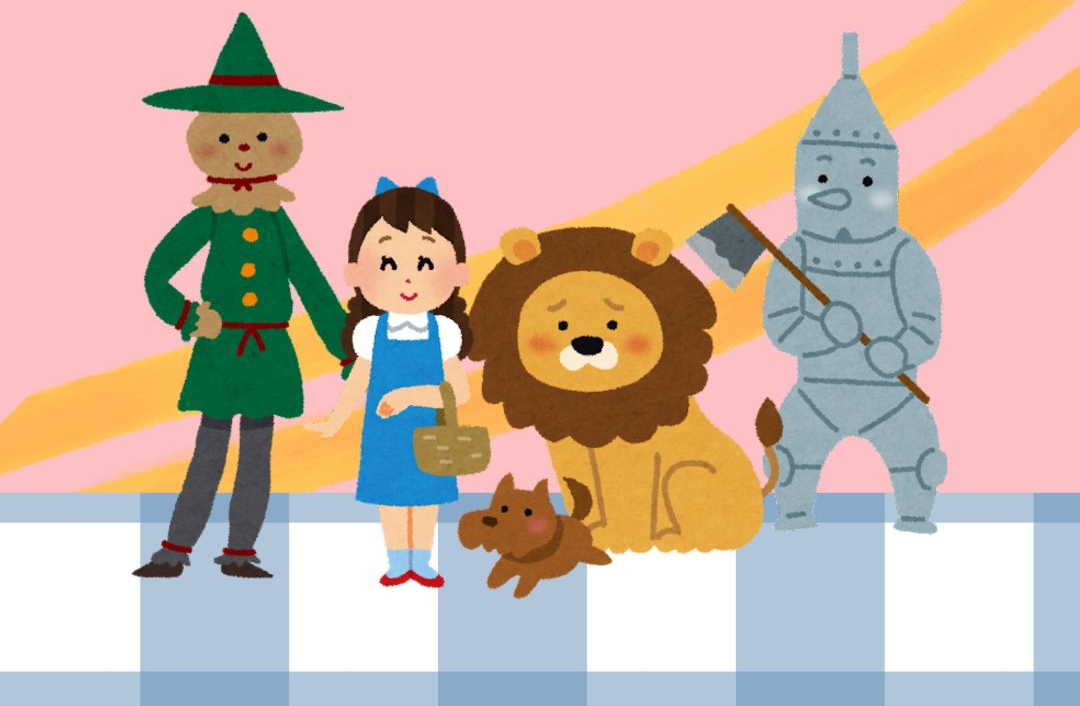
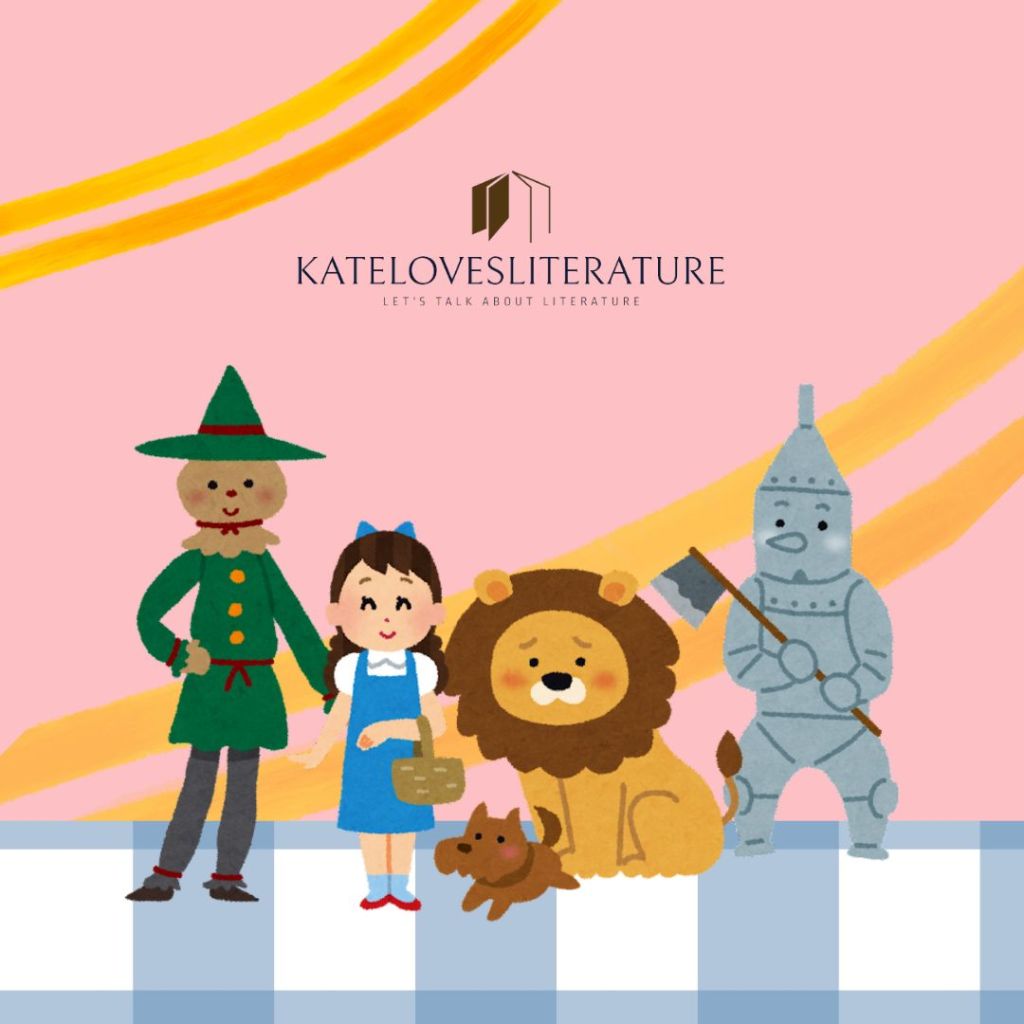
The Wizard of Oz is a simple story, one that I’ve always loved, but I was reminded of just how much I enjoyed it when I went to see the musical version in the Bord Gáis Energy Theatre. If you follow me on Instagram @katelovesliterature, then you will have already seen the photos on my grid.

As expected, it was a brilliant #theatretrip.

Two things captured my attention specifically during this adaptation. The first point is that I was very impressed by this production’s use of screens, and the second point is that I had forgotten how much I enjoy the simplicity of this story. Wicked is touring again currently, and I have my tickets for when it is on in Dublin, so even though I really enjoy Wicked, I loved seeing a villain relishing in being a villain. I’ll talk about this more shortly.

Stylistically, I loved this fresh take on a very classic story. The film alone dates back to 1939, and the winding quest to find one’s way home has been endlessly incorporated into various forms of media ever since. It is a popular trope. One gets lost and must find their way back, learning crucial life lessons along the way. It is a satisfying trope for a reason, and the theme of yearning for belonging somewhere is one that I believe everyone can relate to on some level.

I would call this production quite high-tech, and quite modern. The use of screens and taking a more neon approach to everything felt larger than life, which I think is quite appropriate for Oz. I was sceptical about the use of screens going in, as sometimes I find that screens end up taking over the entire production and no matter what, I think there is something to be said for solid sets and backgrounds that aren’t digital. I was pleasantly surprised though, as I felt there was a lot of care given to striking the balance of when to use screens and when to not, and I loved the bright, electric yellow-brick road that moved in pieces throughout the show.

In this production, in my opinion, a darker undertone was present. Oz was more imposing, darker, despite being lit up in neon. It was so bright that it was slightly unsettling, and for Dorothy, who is off on this imposing journey, it was fitting that Oz would seem gigantic and cold. Kansas felt darker too, with a layer of dust and grime persisting, and everyone was tense and on edge, even before the tornado warning. This worked well as it was easy to see why Dorothy felt so displaced, why maybe Kansas didn’t feel like home at first, and of course, Dorothy’s love for Toto was ever enduring. The style choices made sense, and the screens helped instead of hindered, so I would see this version of the production again anytime.

I want to take a moment to say congratulations, bravo, and well done to the cast and crew.

Aviva Tulley was simply charming as Dorothy. Her rendition of Somewhere Over the Rainbow received a well-deserved extended applause. She was the perfect Dorothy, charming and endearing, yet determined to persevere, not only to help herself, but to help her new friends too. I want to mention Benjamin Yates. He was the most wonderful Scarecrow. The Scarecrow is a vital part of the show. He is the first friend that Dorothy makes in Oz, and he is the first to join her, not leaving her alone on the journey. Their friendship is so sweet, and Benjamin Yates was a fantastic mix of sweet, funny, and earnest. The entire cast were fantastic though and, in my opinion, they all deserve a huge amount of praise.

Craig Revel Horwood was The Wicked Witch of the West. Craig was impressive and it was so much fun to see a villain simply revel in being a villain. I’ve decided that I will consider The Wicked Witch of the West and Elphaba to be two distinctly different characters. I know that many people probably view them this way already, but Wicked is presented often as the “untold side of the story,” of The Wicked Witch of the West. Wicked presents The Wicked Witch of the West as someone who was forced to become evil whereas in The Wizard of Oz, the witch is simply a wicked witch, and her vendetta against Dorothy is based on pettiness and anger alone. Yes, Dorothy technically dropped a house on her sister, but you always get the impression that The Wicked Witch of the West would have found an excuse to torment Dorothy anyway. Having The Wicked Witch of the West double up as the mean and spiteful Miss Gulch from Kansas is a testament to this. Miss Gulch is a spiteful woman who has an unfair vendetta against Dorothy. Miss Gulch takes pleasure in finding reasons to complain about her and act against her, going so far as even trying to take Toto away and harm him.

Craig Revel Horwood clearly enjoyed playing this iconic character, and I really enjoyed seeing a story with clear and plain stakes and triumphs again. The Wicked Witch of the West is an unapologetic antagonist, and the contrast between the surly wicked witch and the ever delightful, bubble-gum pink, moped riding Glinda was visually very striking and very fun to watch. They’re extreme opposites and the dynamic works very well onstage.

I’m all for nuance, especially in children’s literature. I believe I’ve made that very clear time and time again, but I do also feel somewhat frustrated when I see every villain getting the same “misunderstood actually,” treatment. Understanding why someone behaves as they do is important, and yes, sometimes evil is made, but I also do think there’s something to be said about acknowledging that some people simply have bad intentions. The Wicked Witch of the West in this production of The Wizard of Oz is evil just to be evil, and it was highly entertaining.

I’d see this show again tomorrow if I could.

Next up on Katelovesliterature.com, I’m going to be discussing 2.22: A Ghost Story.

Stay tuned!